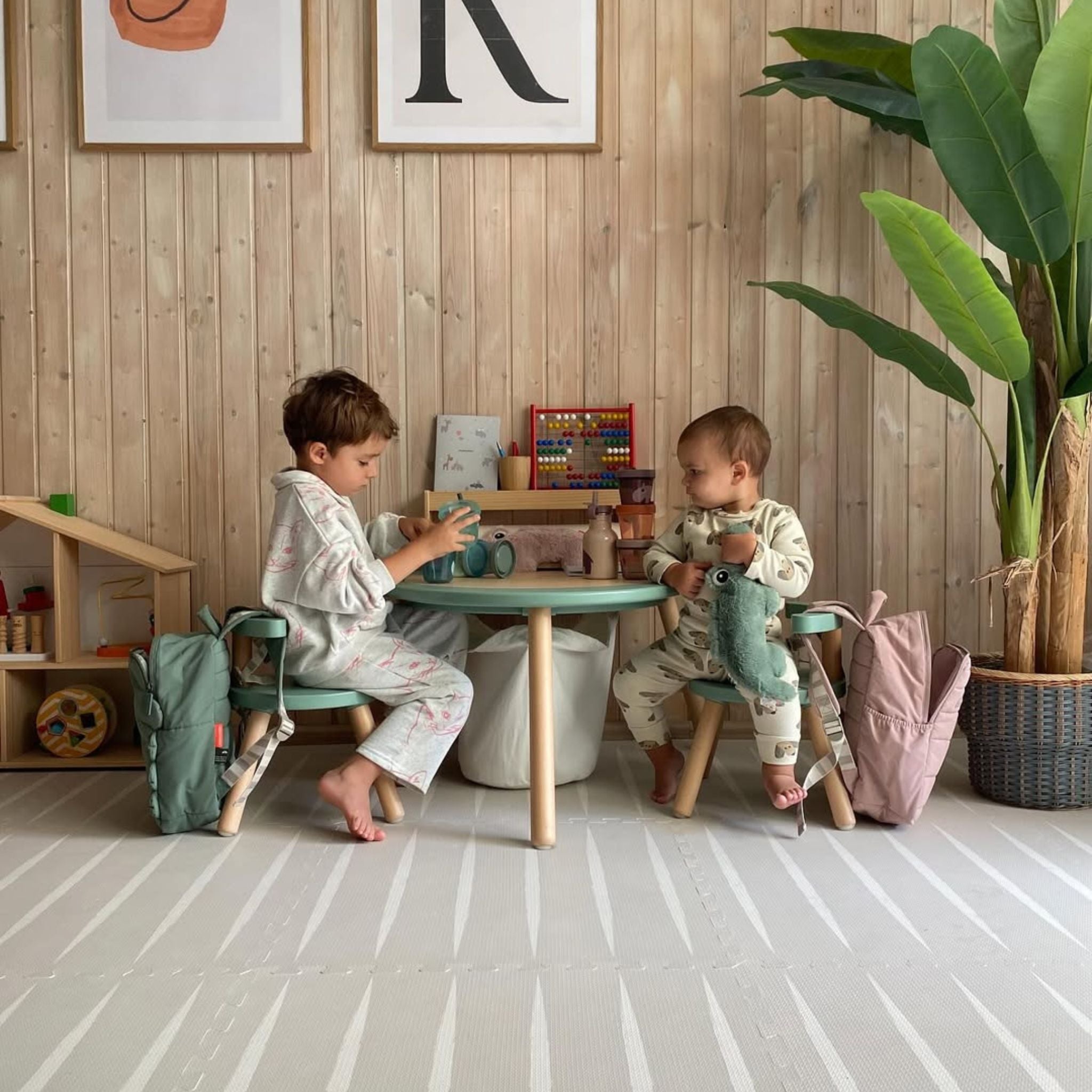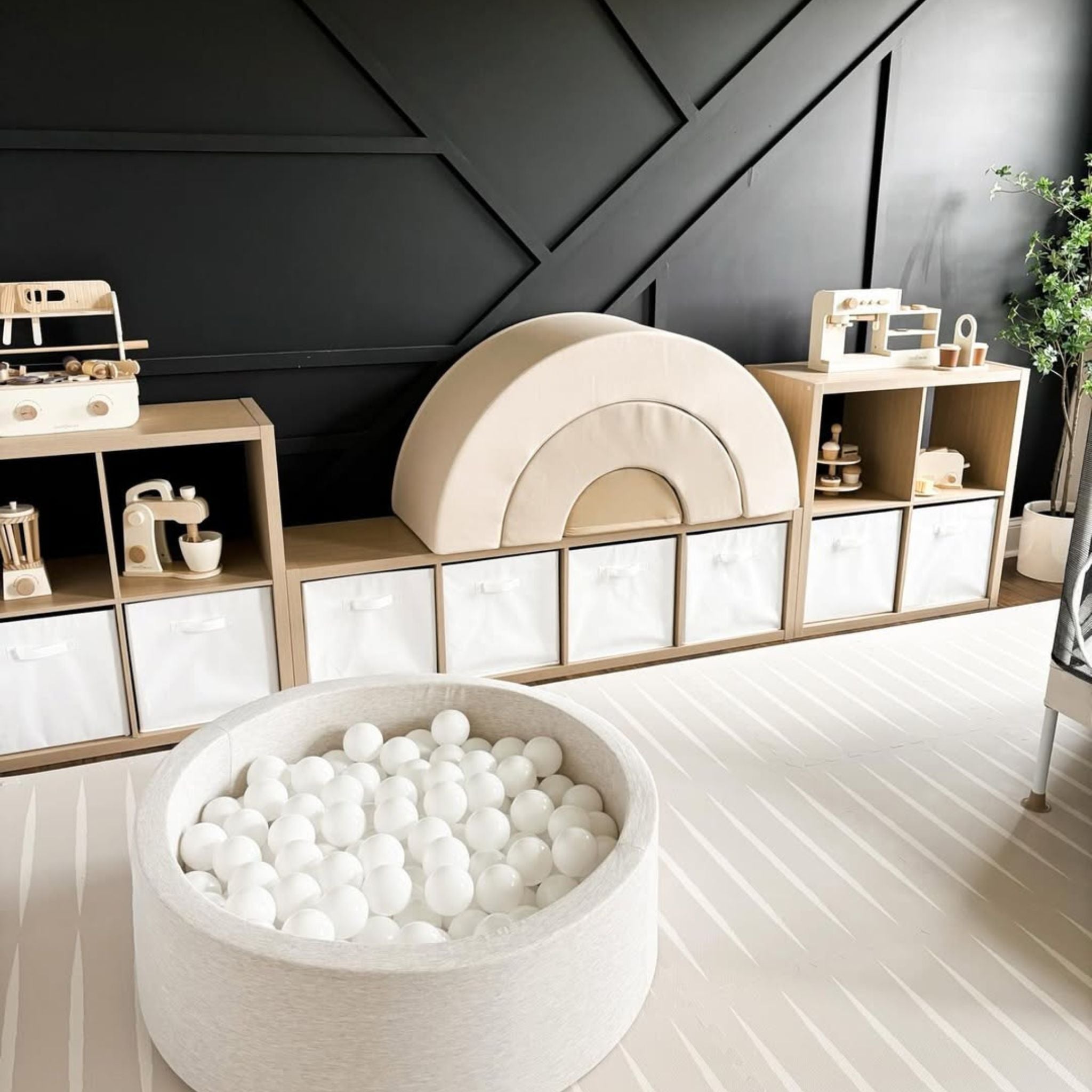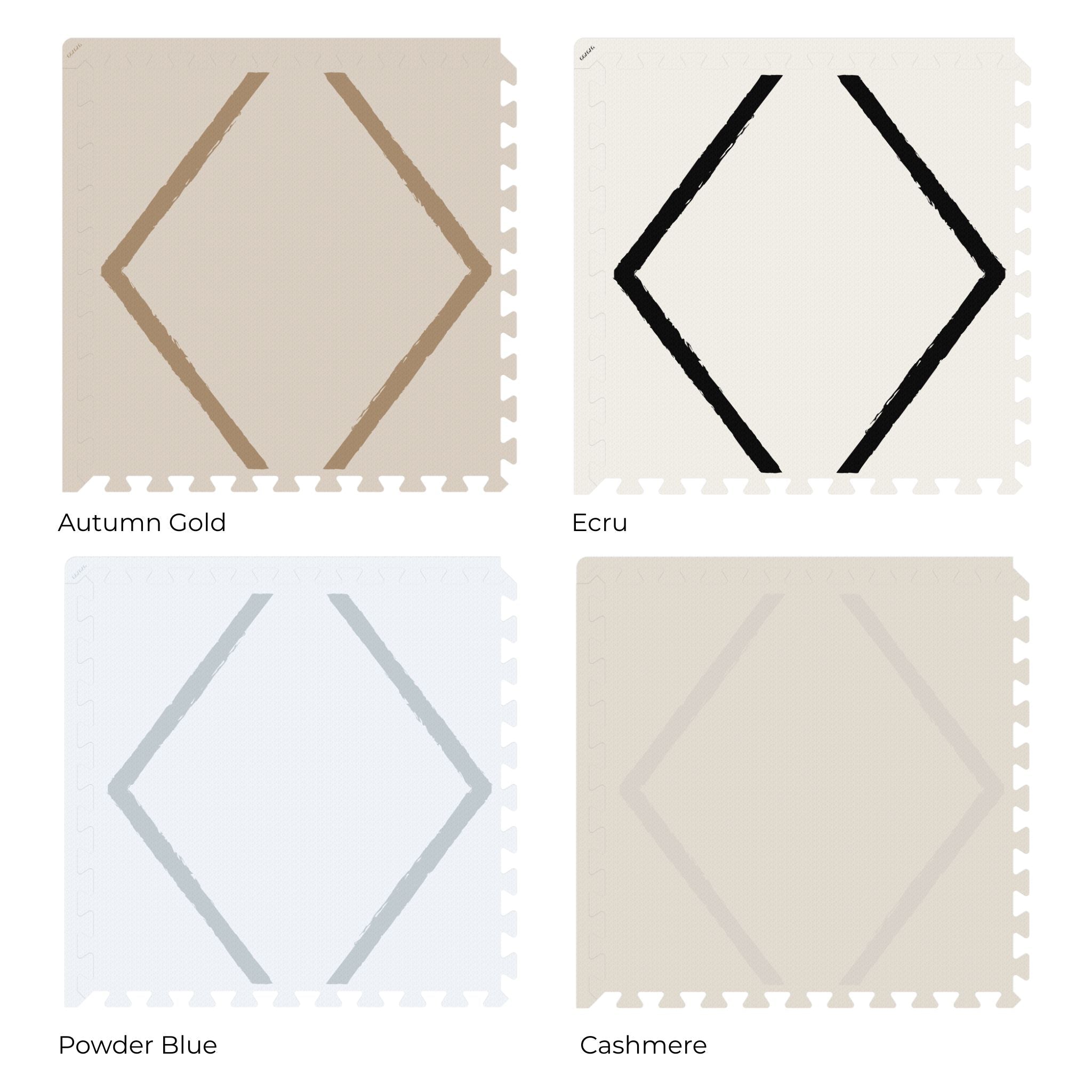

Short answer: a foam play mat is worth it when the tiles are thick enough to feel soft underfoot, sized so they join into the footprint your room actually needs, and easy enough to wipe clean that you keep it down instead of putting it away.
The question underneath is simpler than it looks: once you strip out the marketing language, what separates one foam mat from another, and does any of it matter for a baby who is rolling today and walking in six months. If you are also wondering at what age a baby can start on a mat at all, we have answered that separately in our article on newborns and play mats. This guide starts after that question, once you already know you want one and need to know what to look for.

How thick does a foam play mat actually need to be?
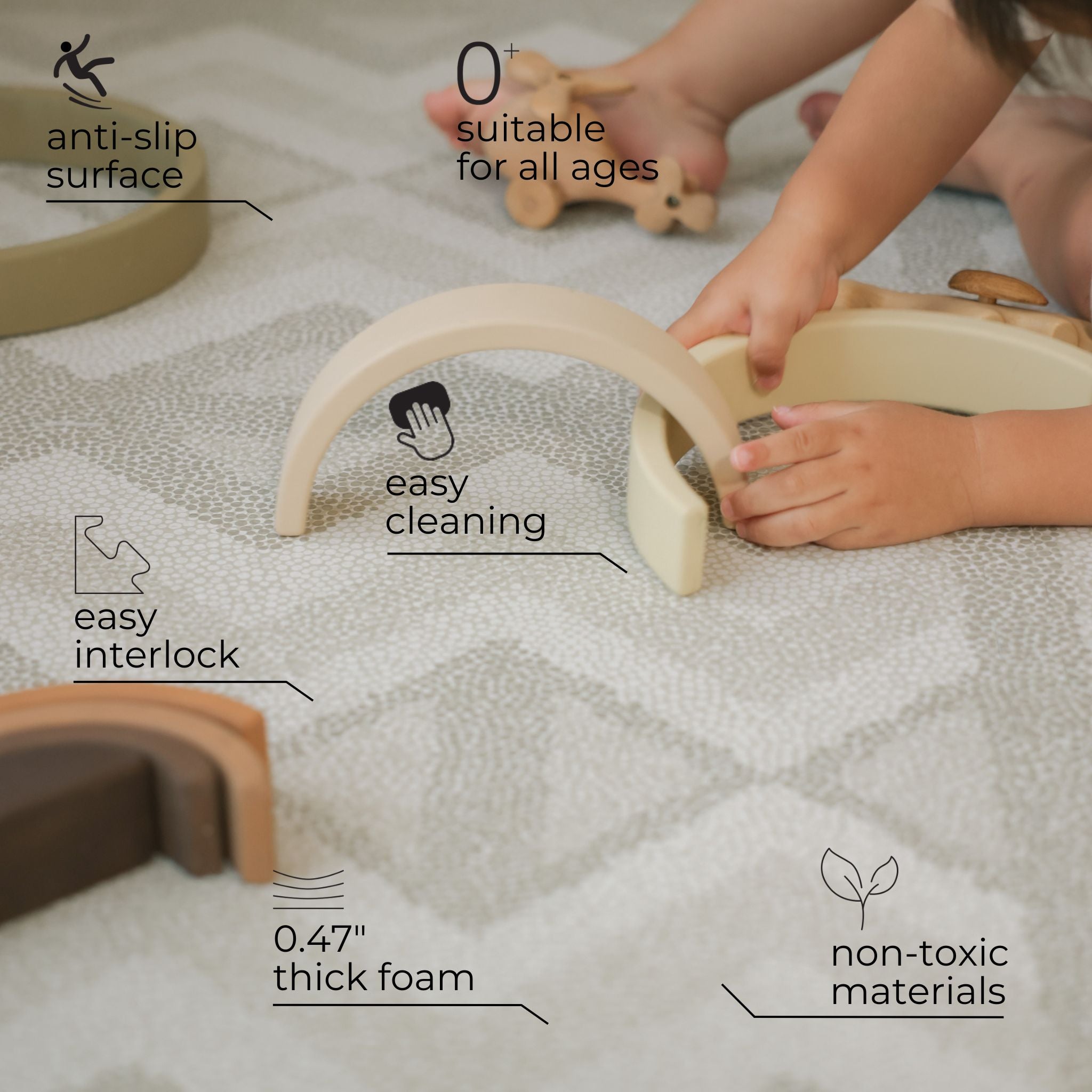
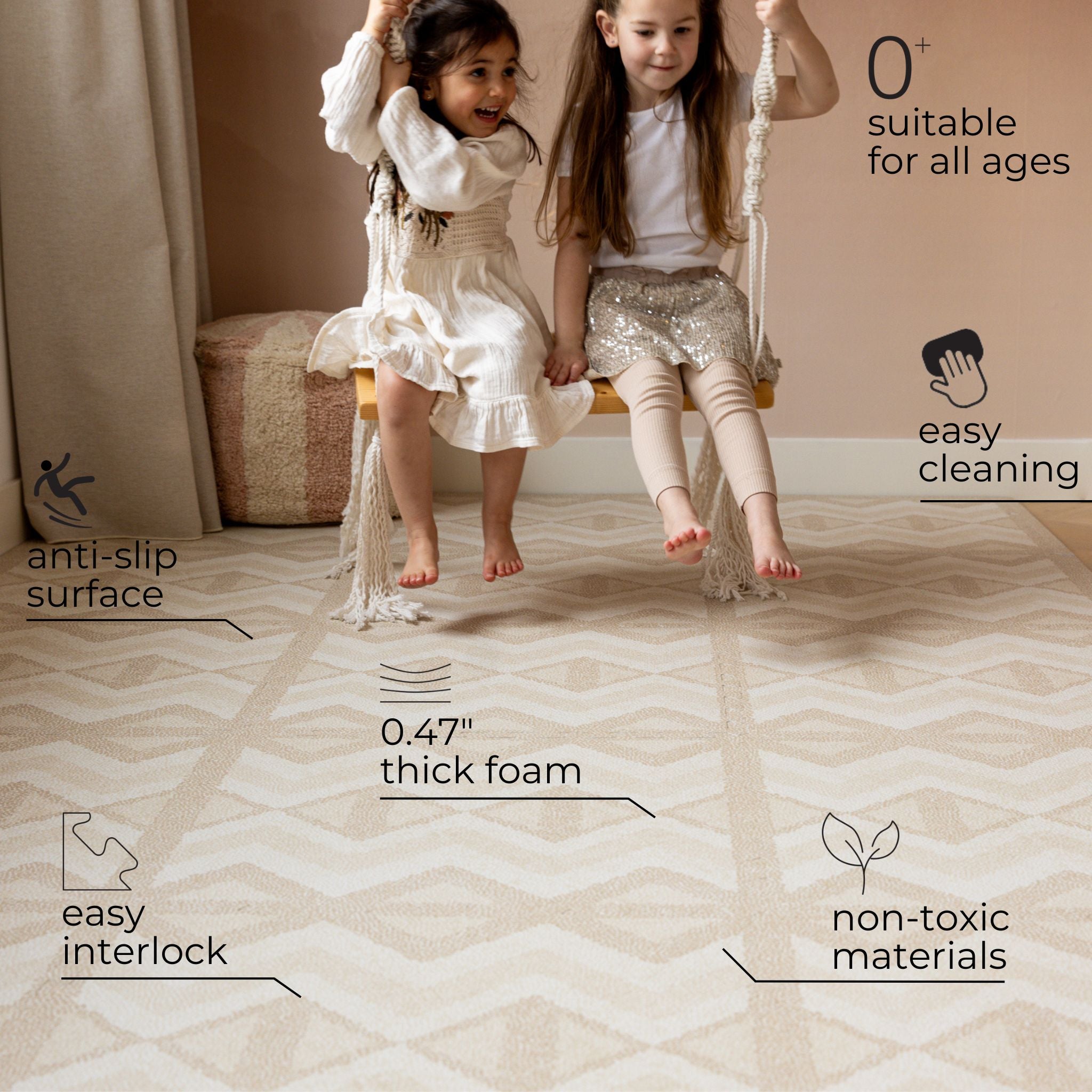
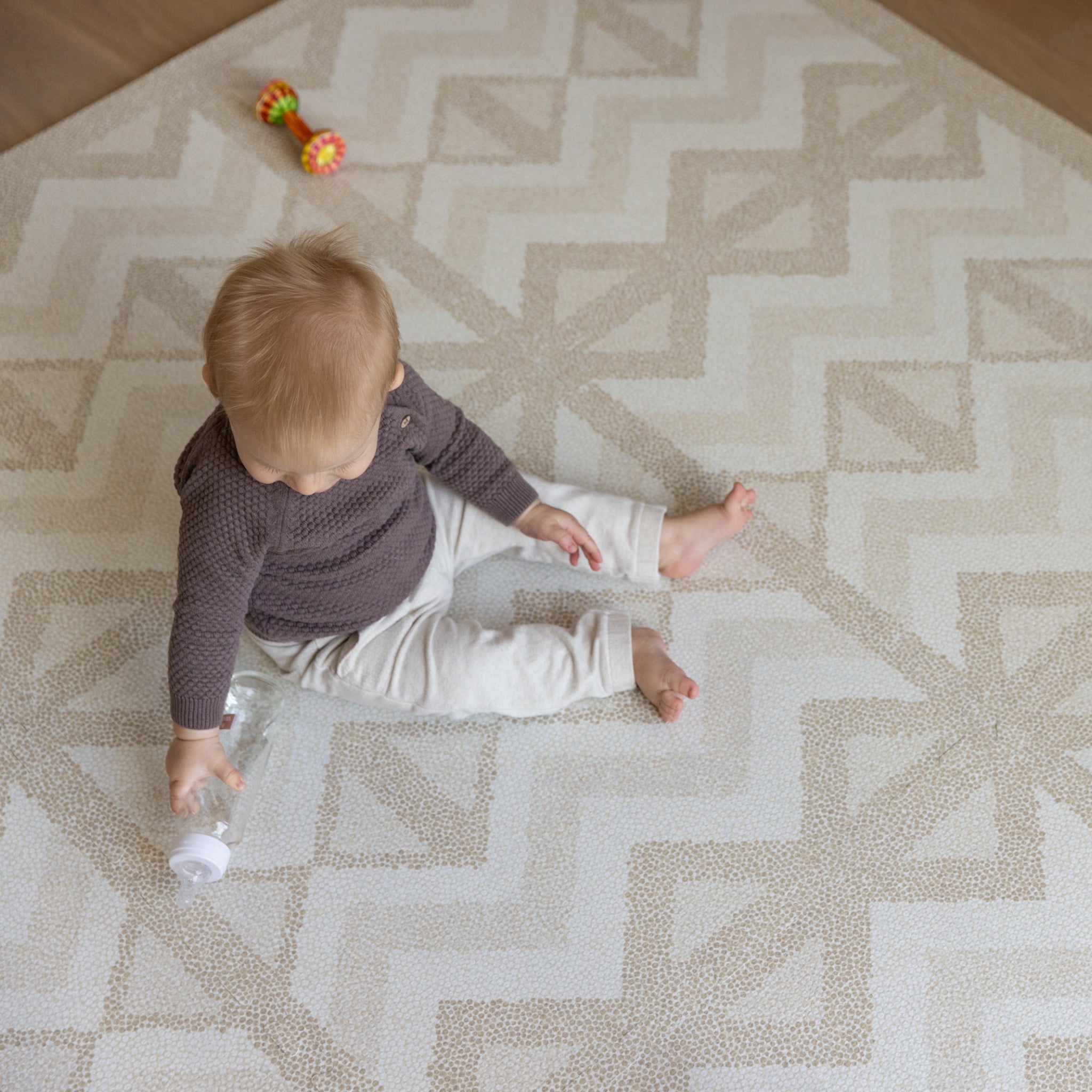
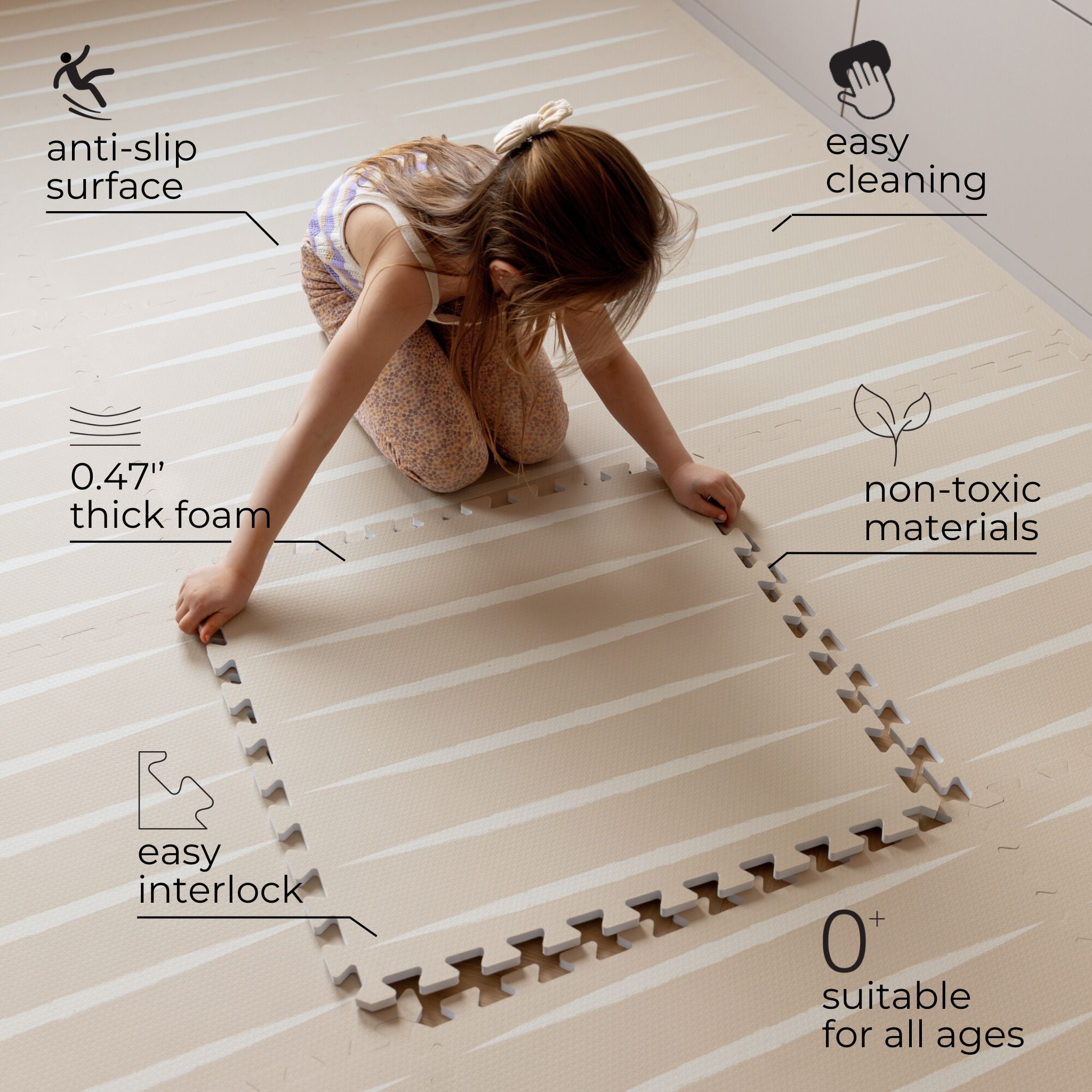
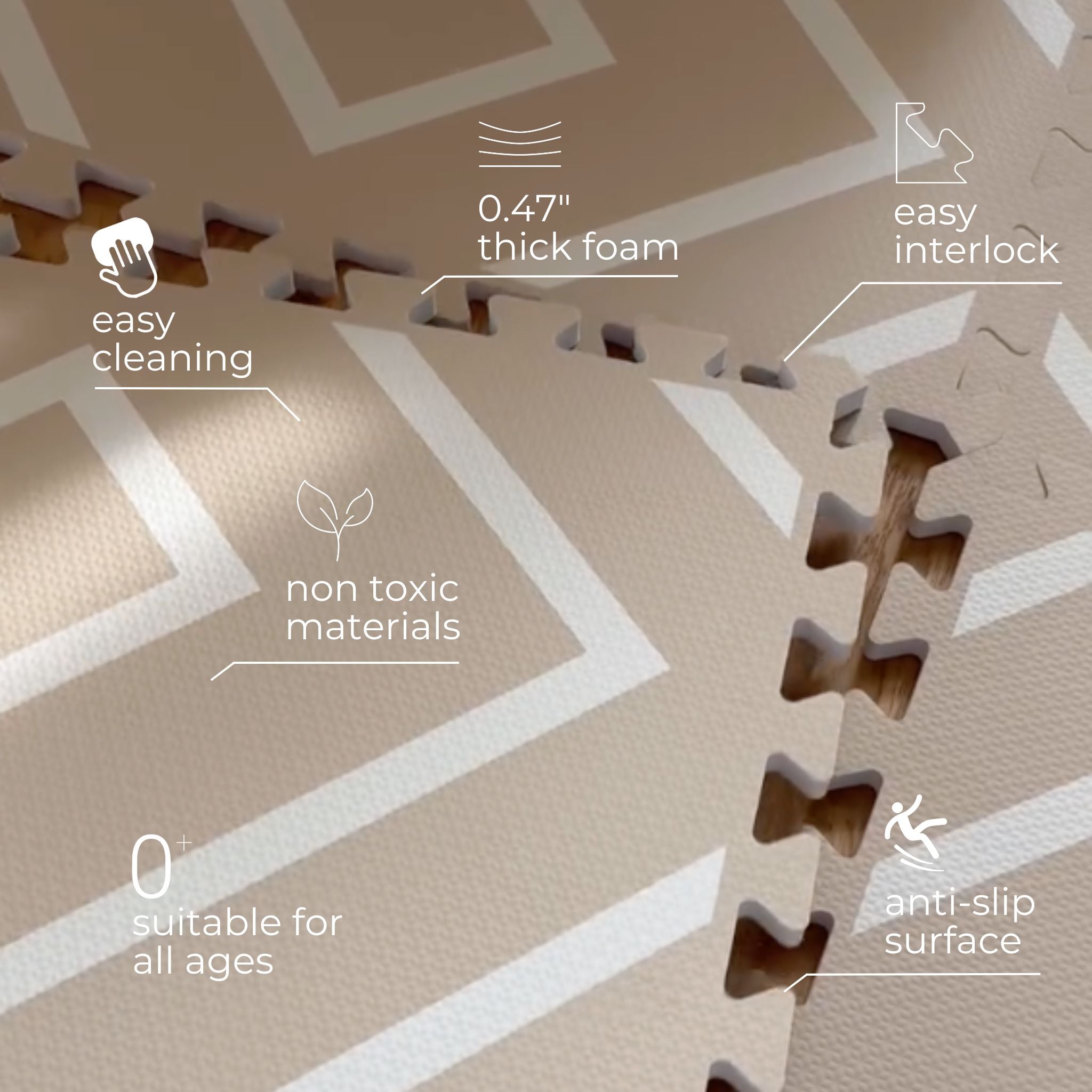
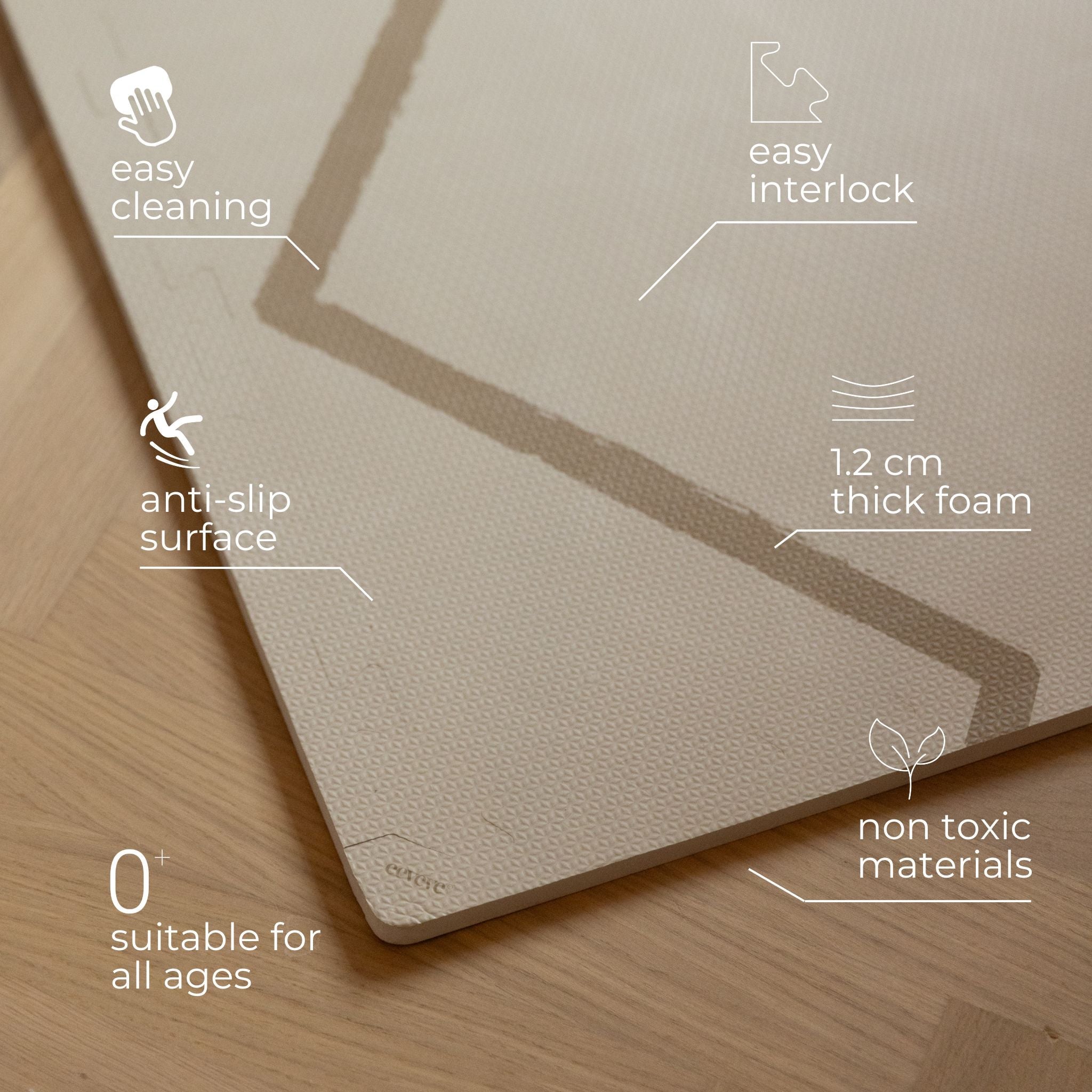
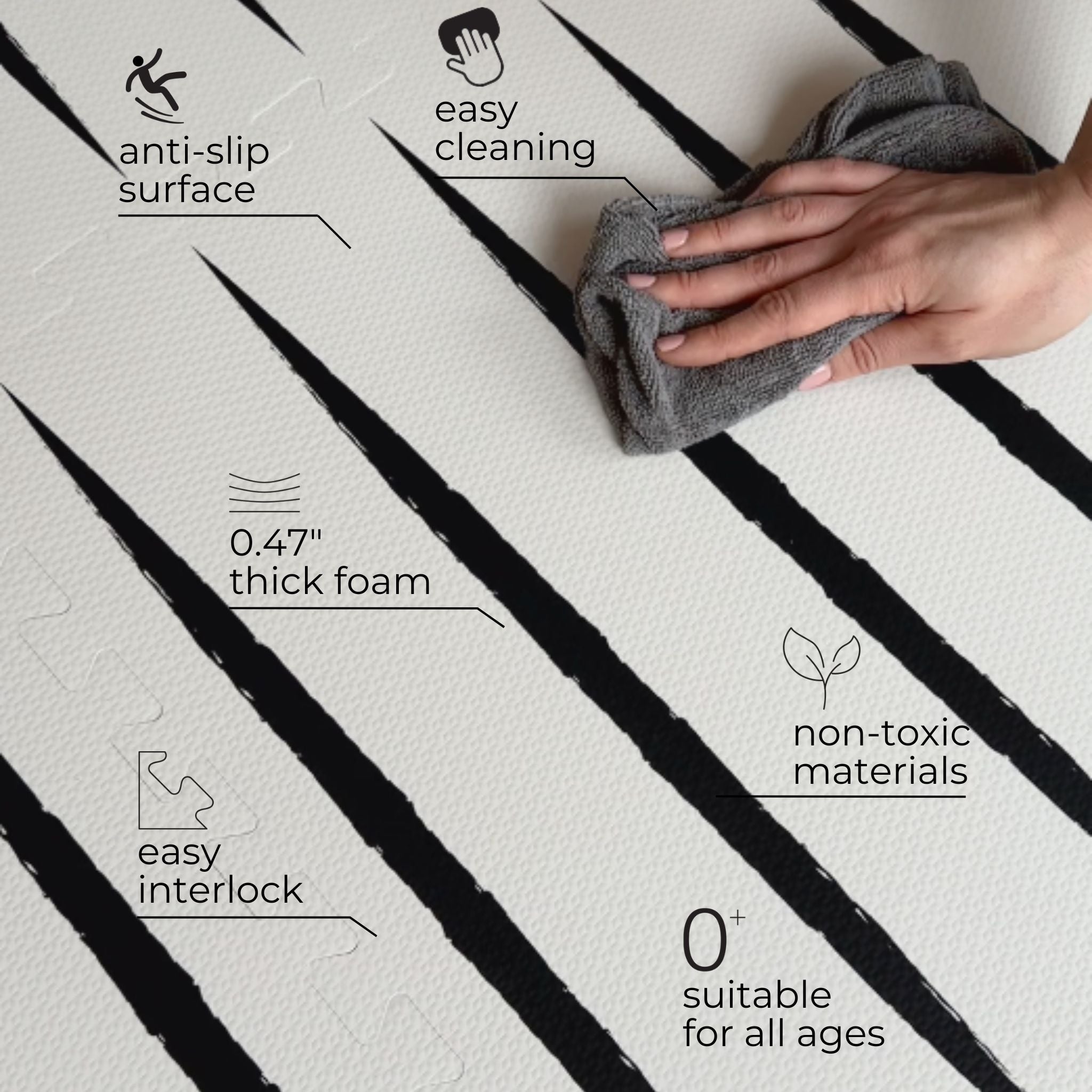
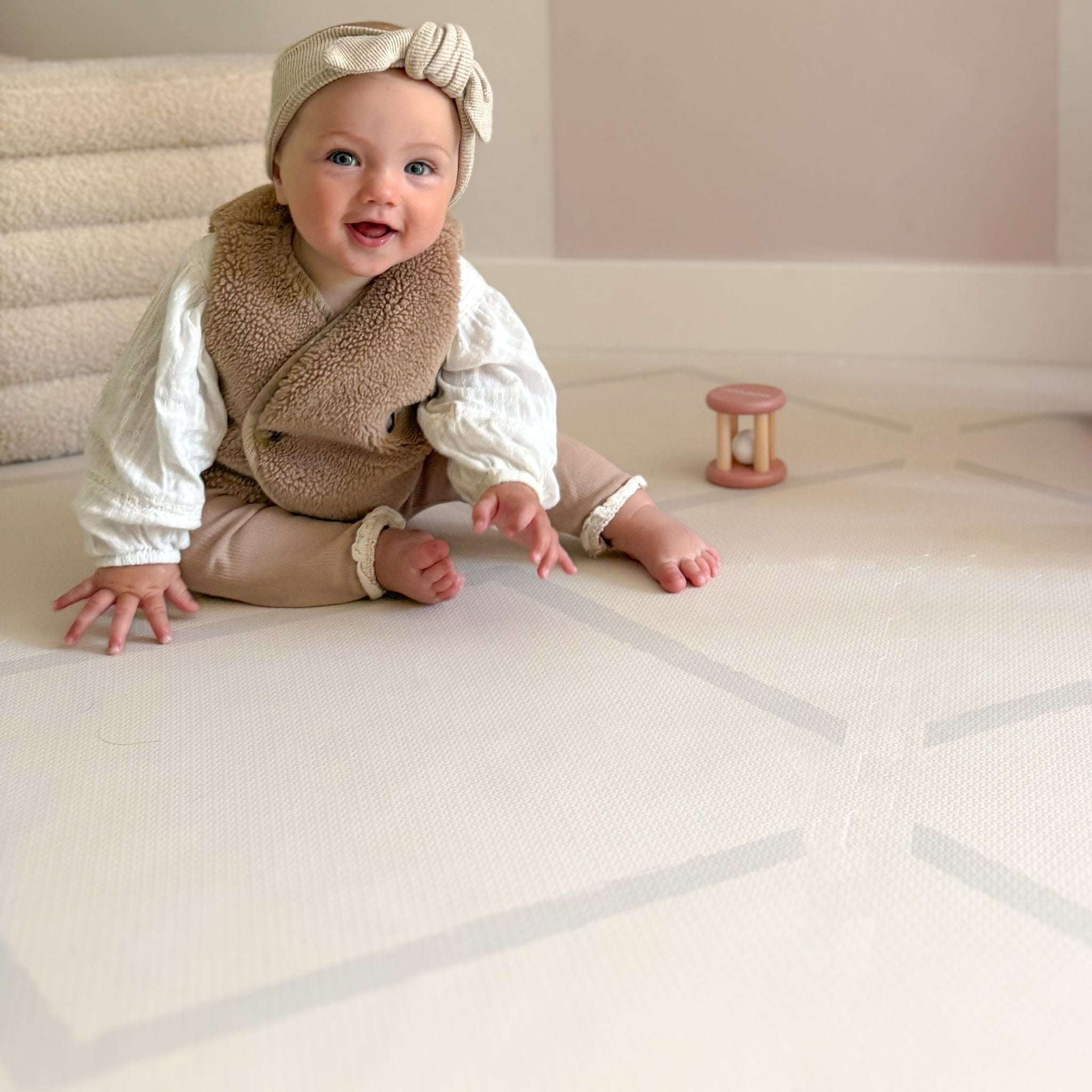
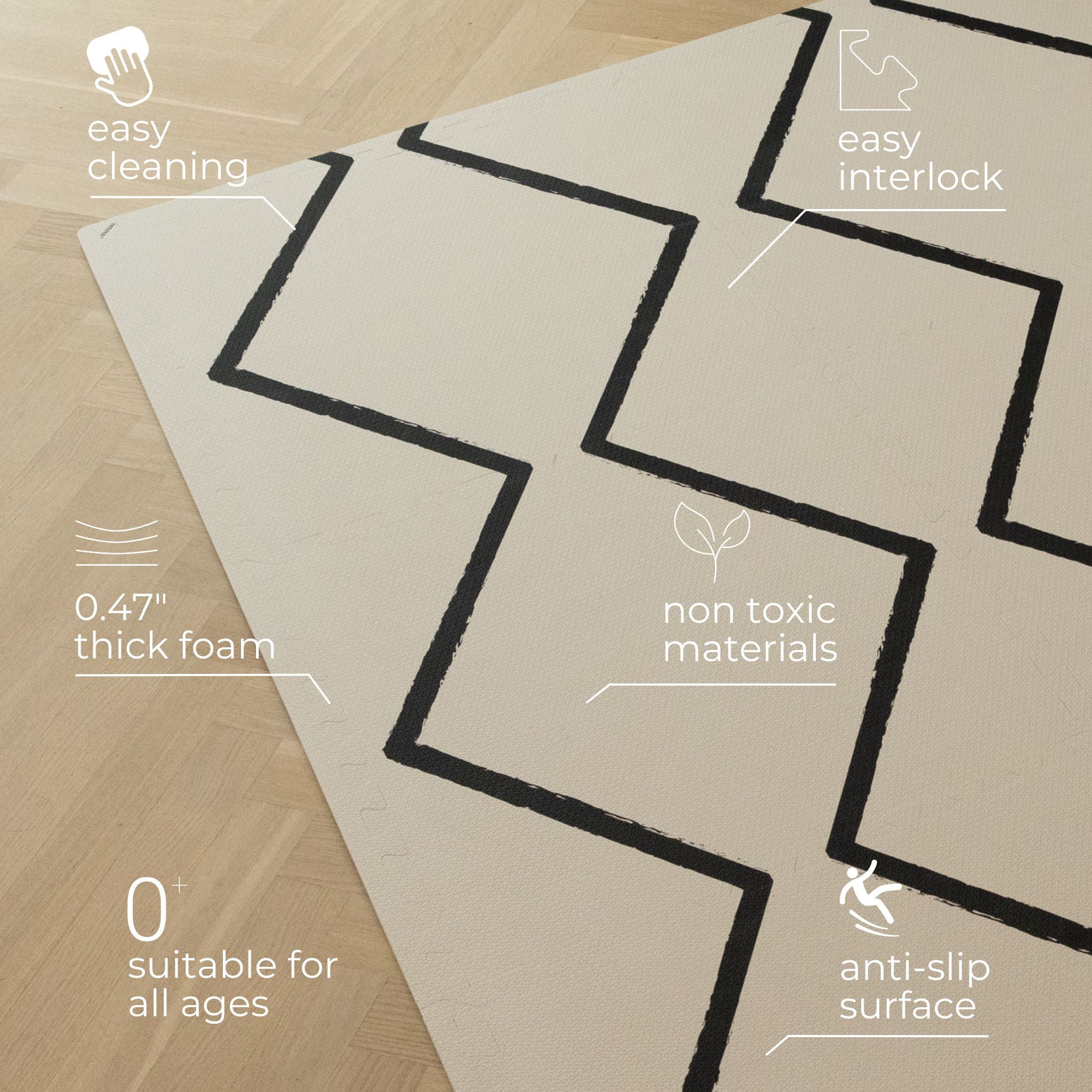
Thickness is the spec everyone asks about first, and the honest answer is that more is not automatically better. Our mats are 1.2 cm thick, roughly half an inch, made from EVA foam. That makes a hard floor of hardwood, tile or laminate noticeably softer to sit, crawl and play on, while staying flat enough that the seams do not turn into a step for a toddler who is just learning to walk. Thicker is not automatically better: it mostly changes how the surface feels underfoot.
What matters more than raw thickness is what is underneath the mat. On top of carpet almost any foam feels soft. On concrete or tile, you notice every millimeter, and that is where a dedicated foam layer earns its place instead of a thin yoga mat or a folded blanket.
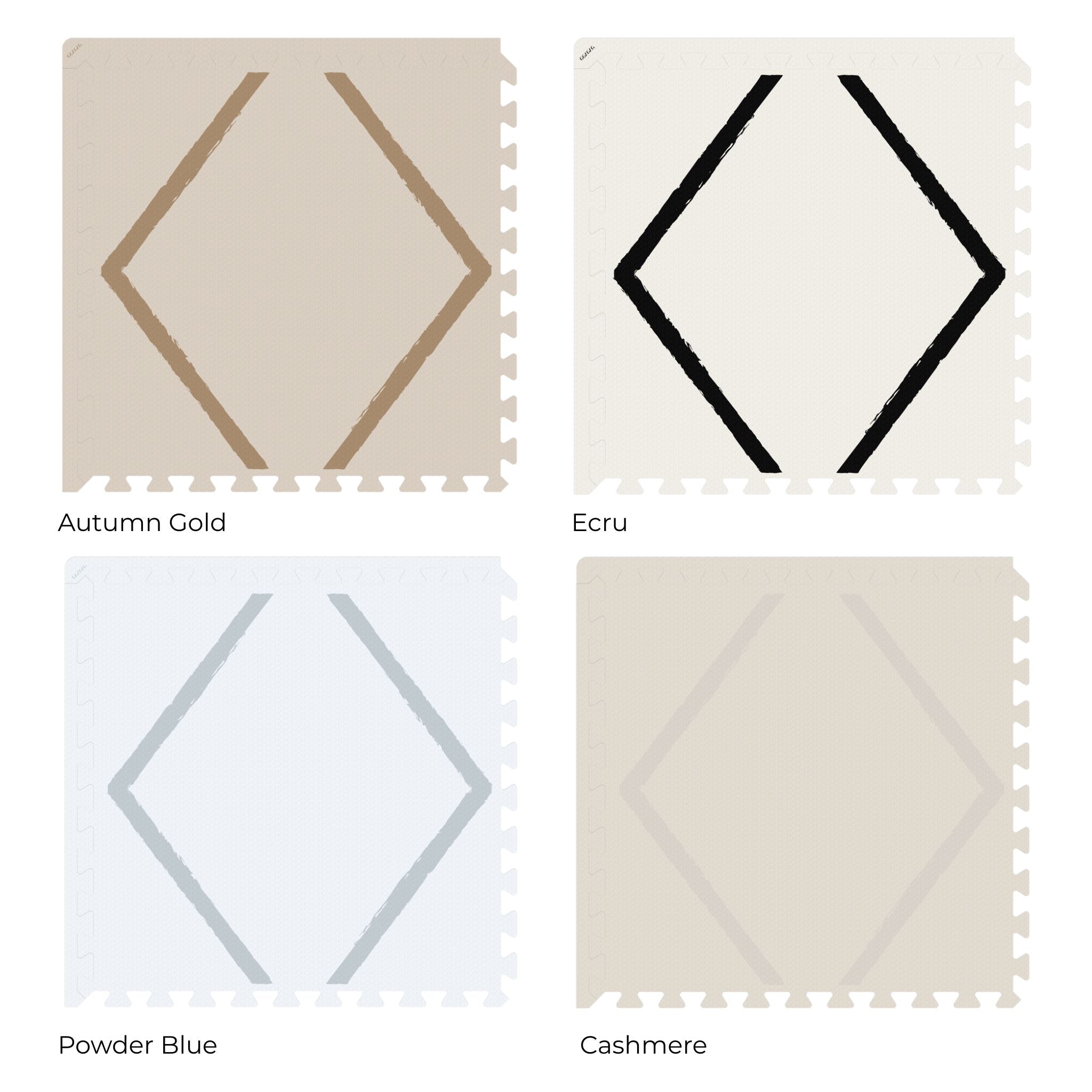
How big is one tile, and how do the tiles connect?
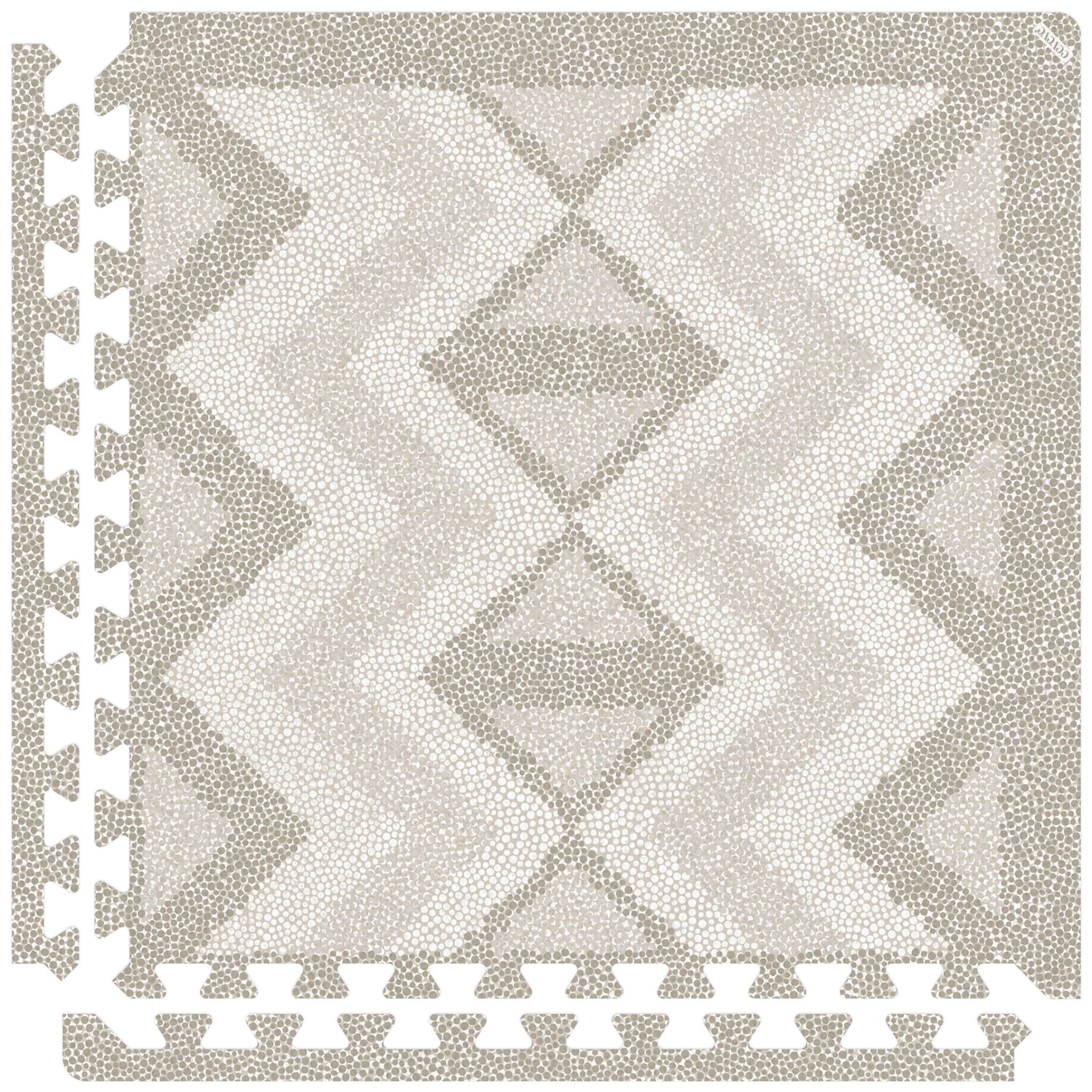
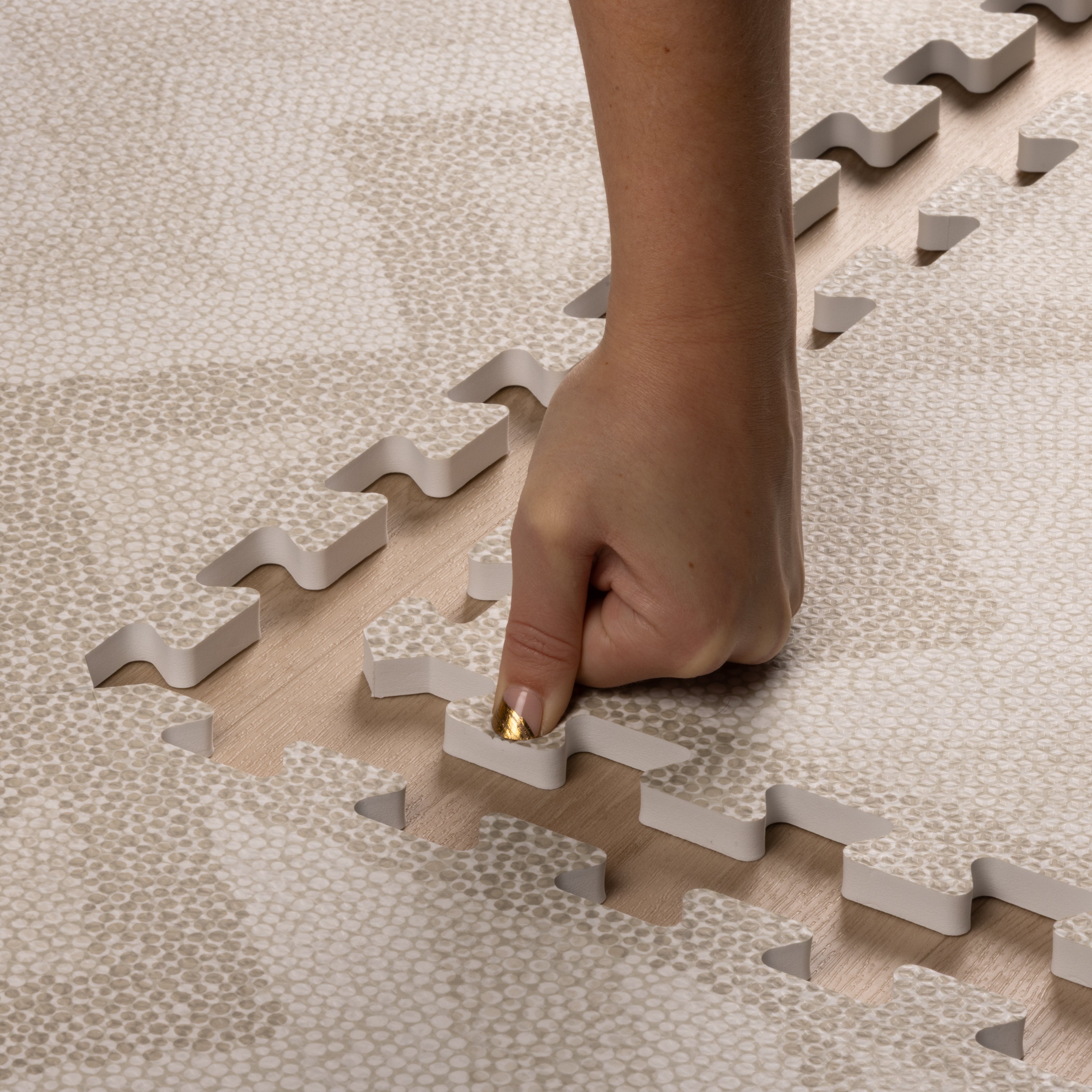
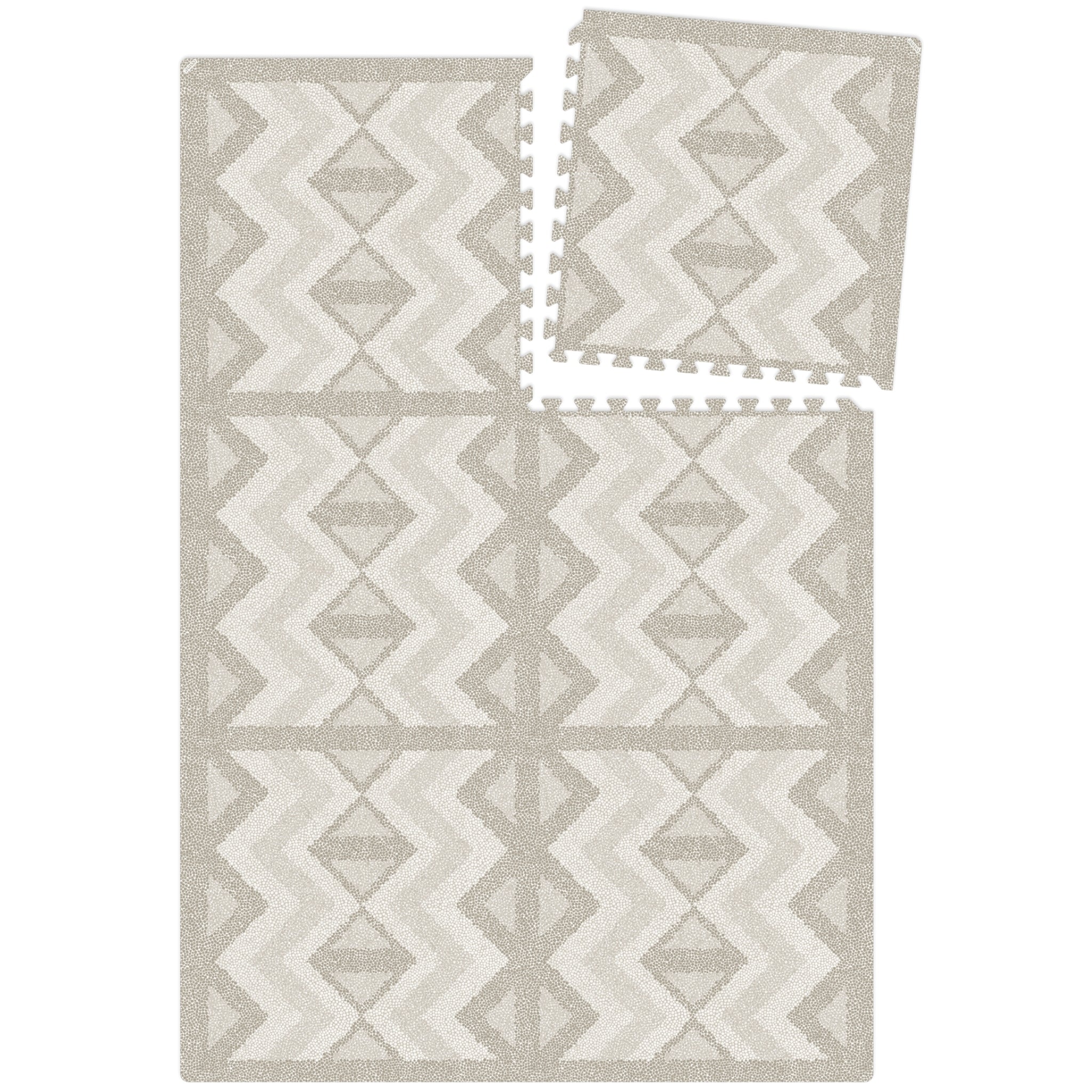
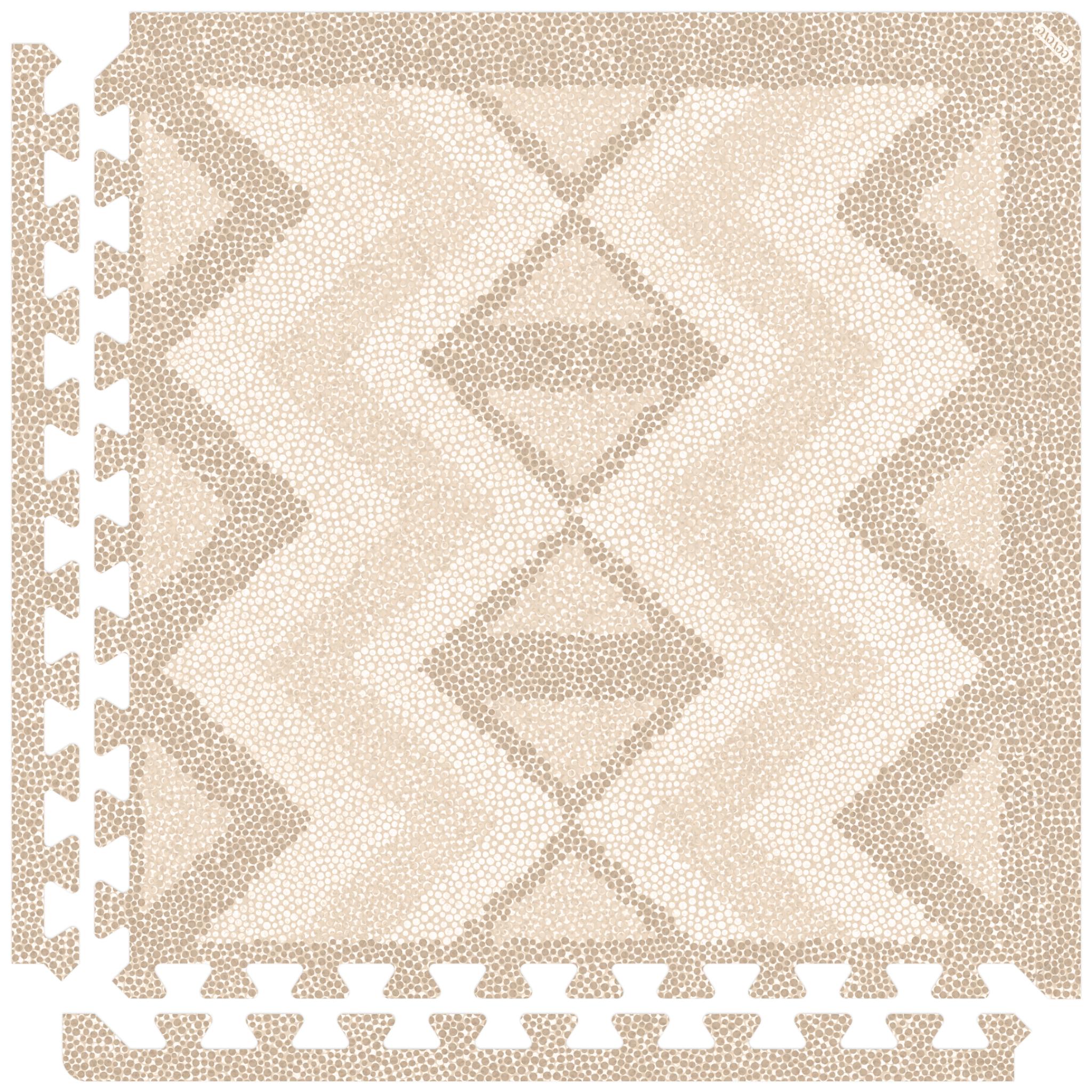
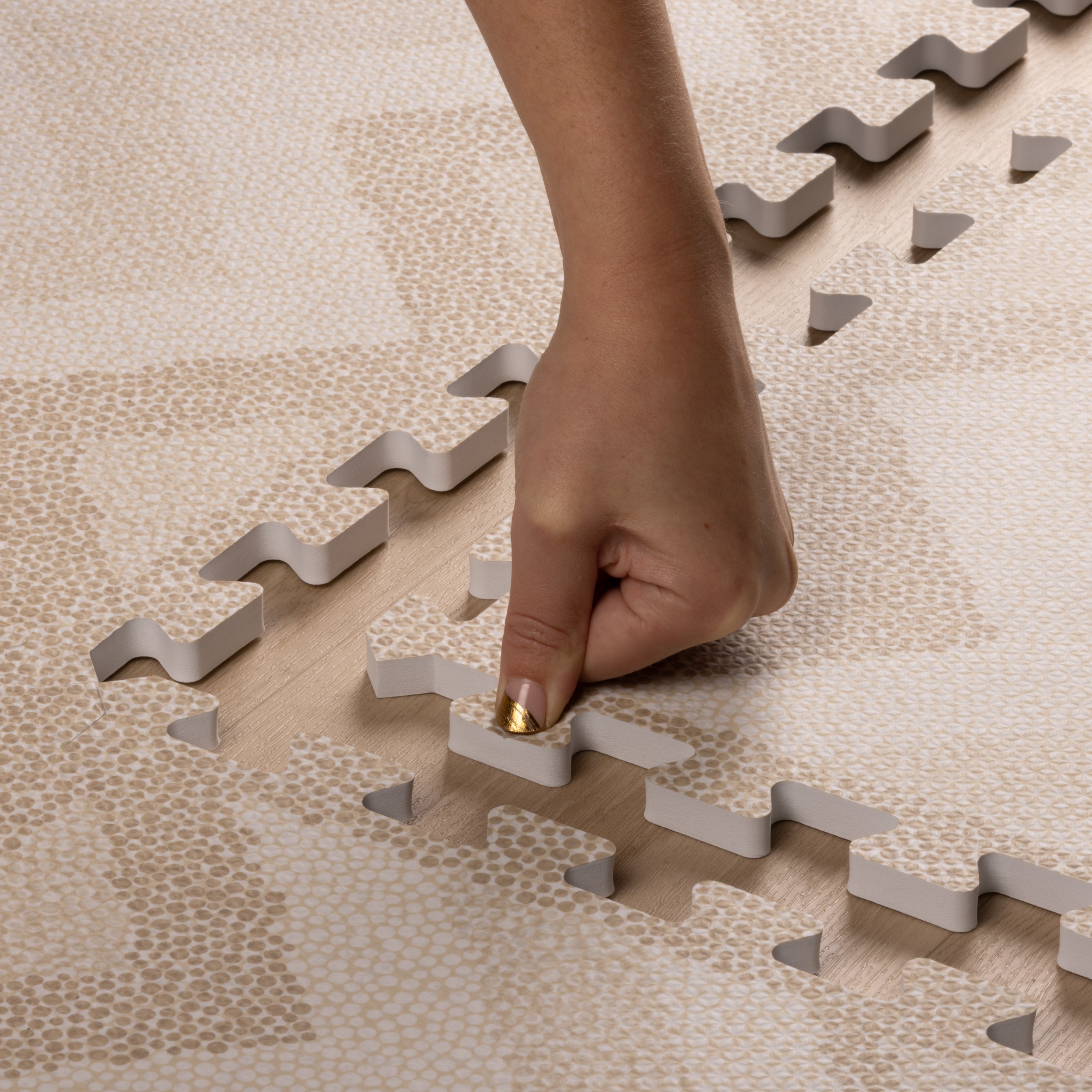
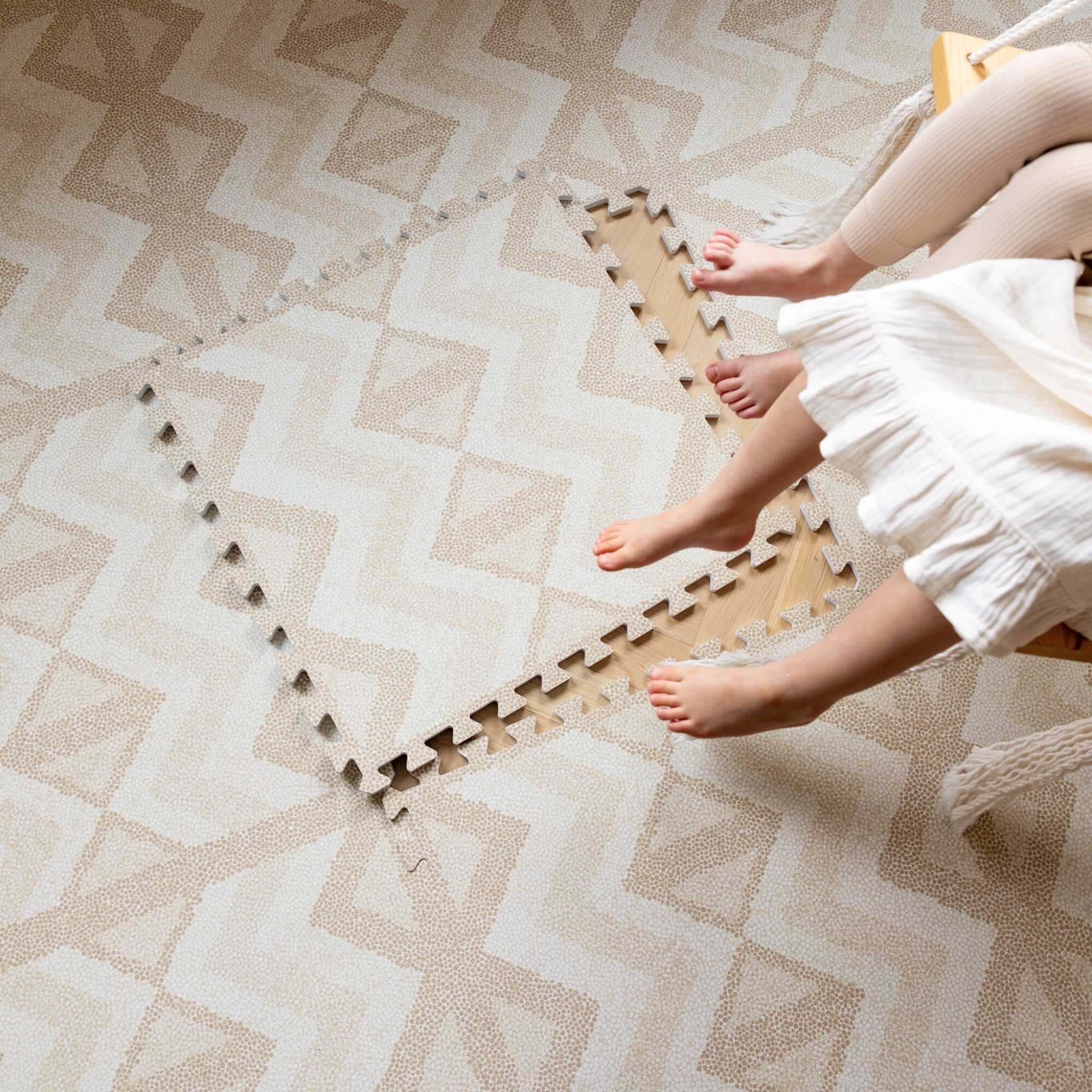
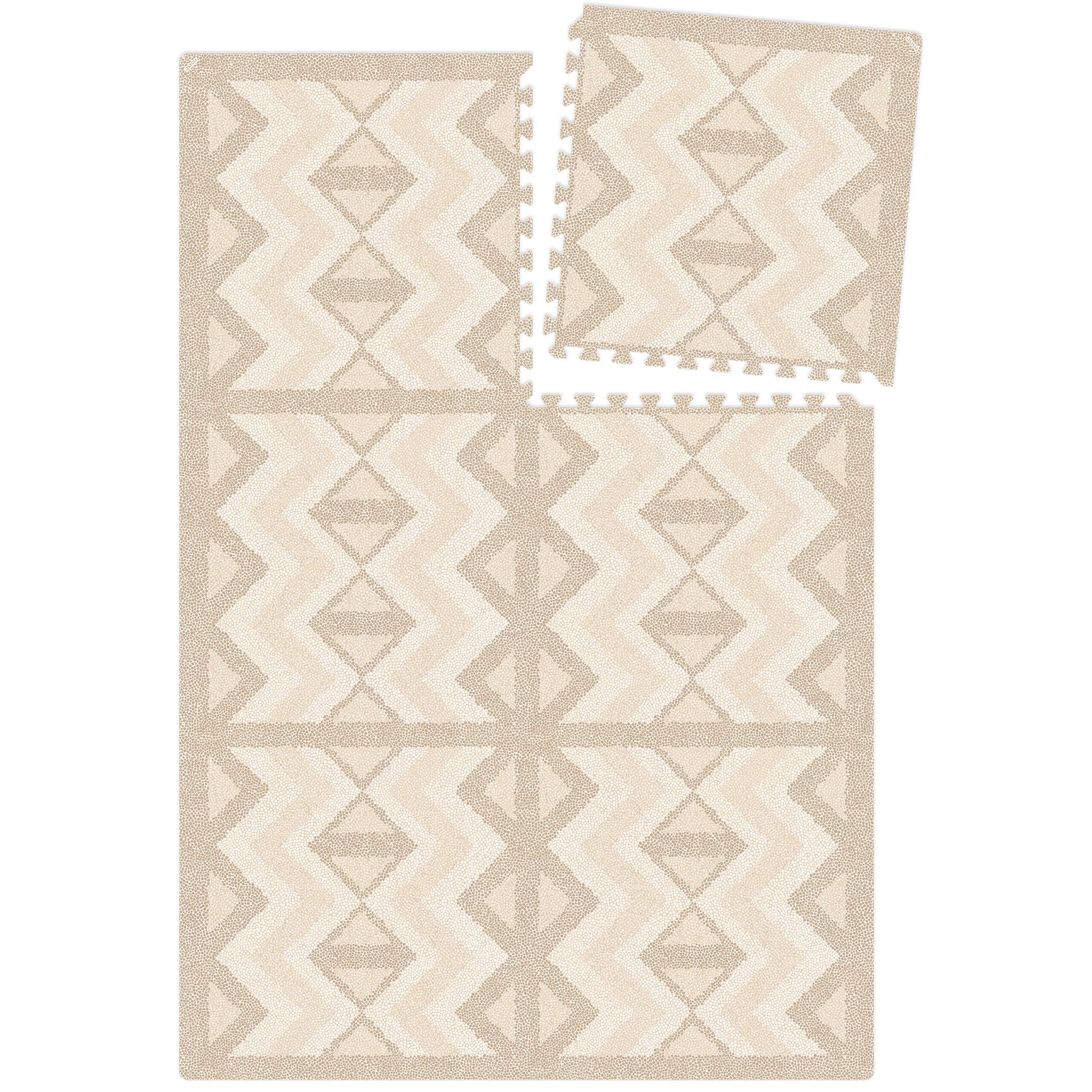
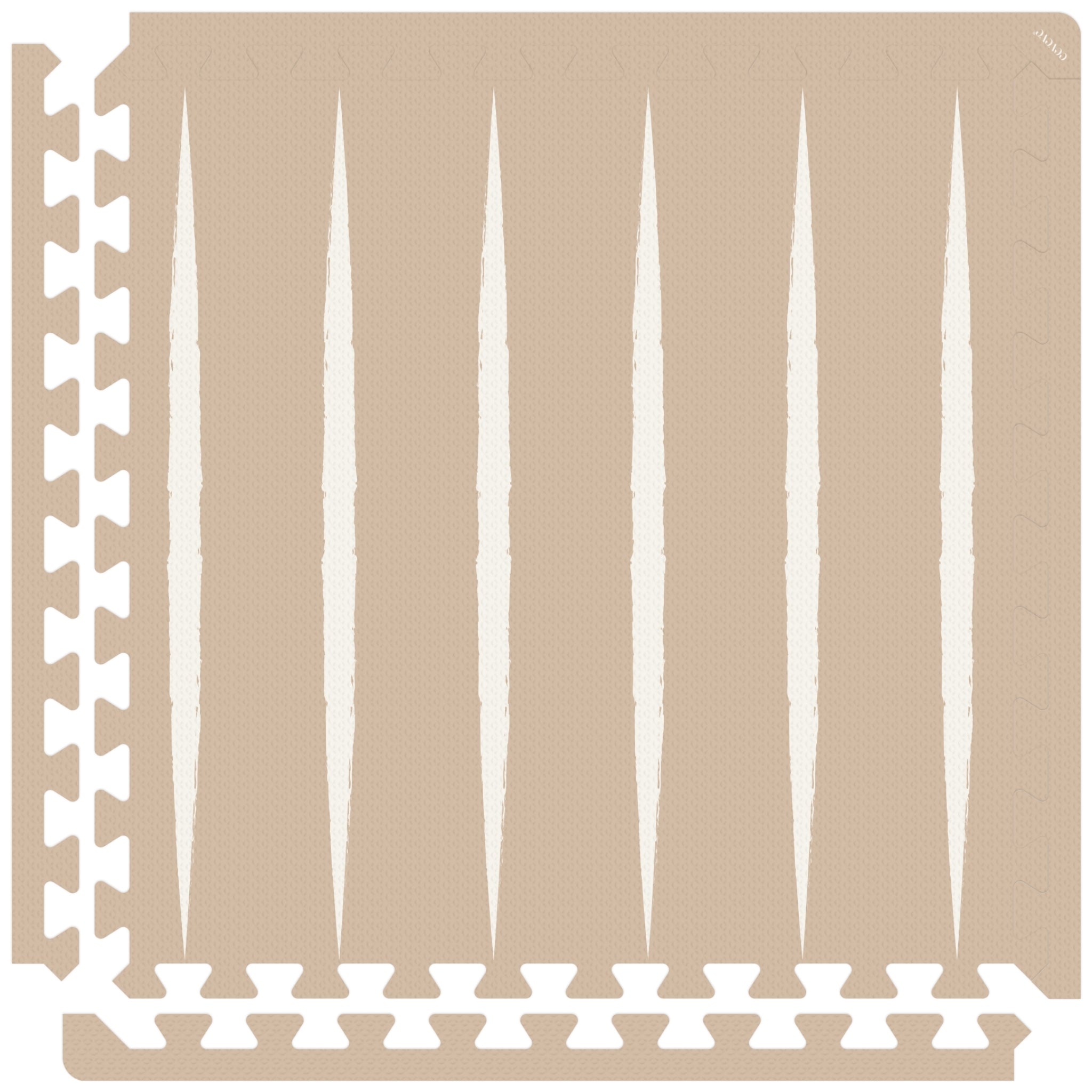
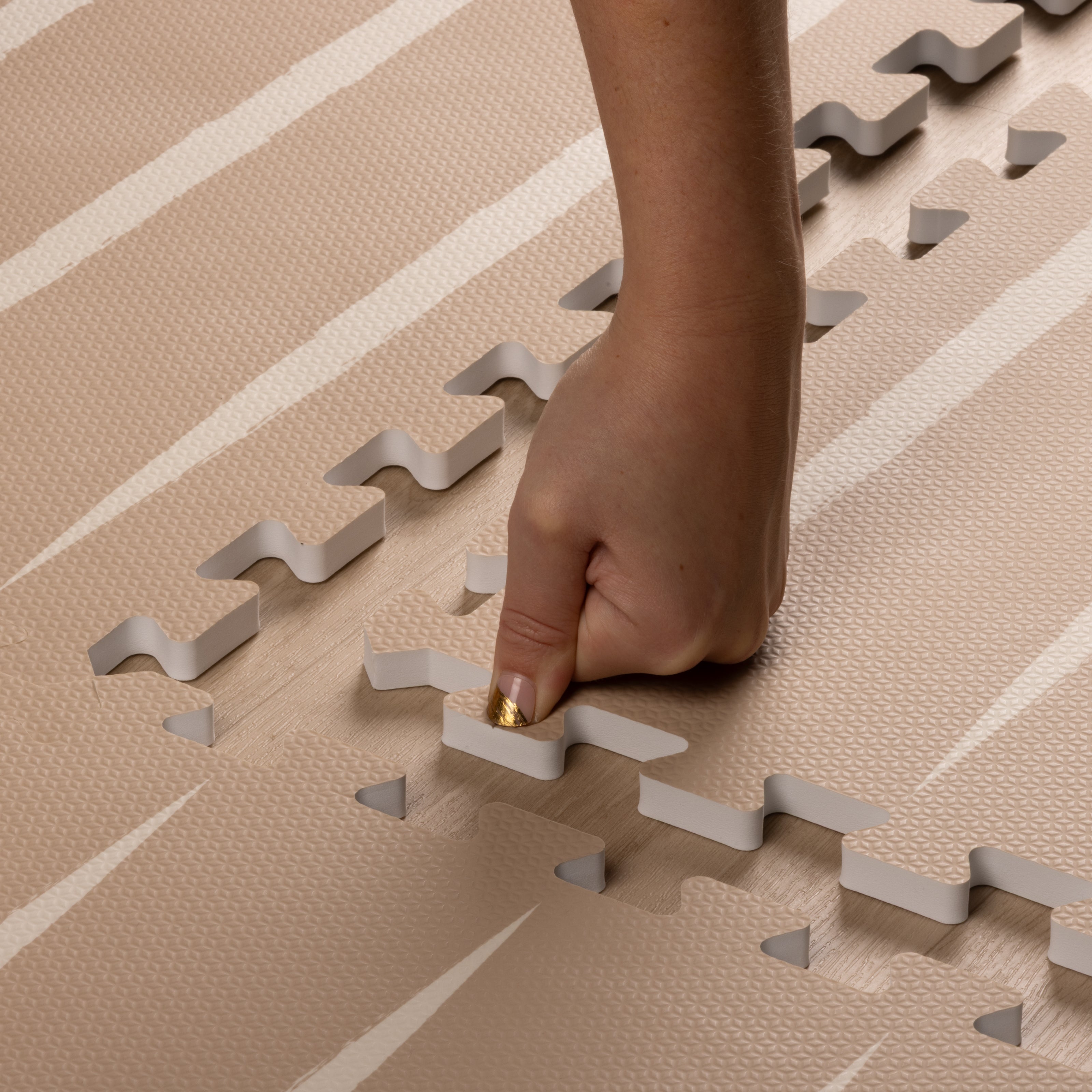
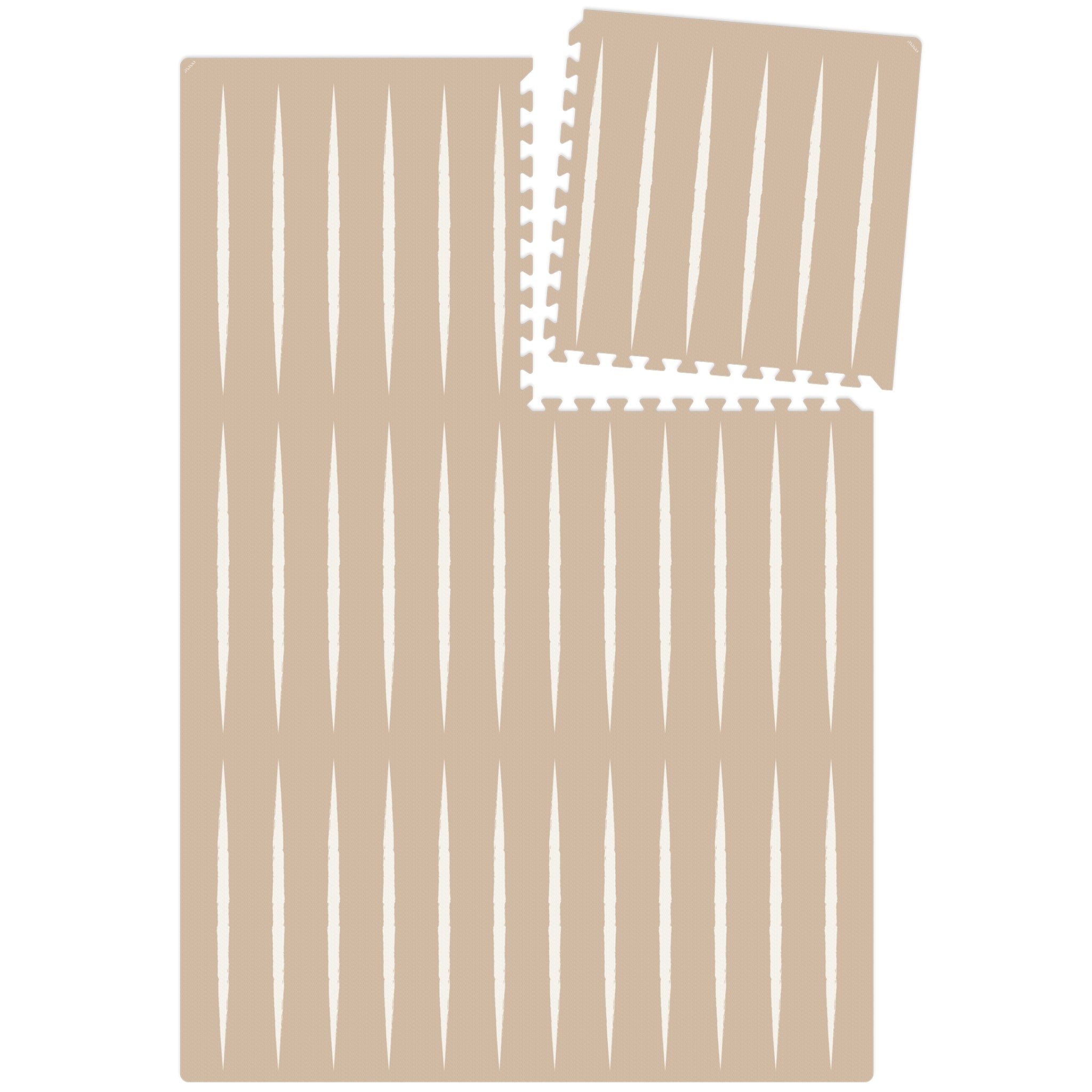
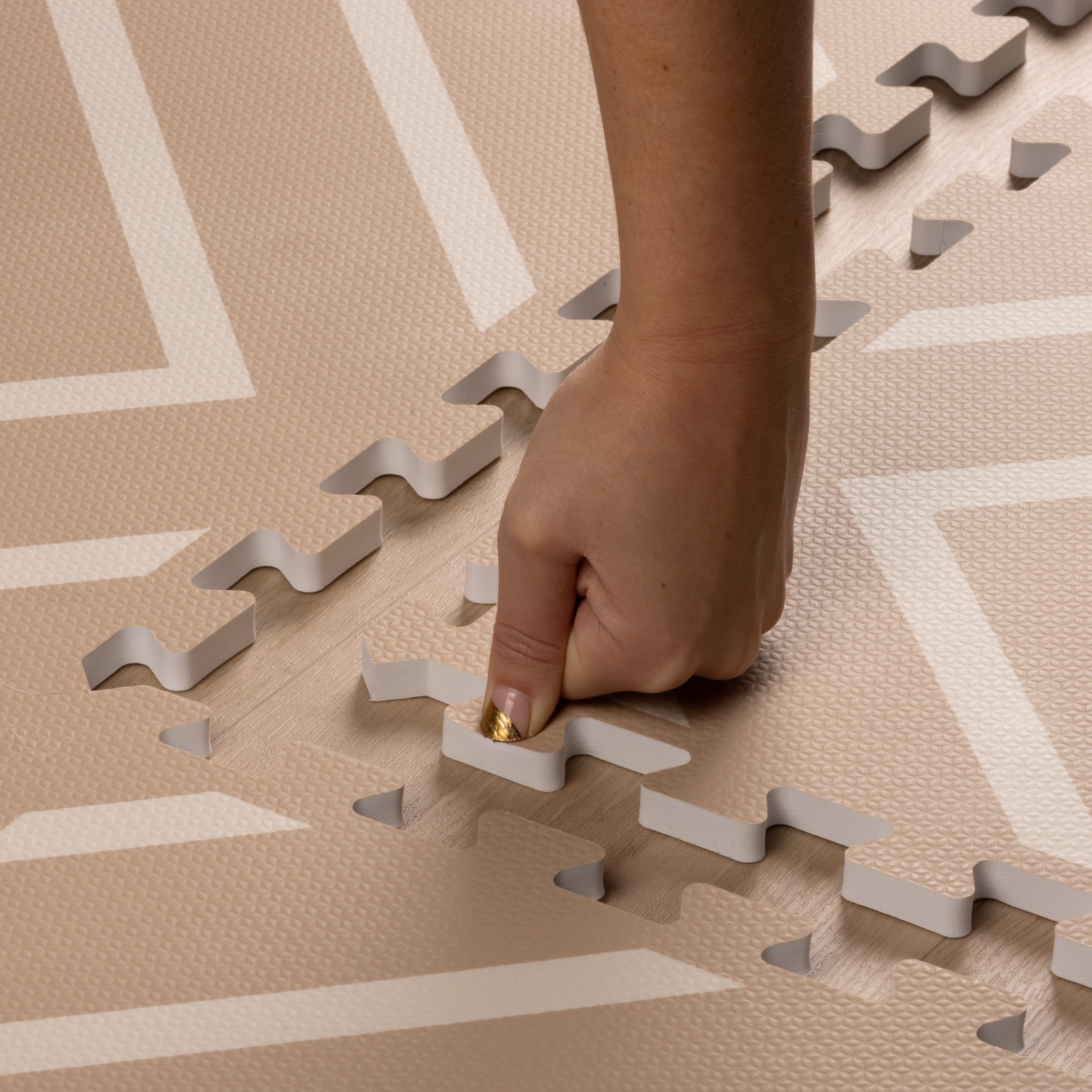
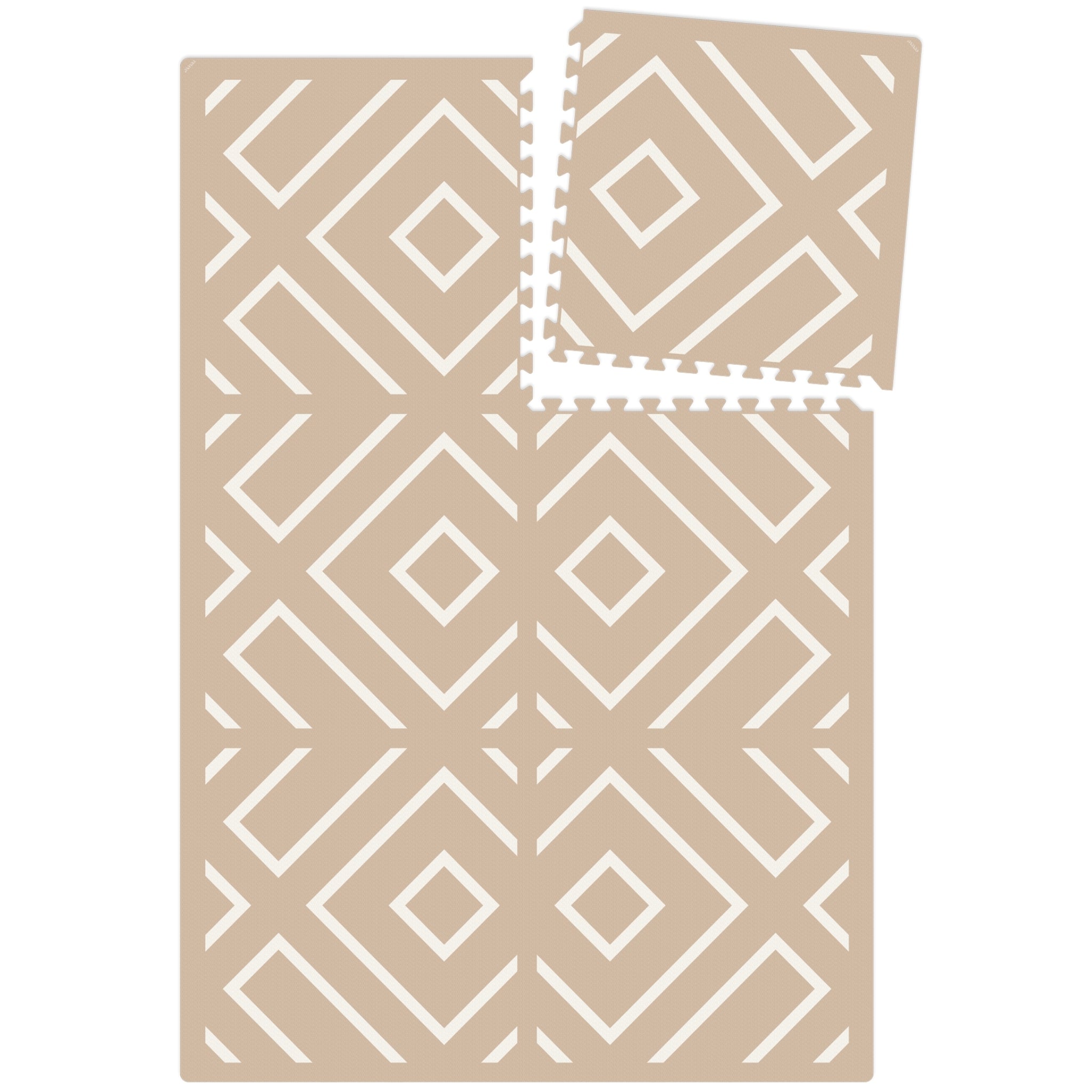
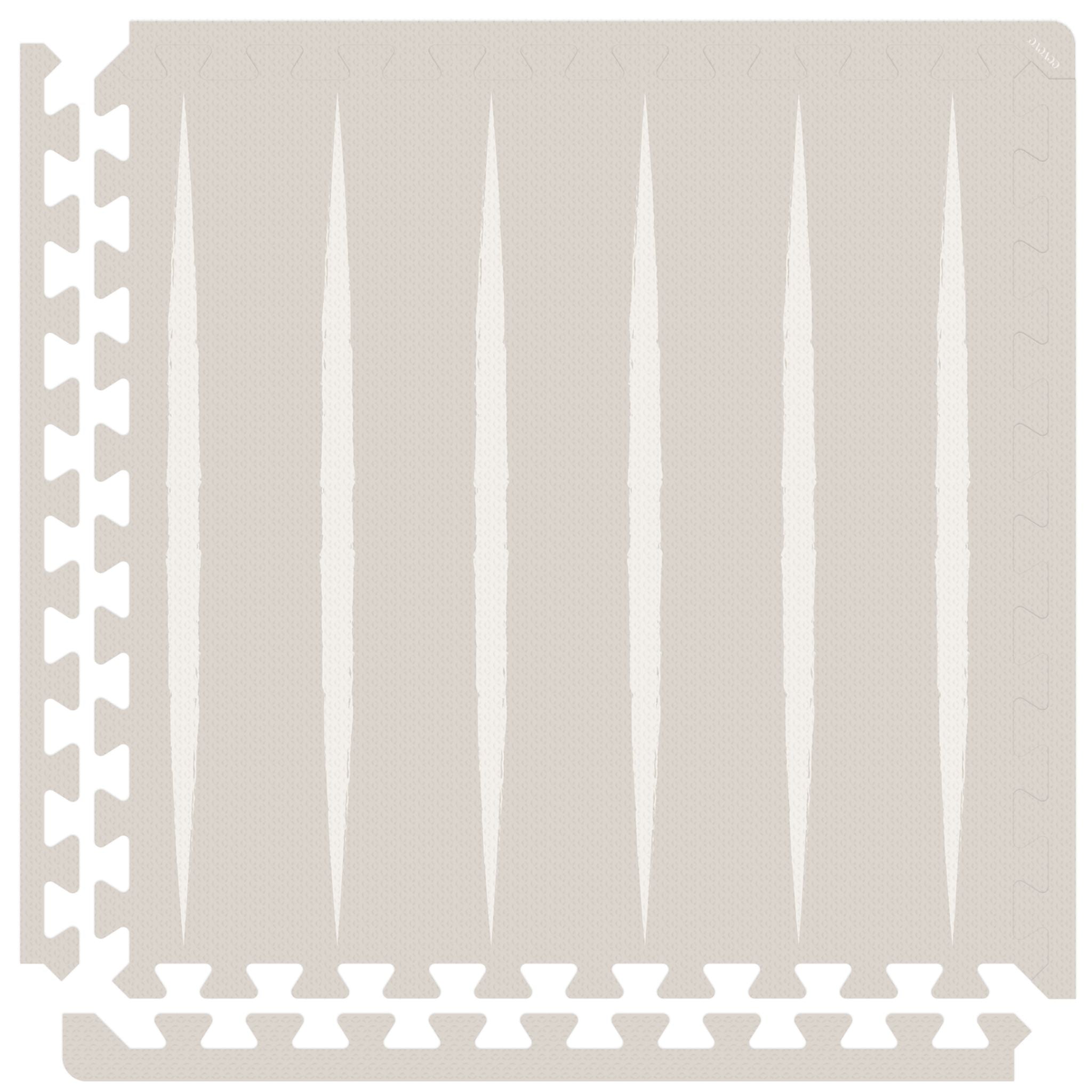
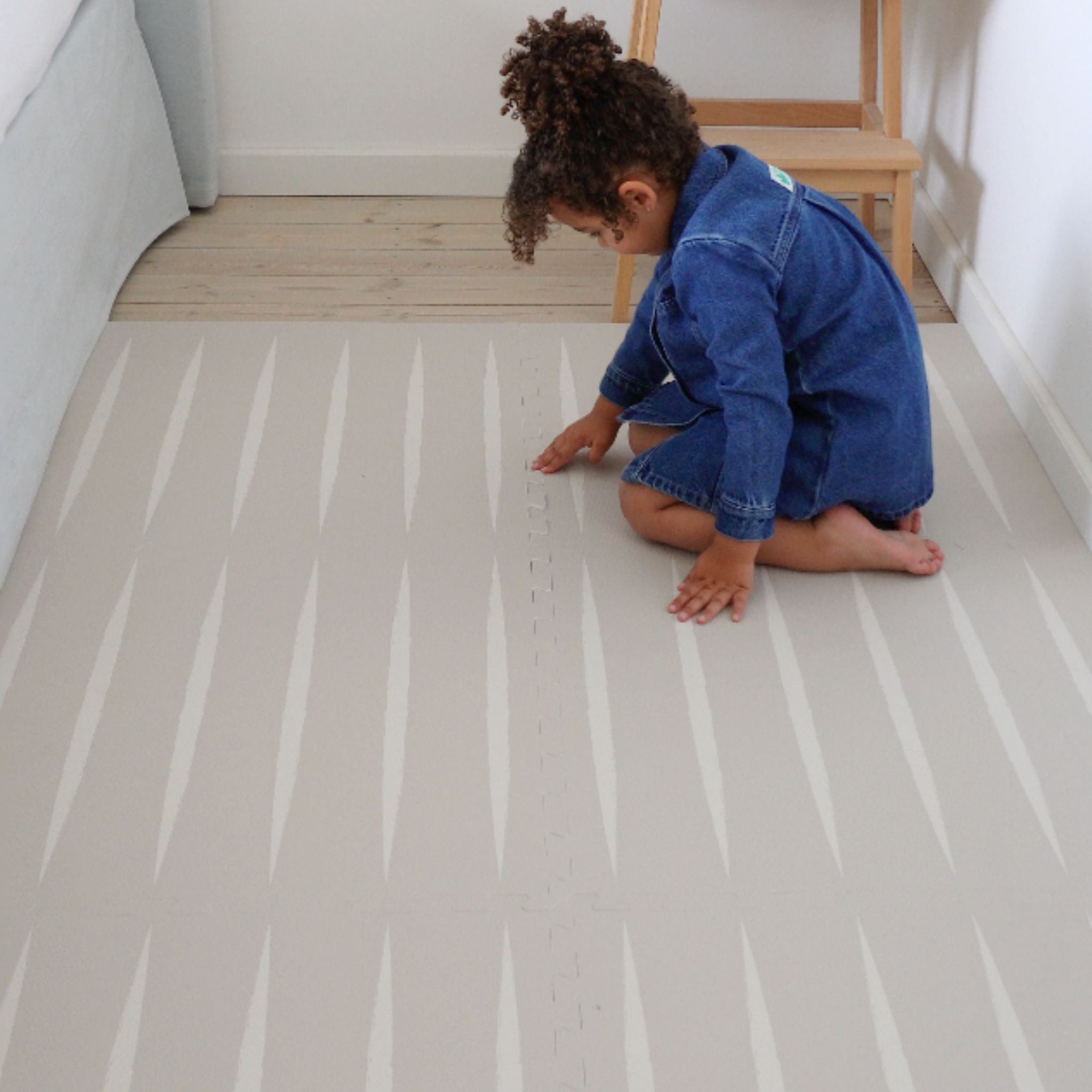
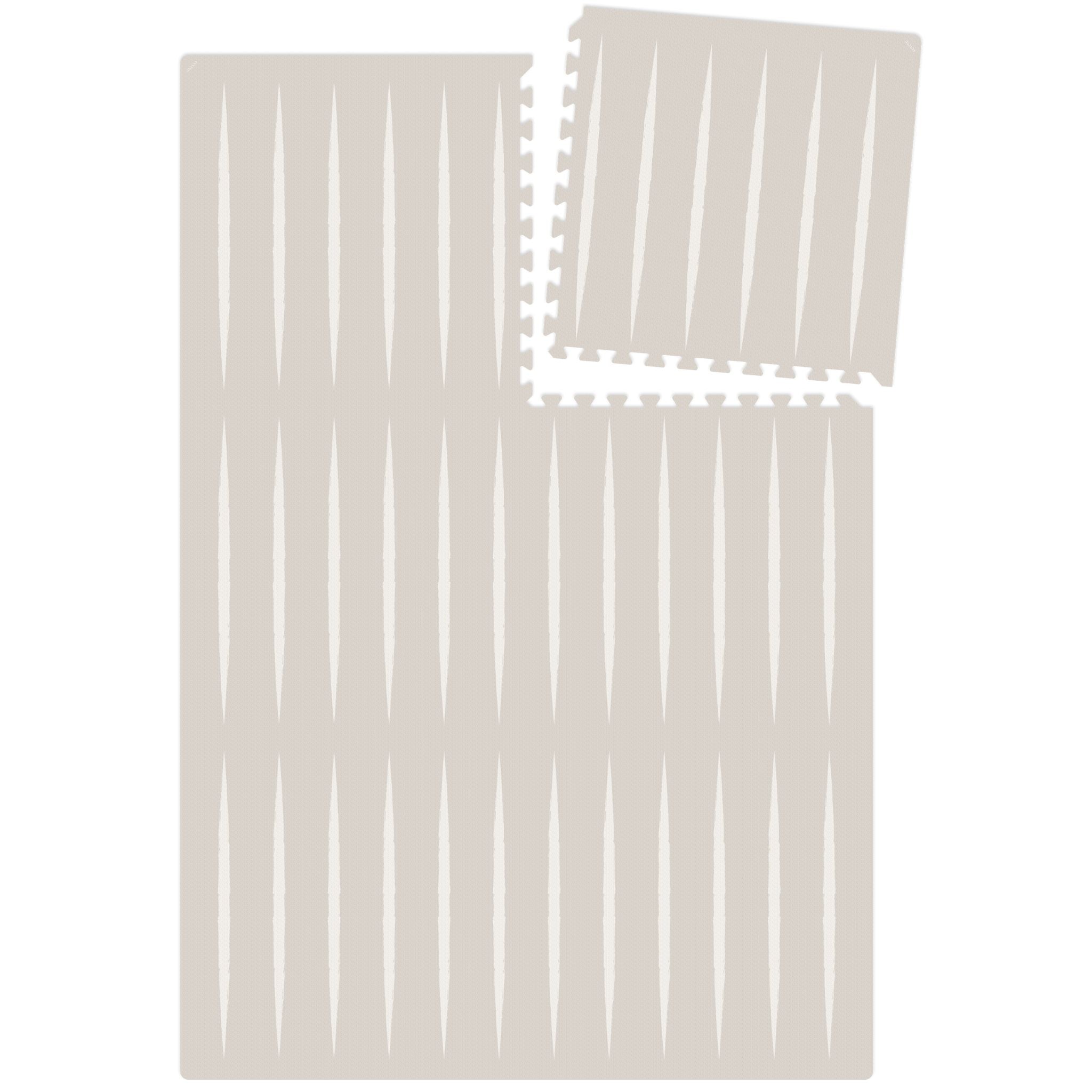
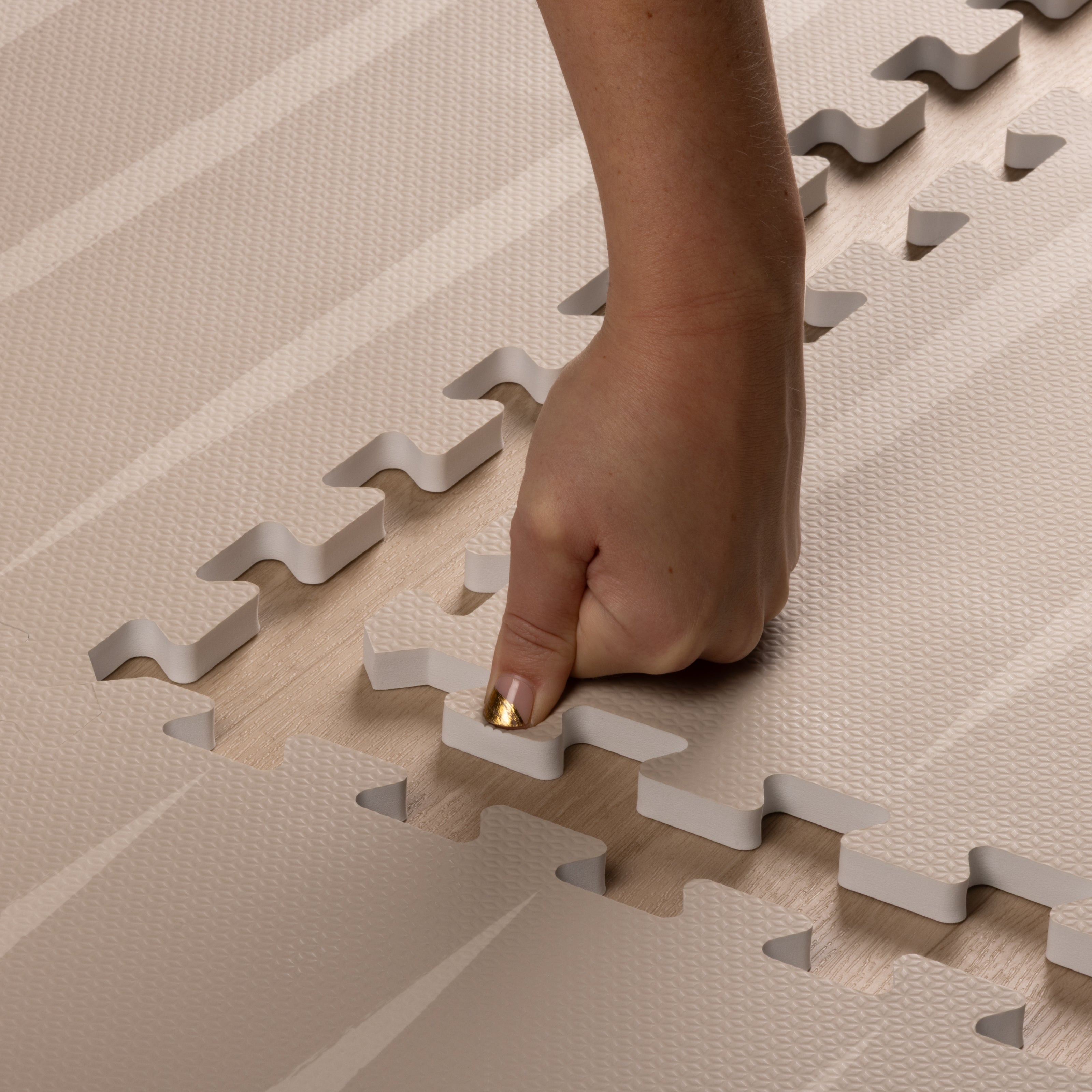
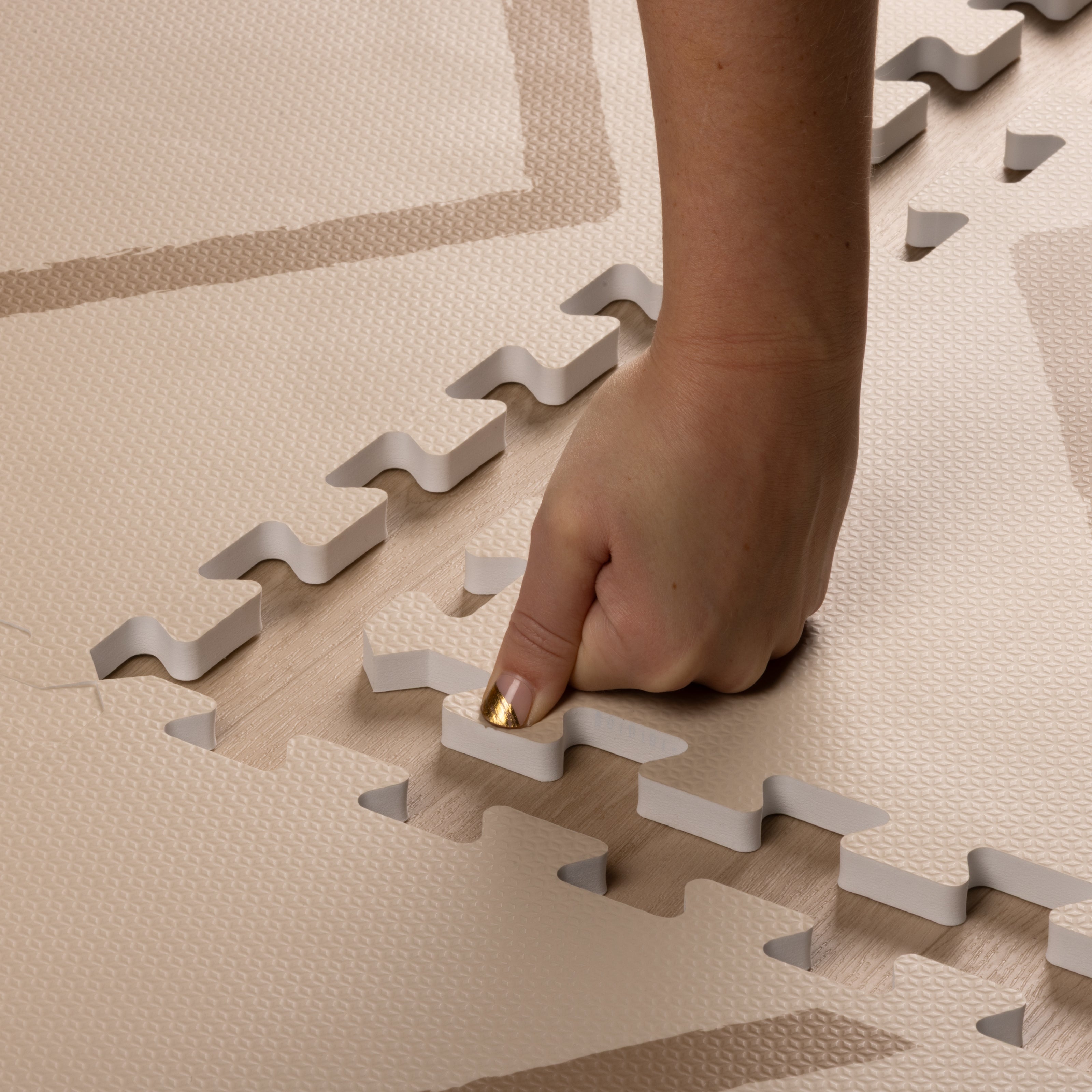
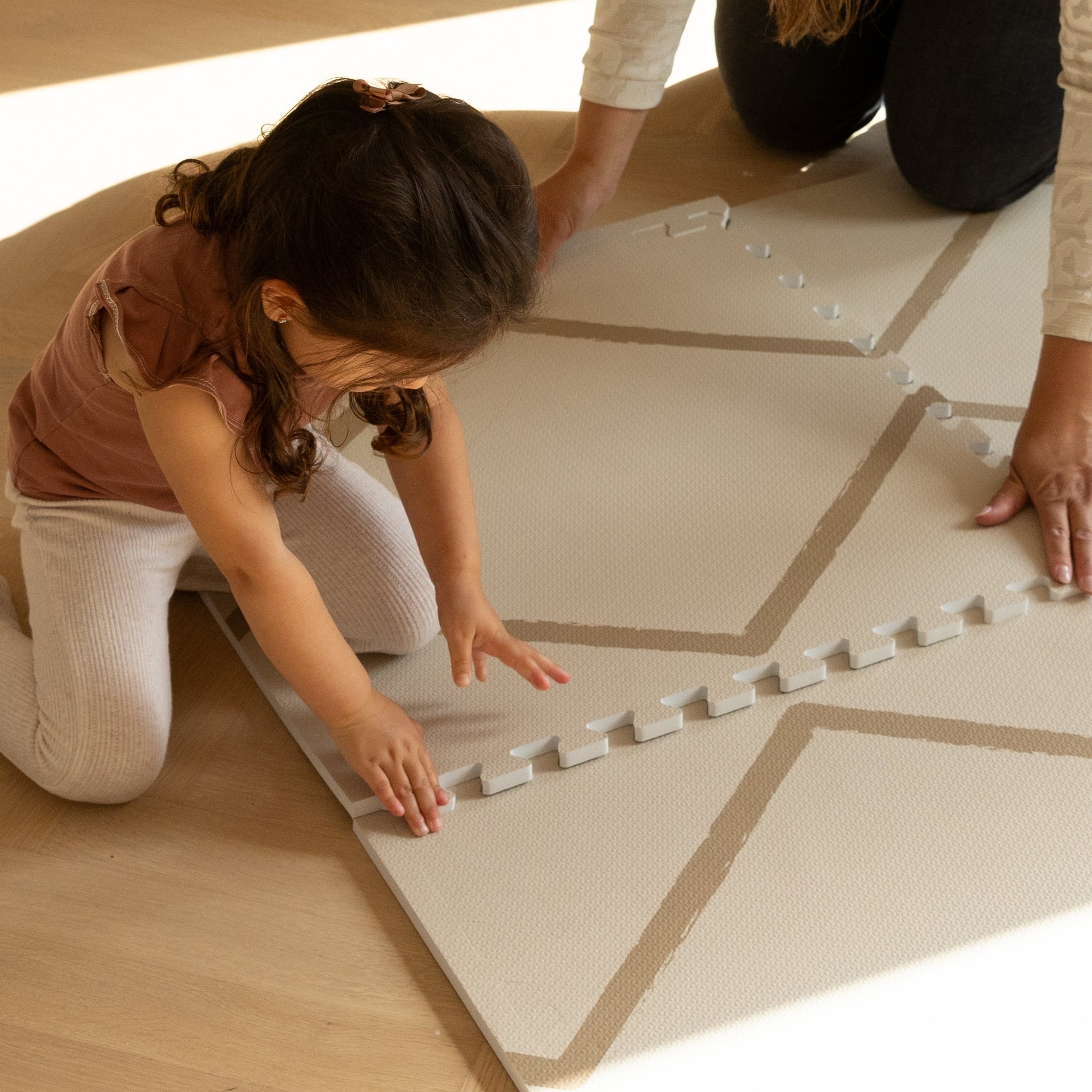
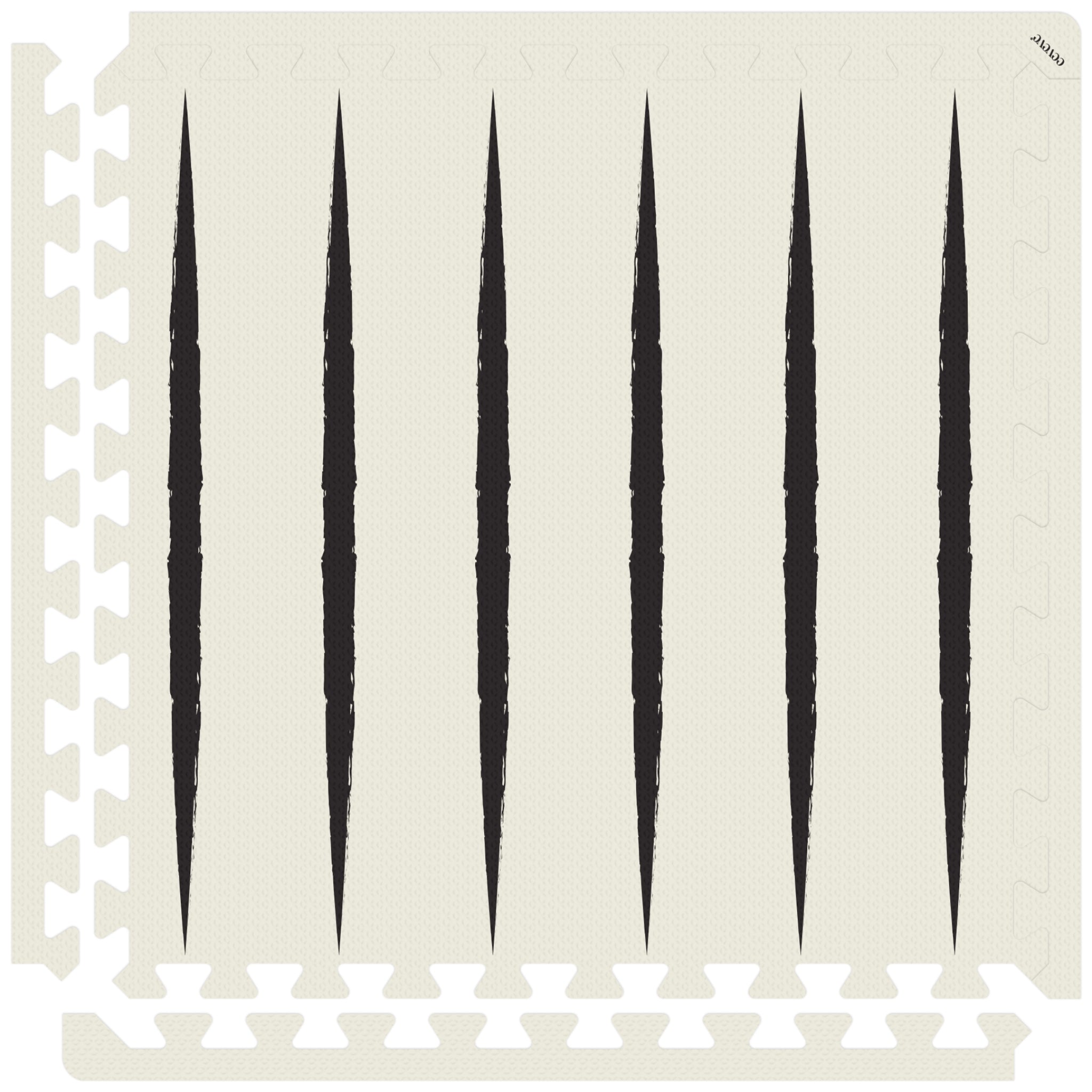
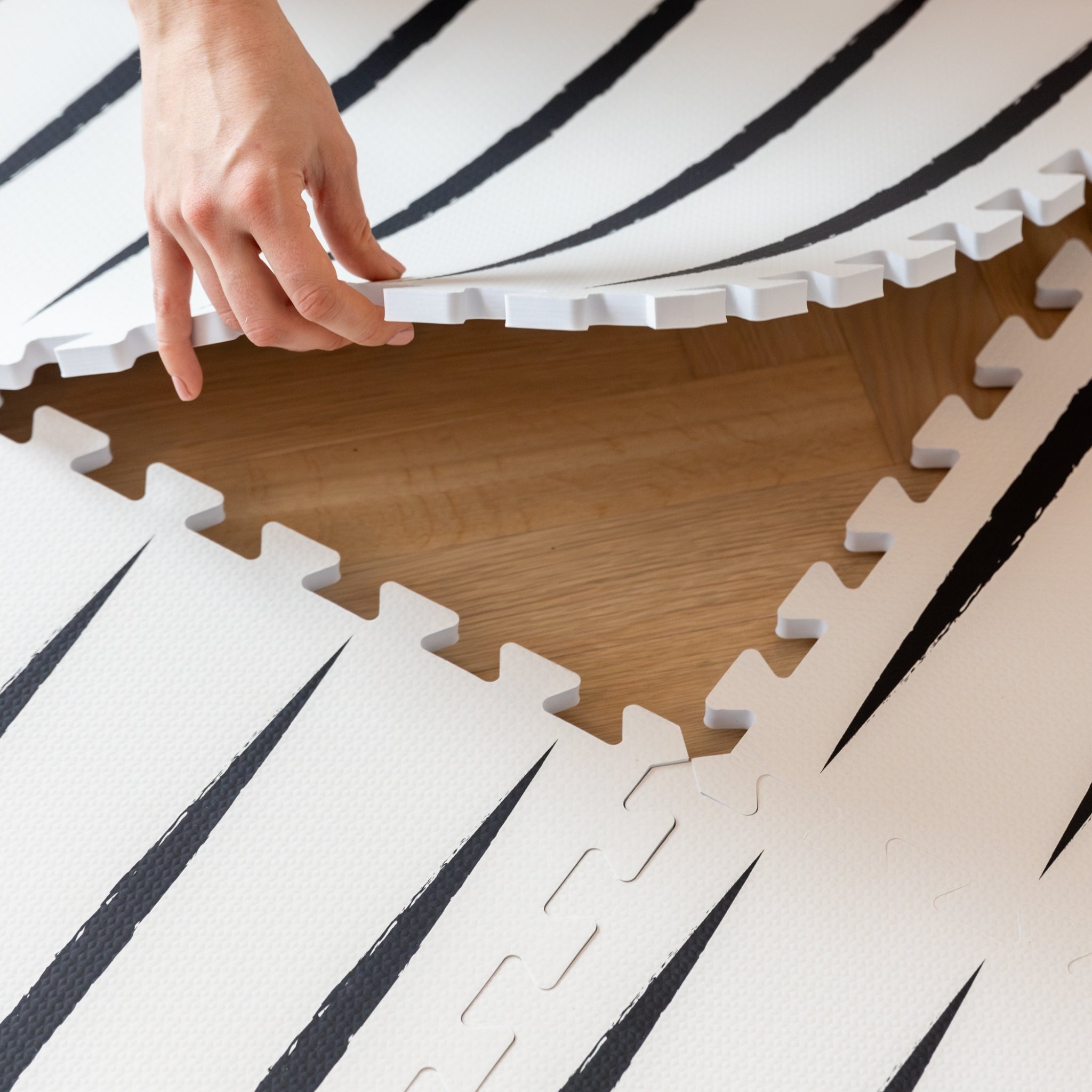
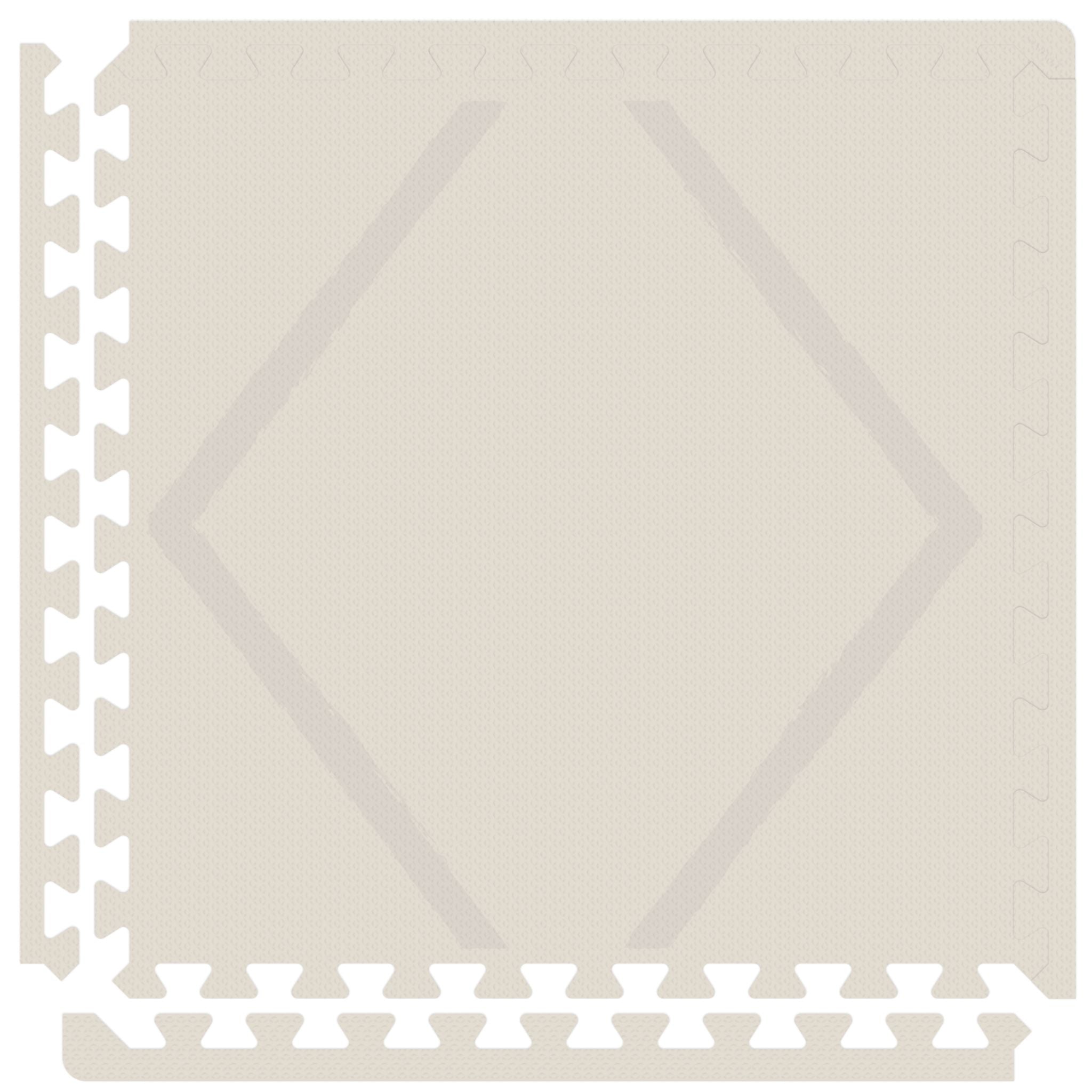
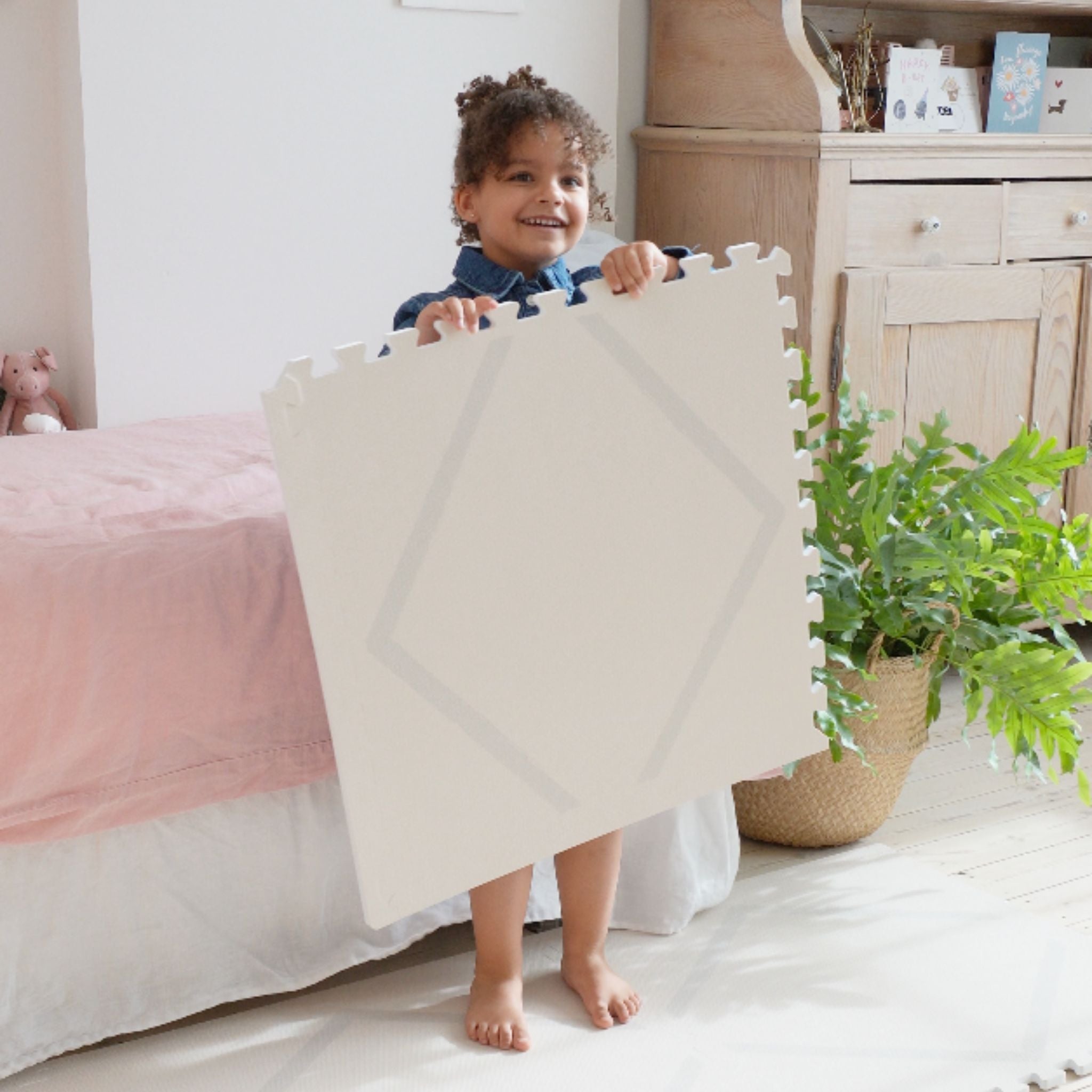
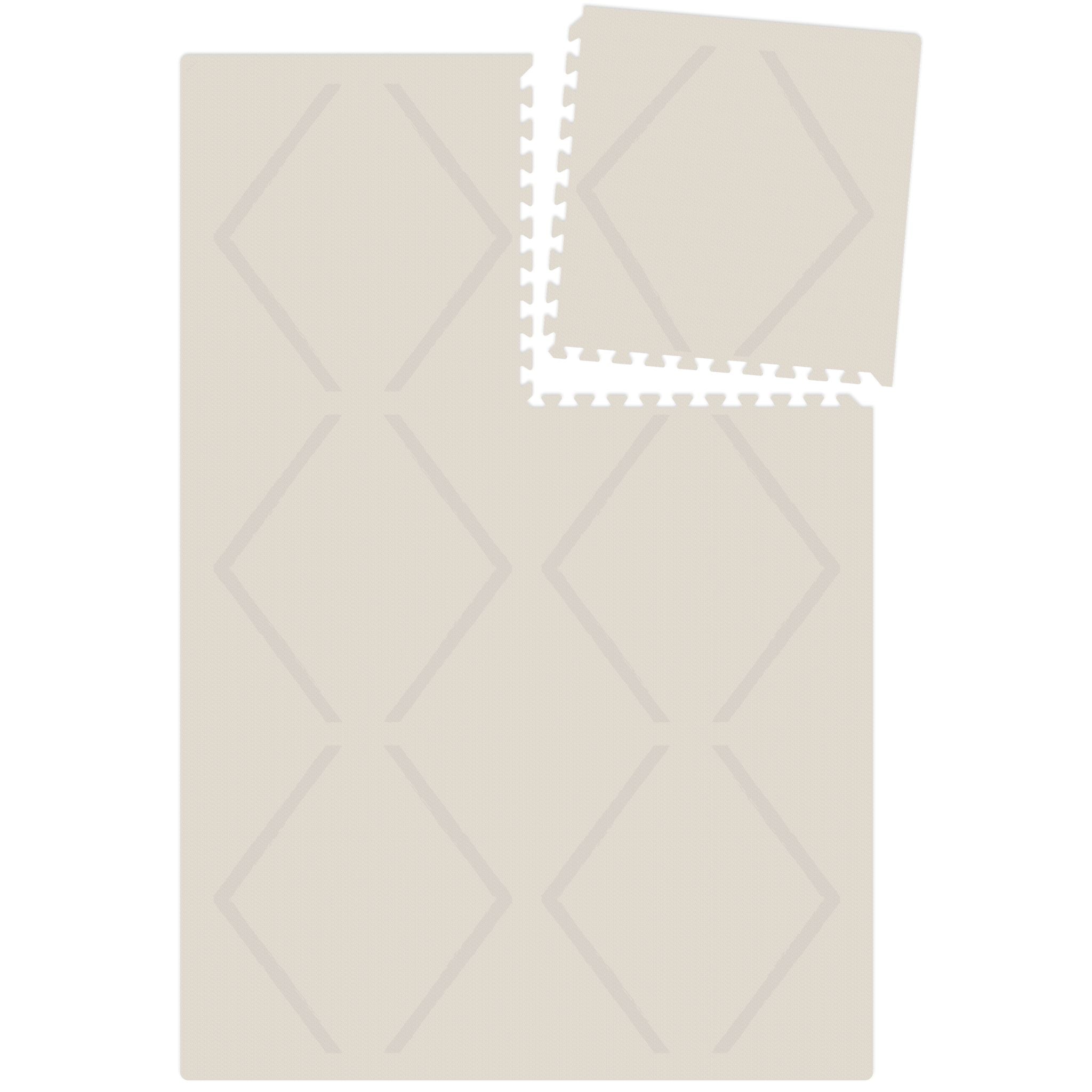
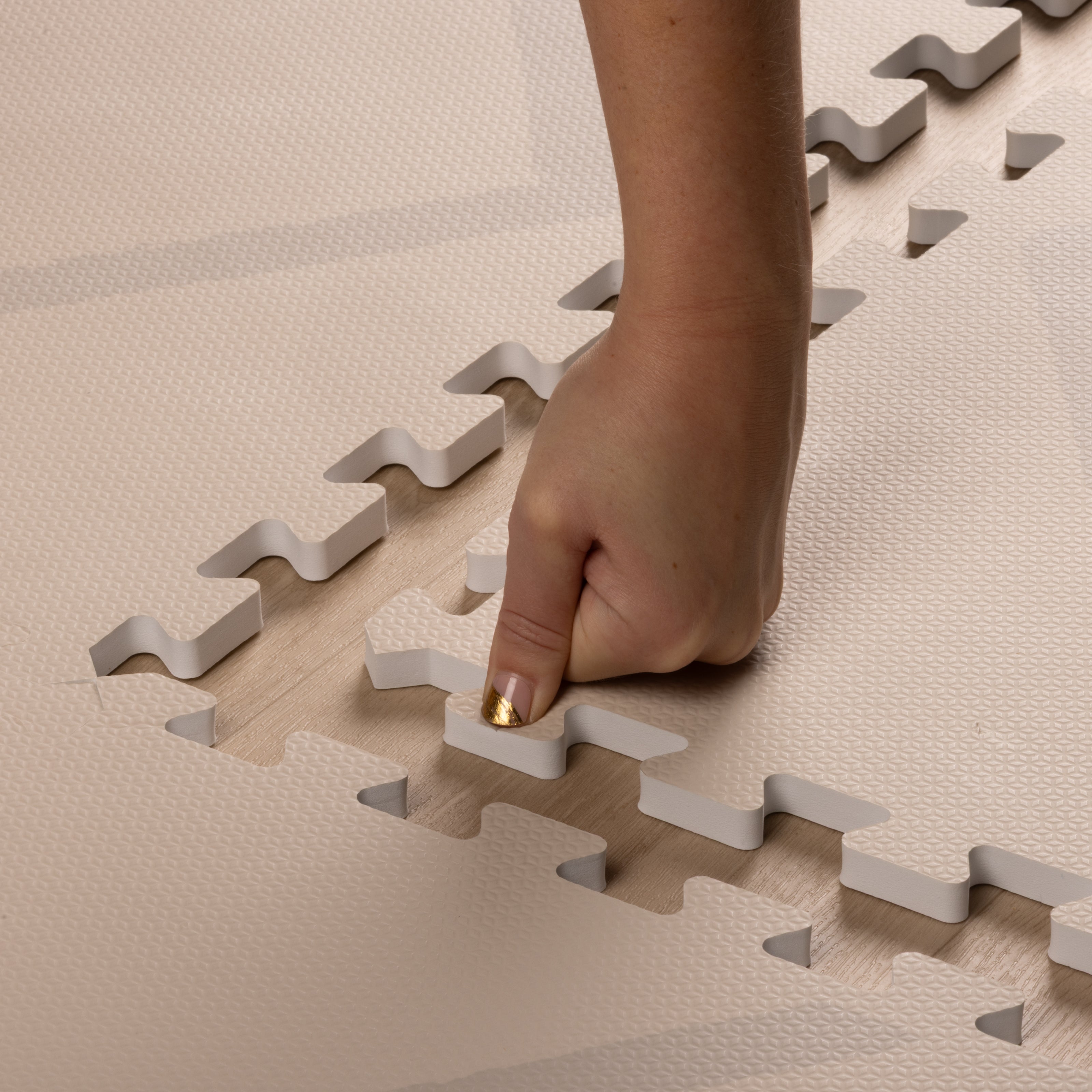
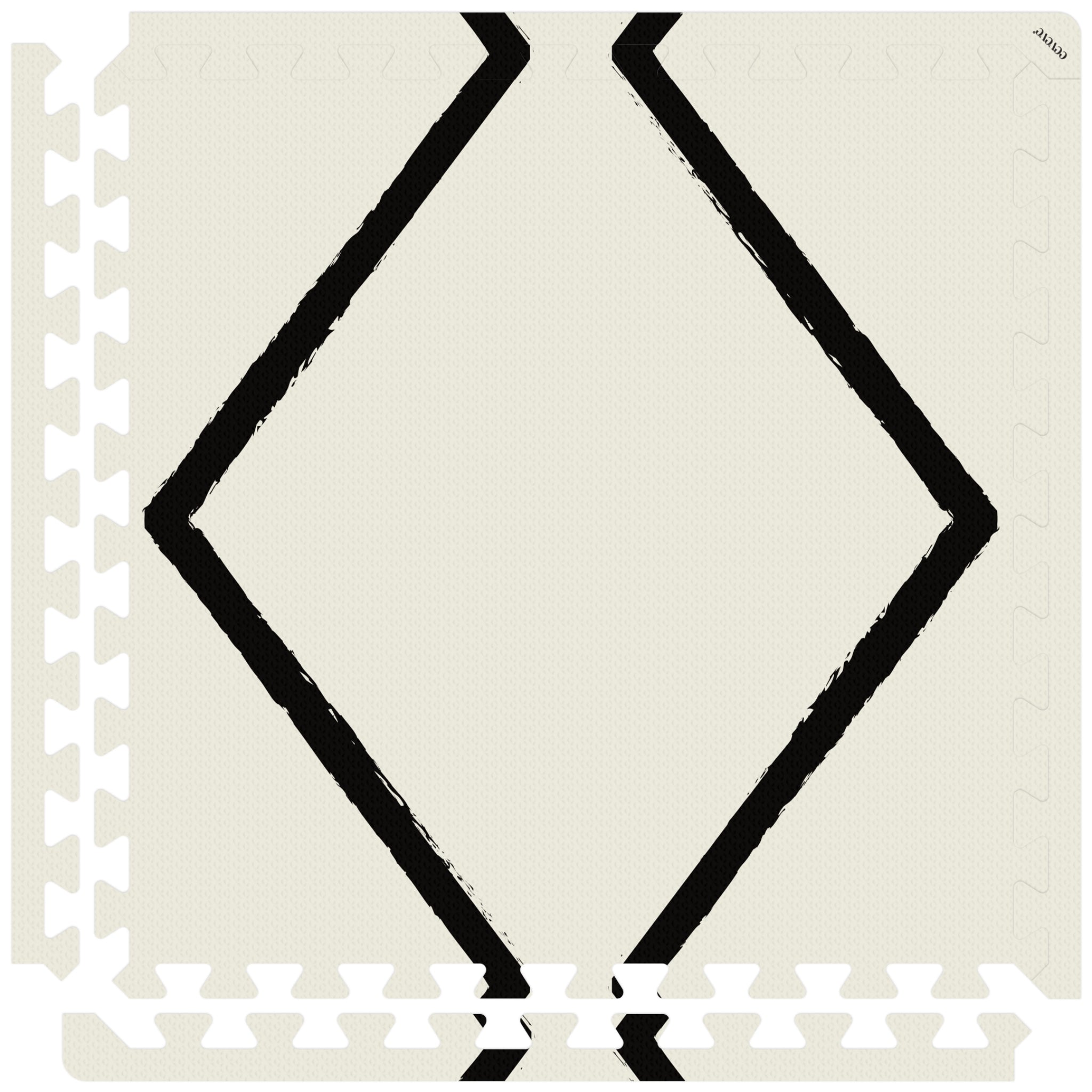
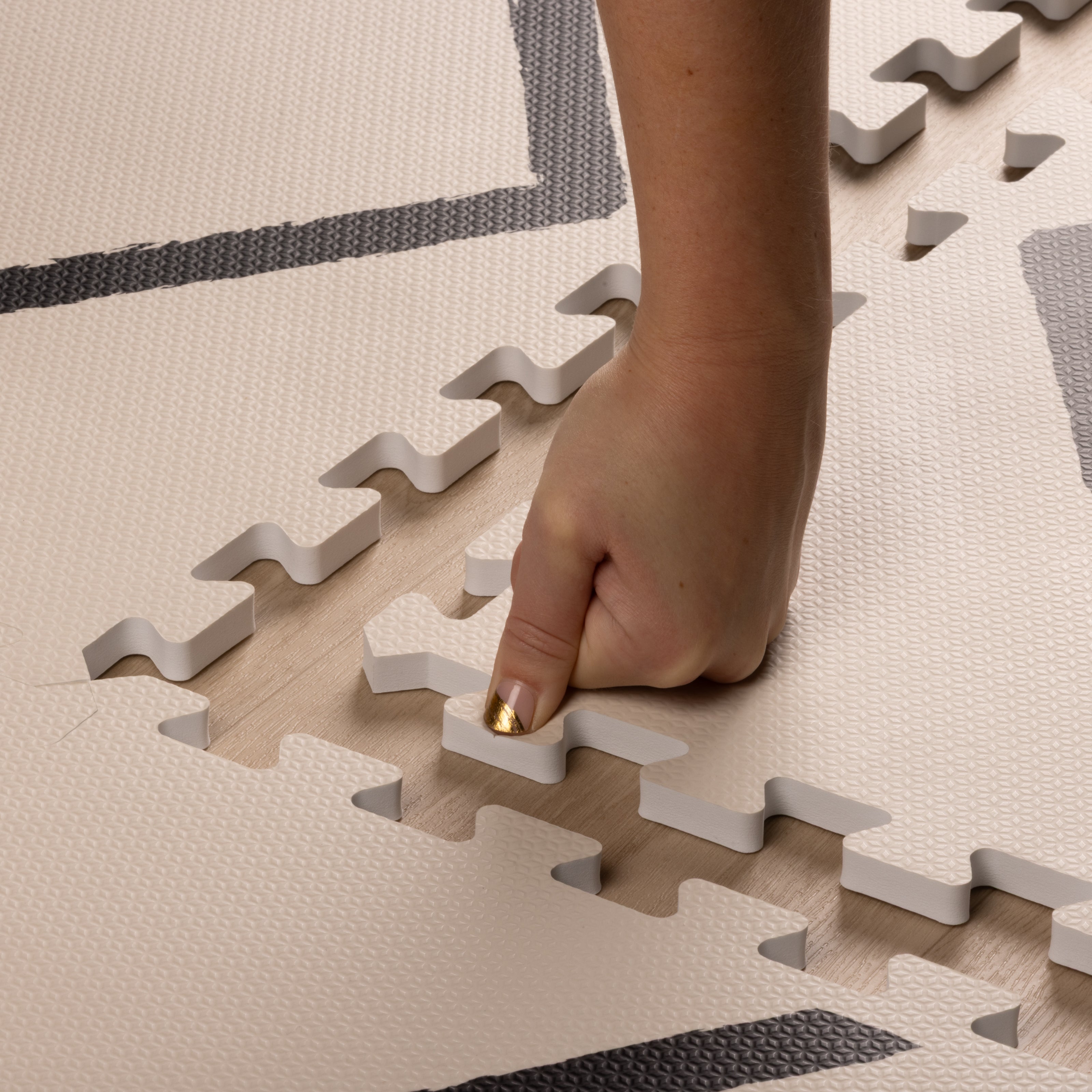
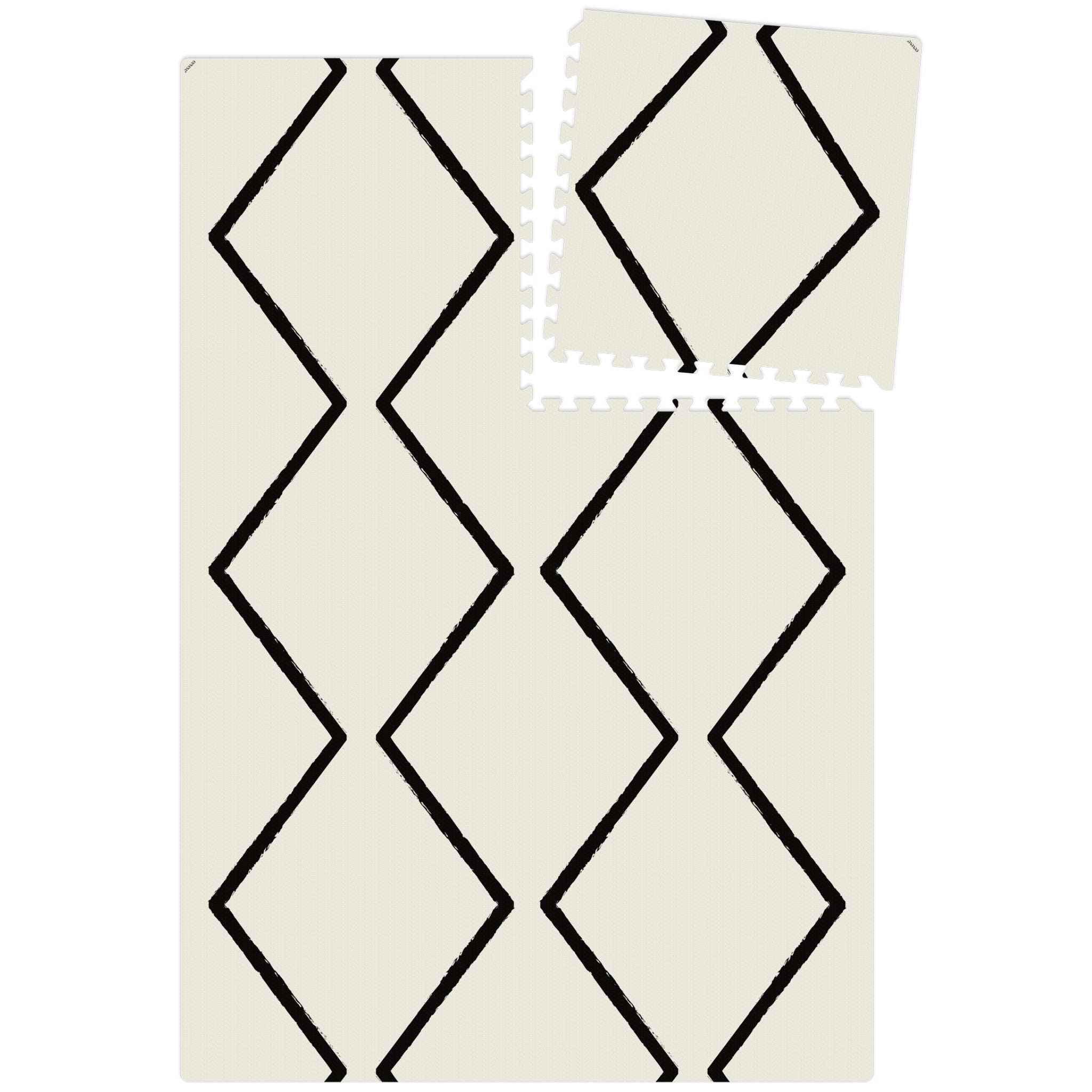
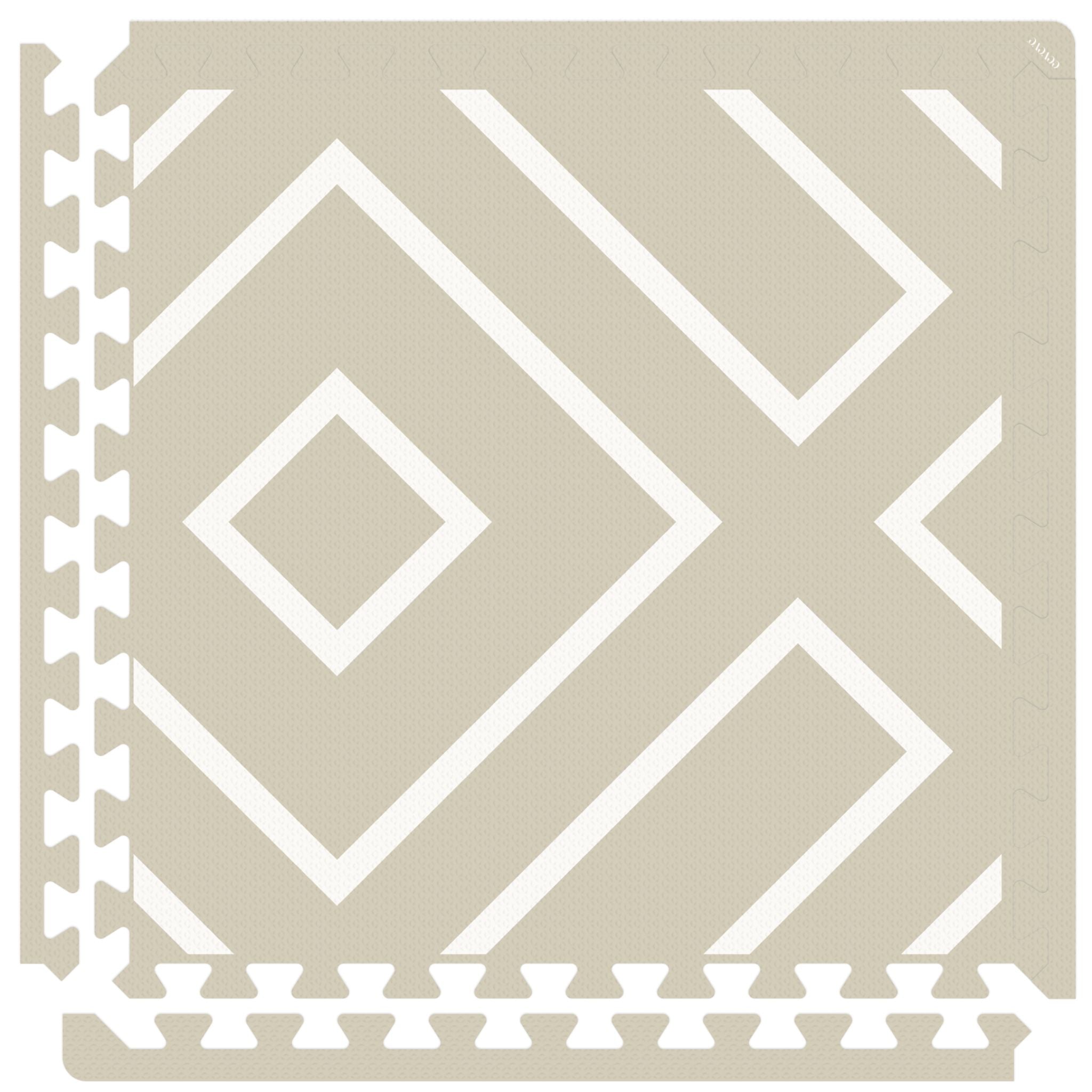
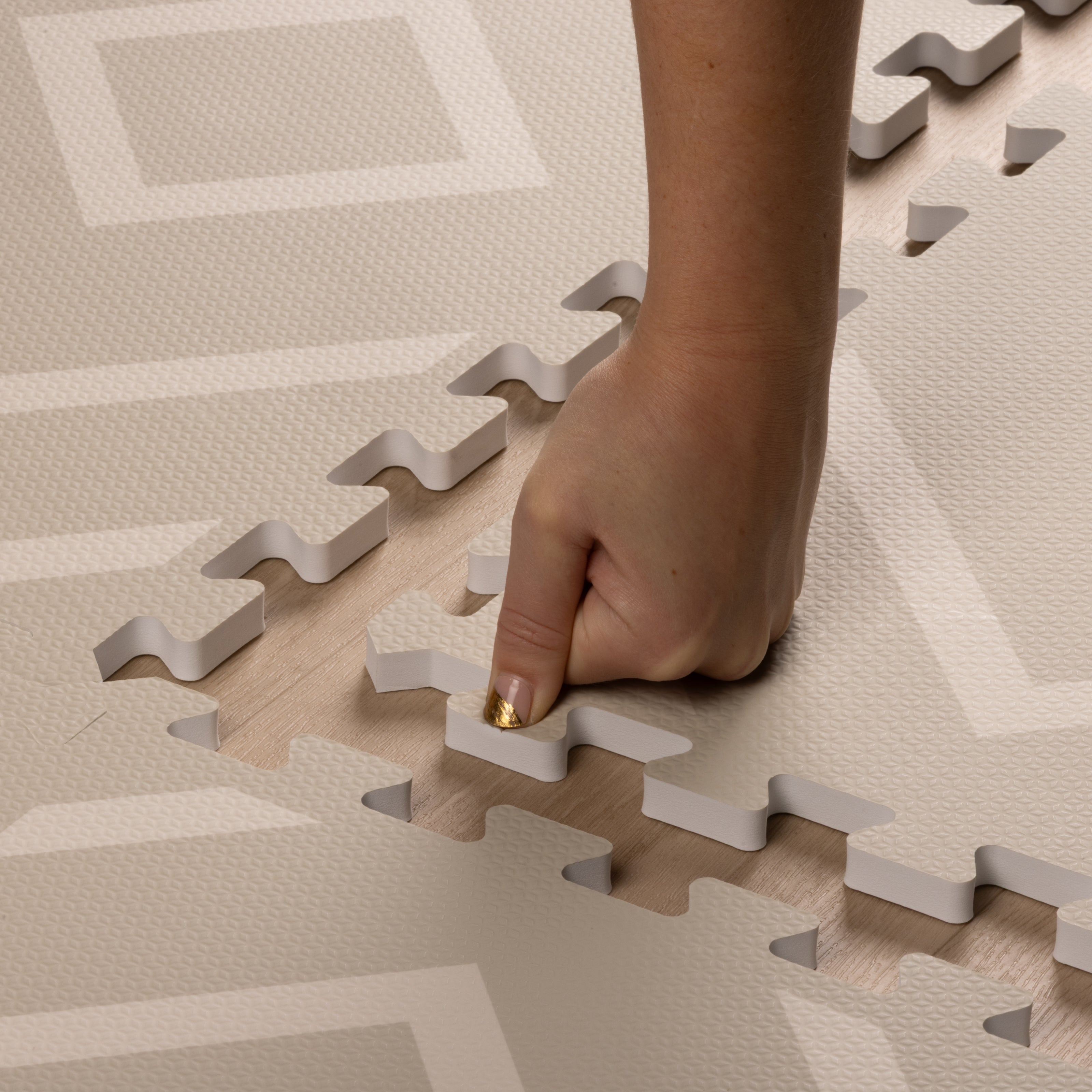
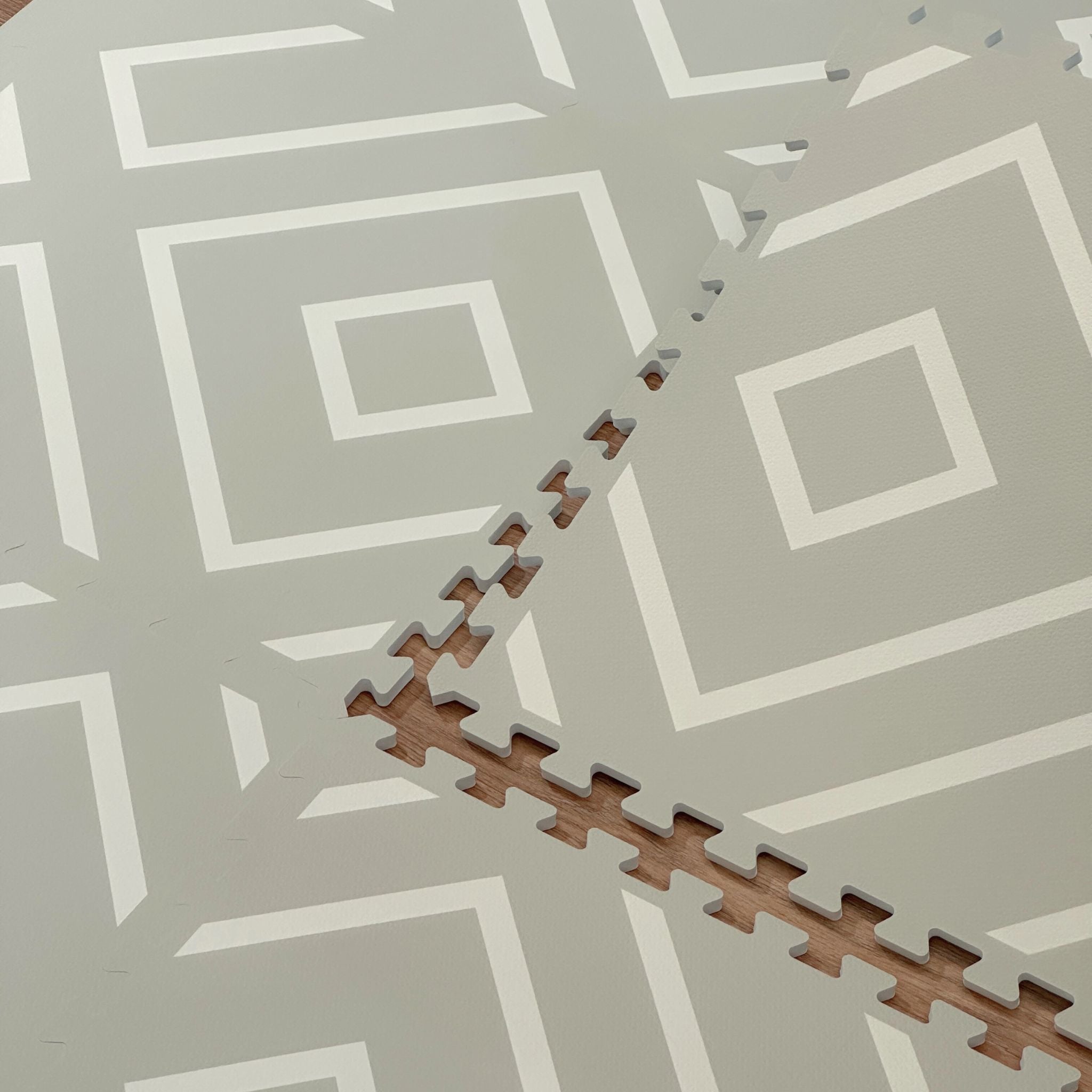
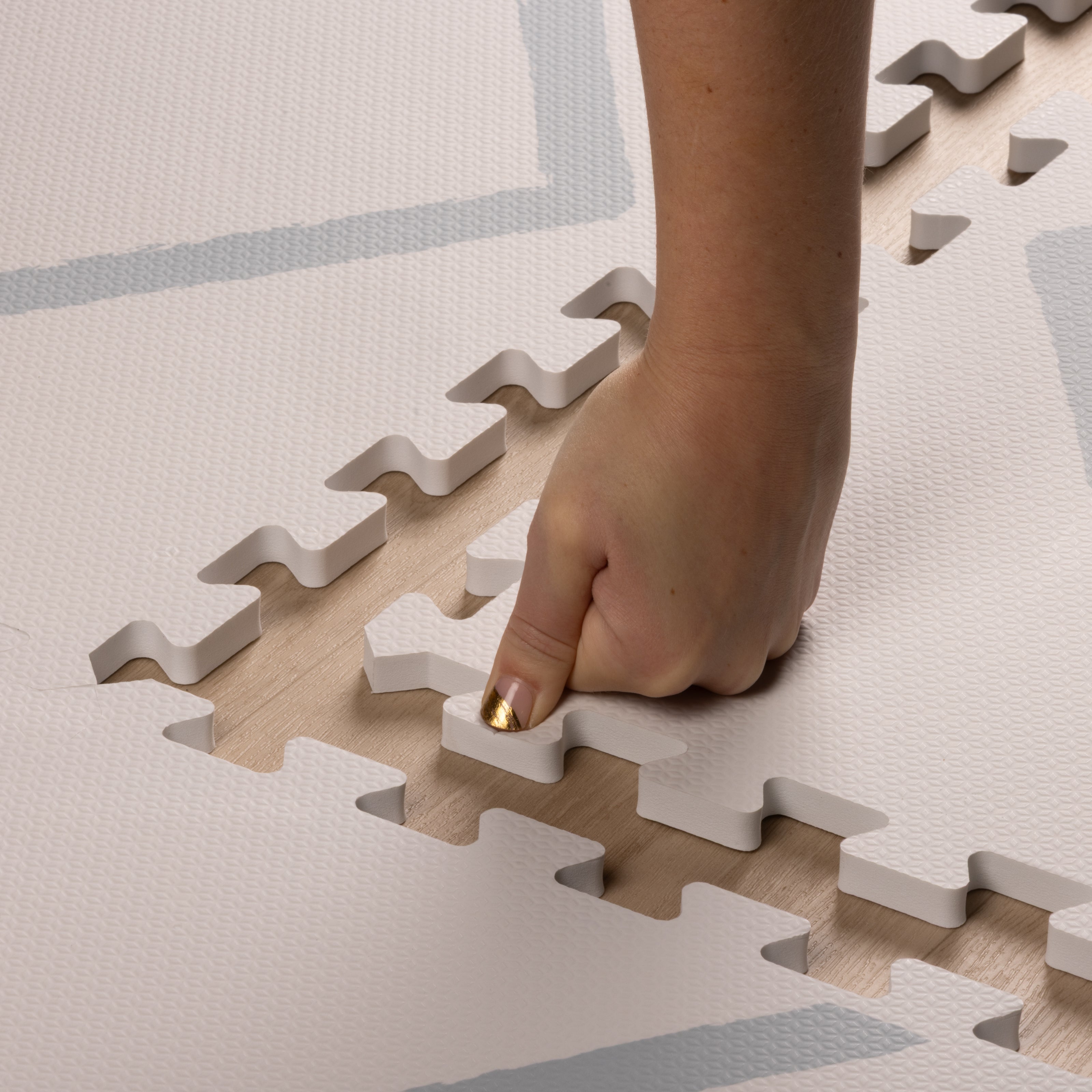
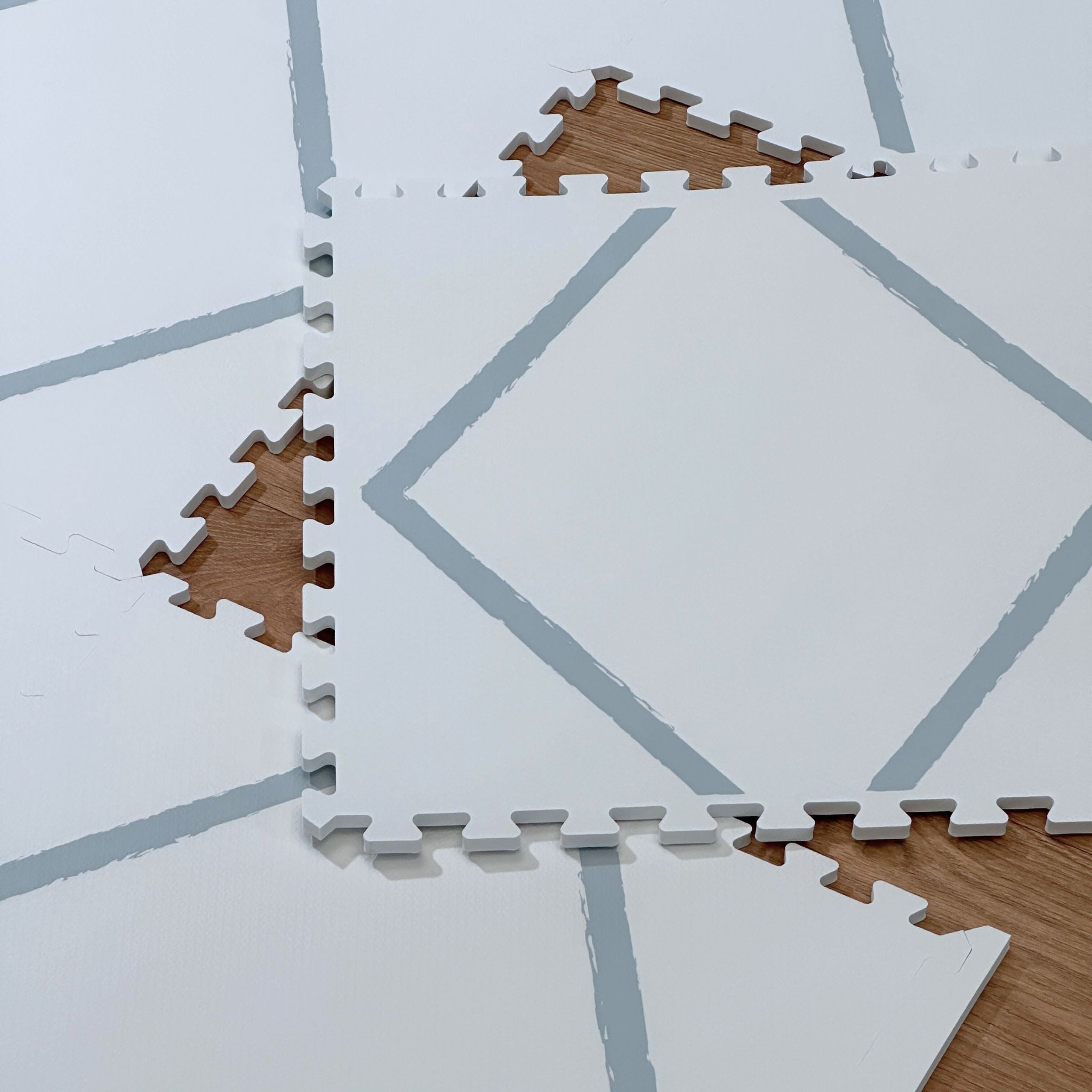
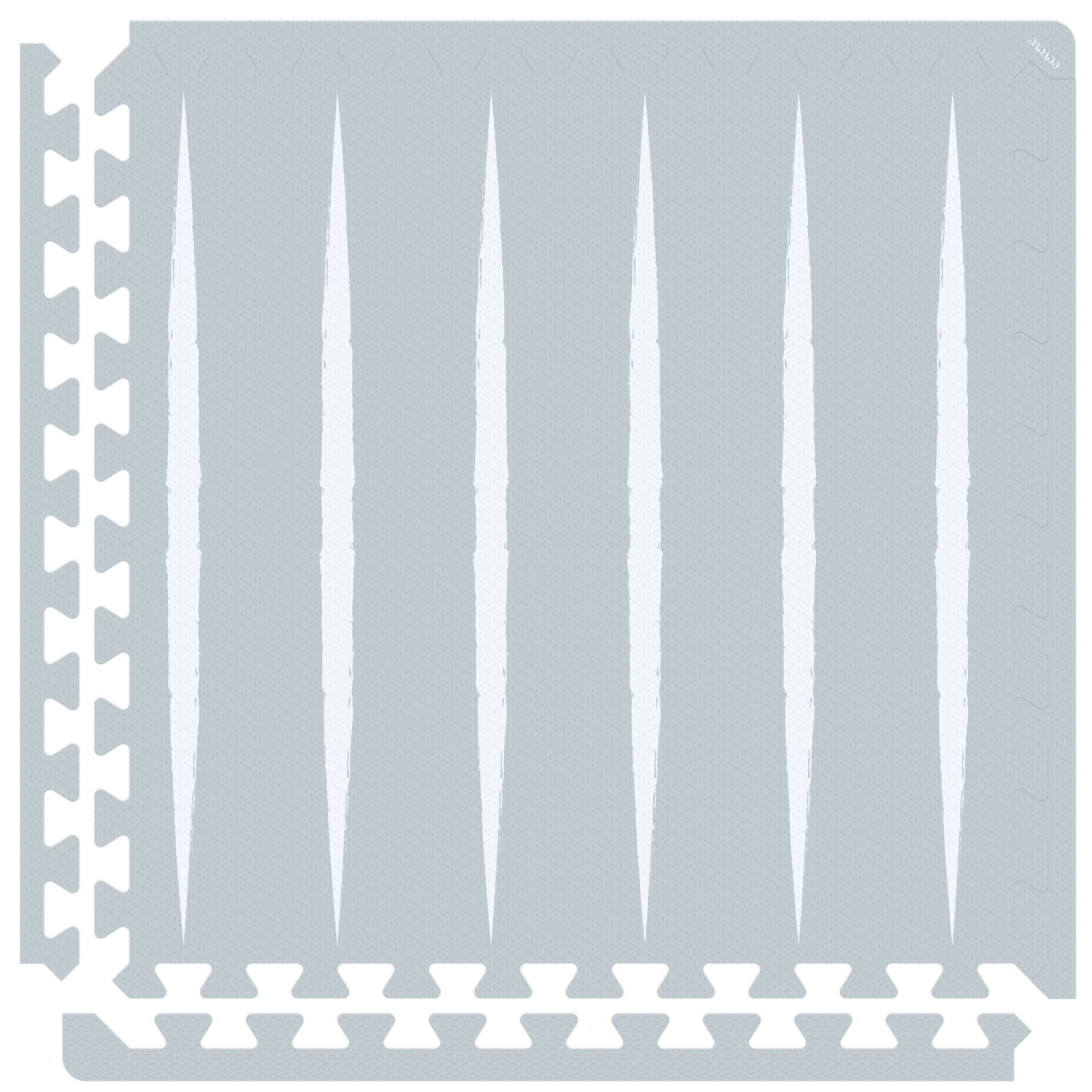
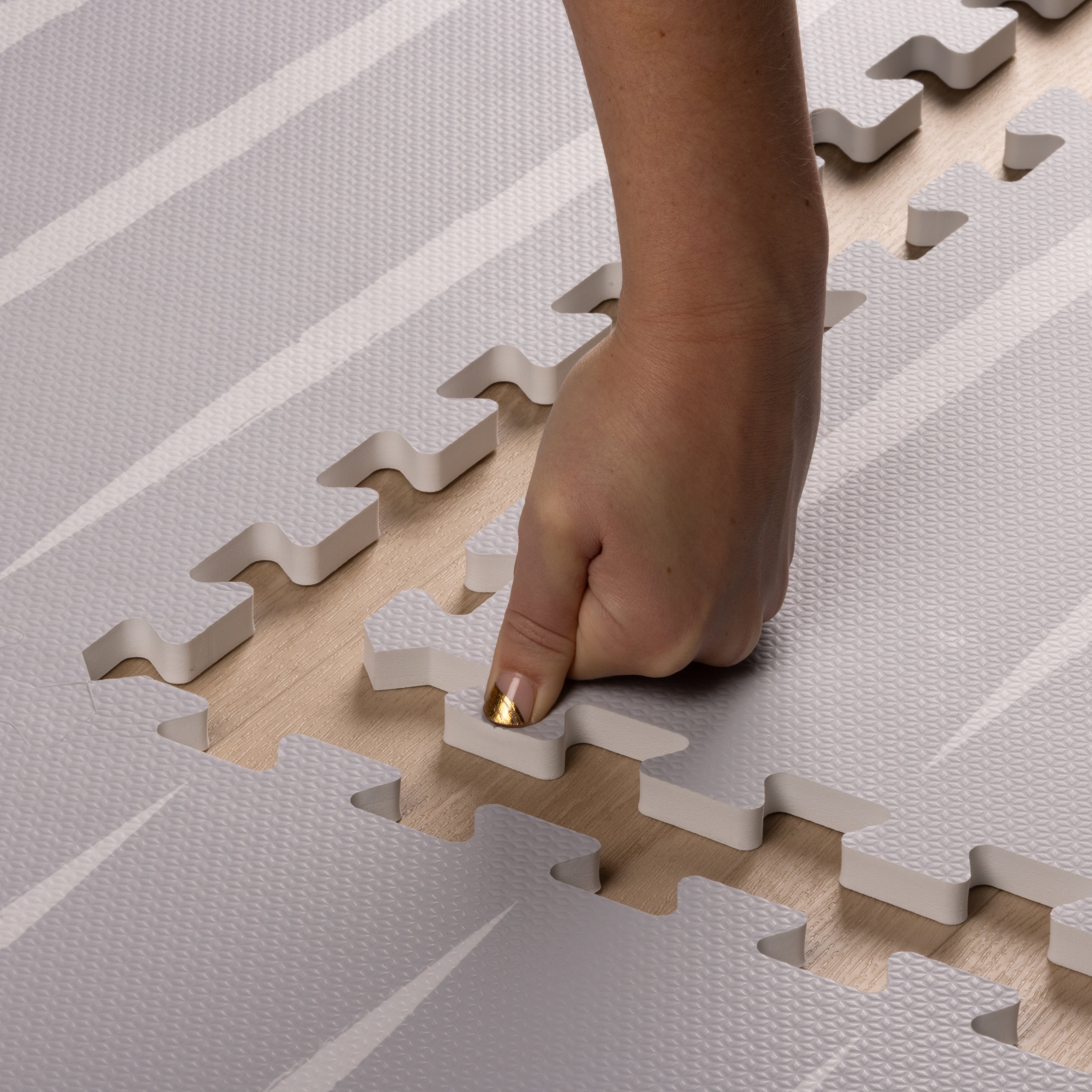
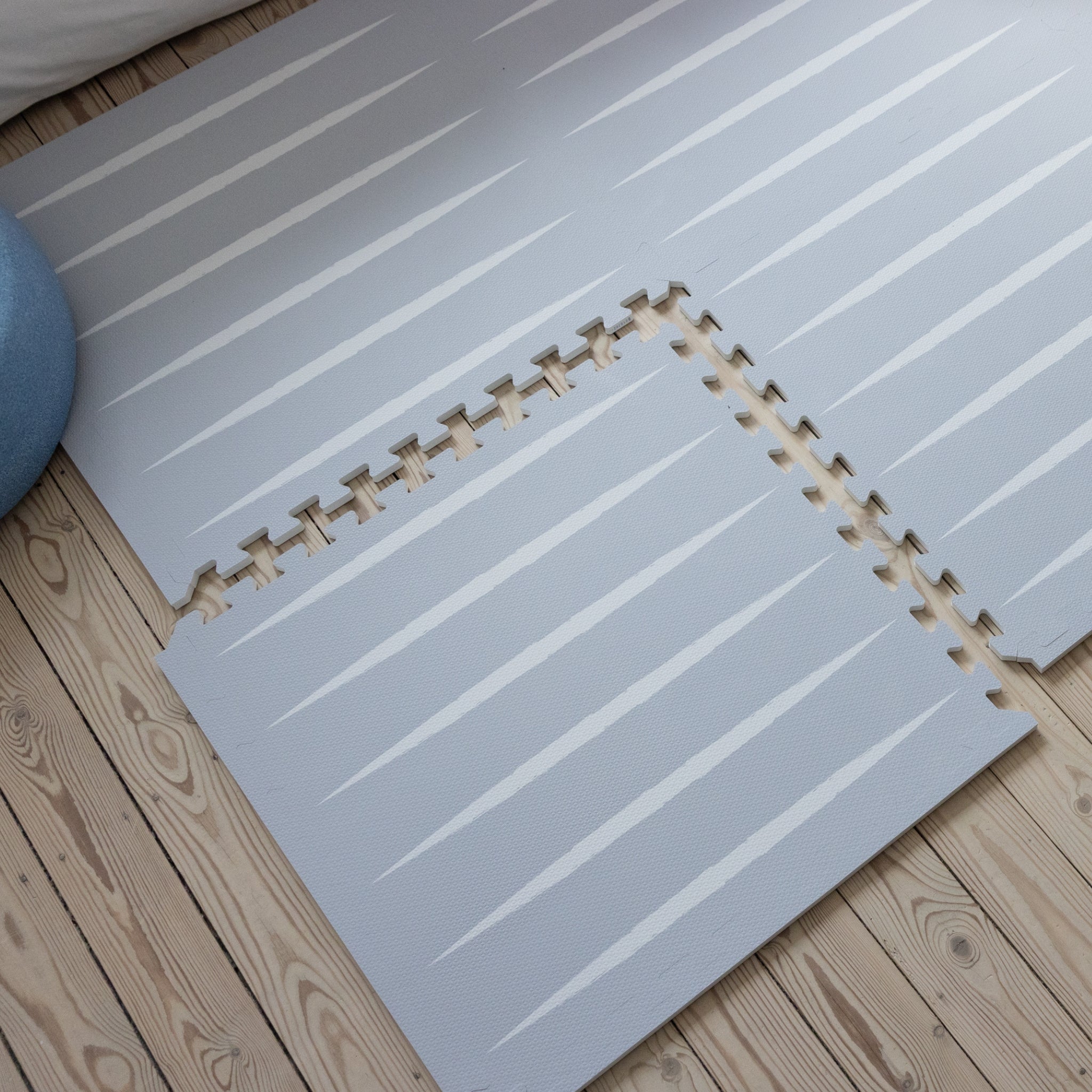
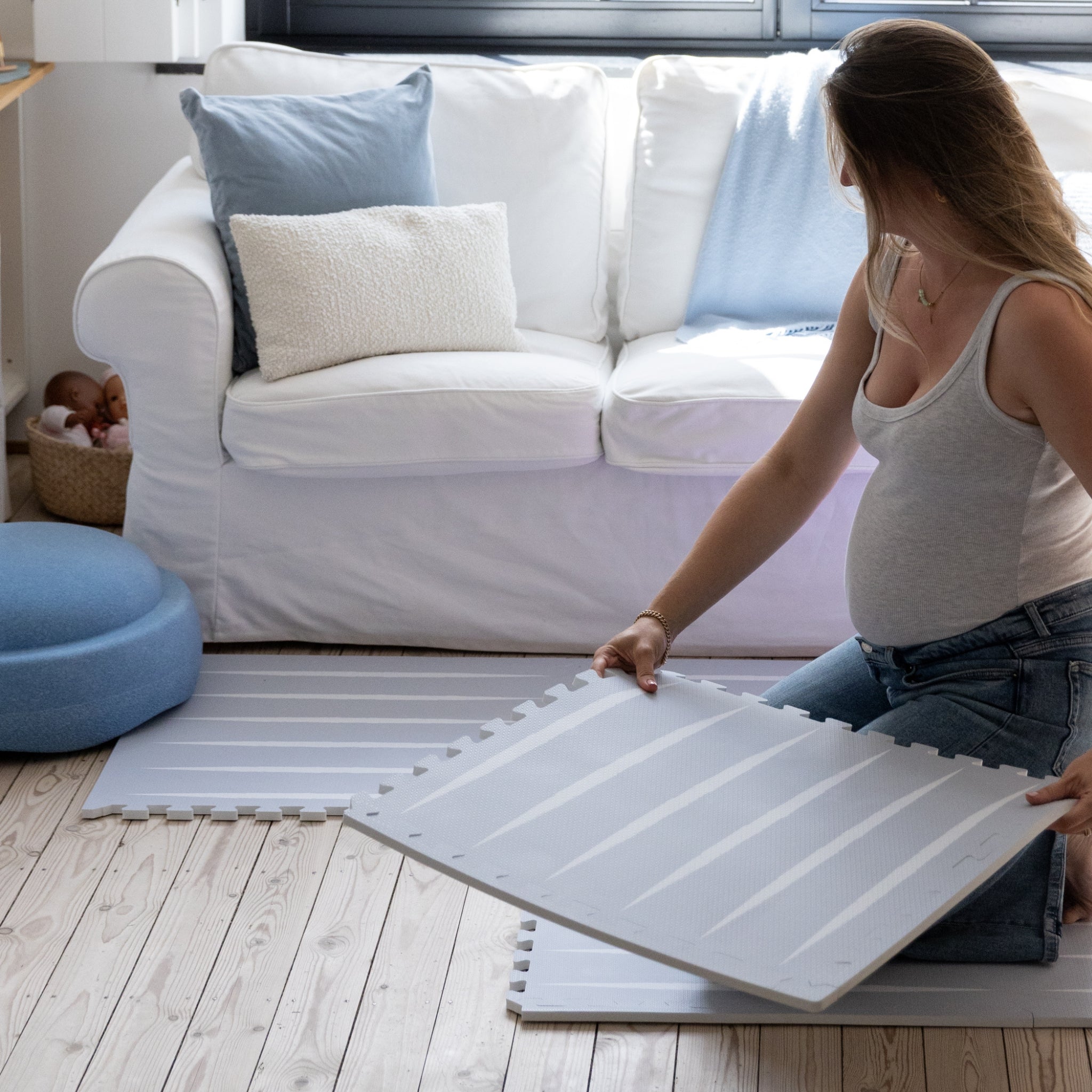
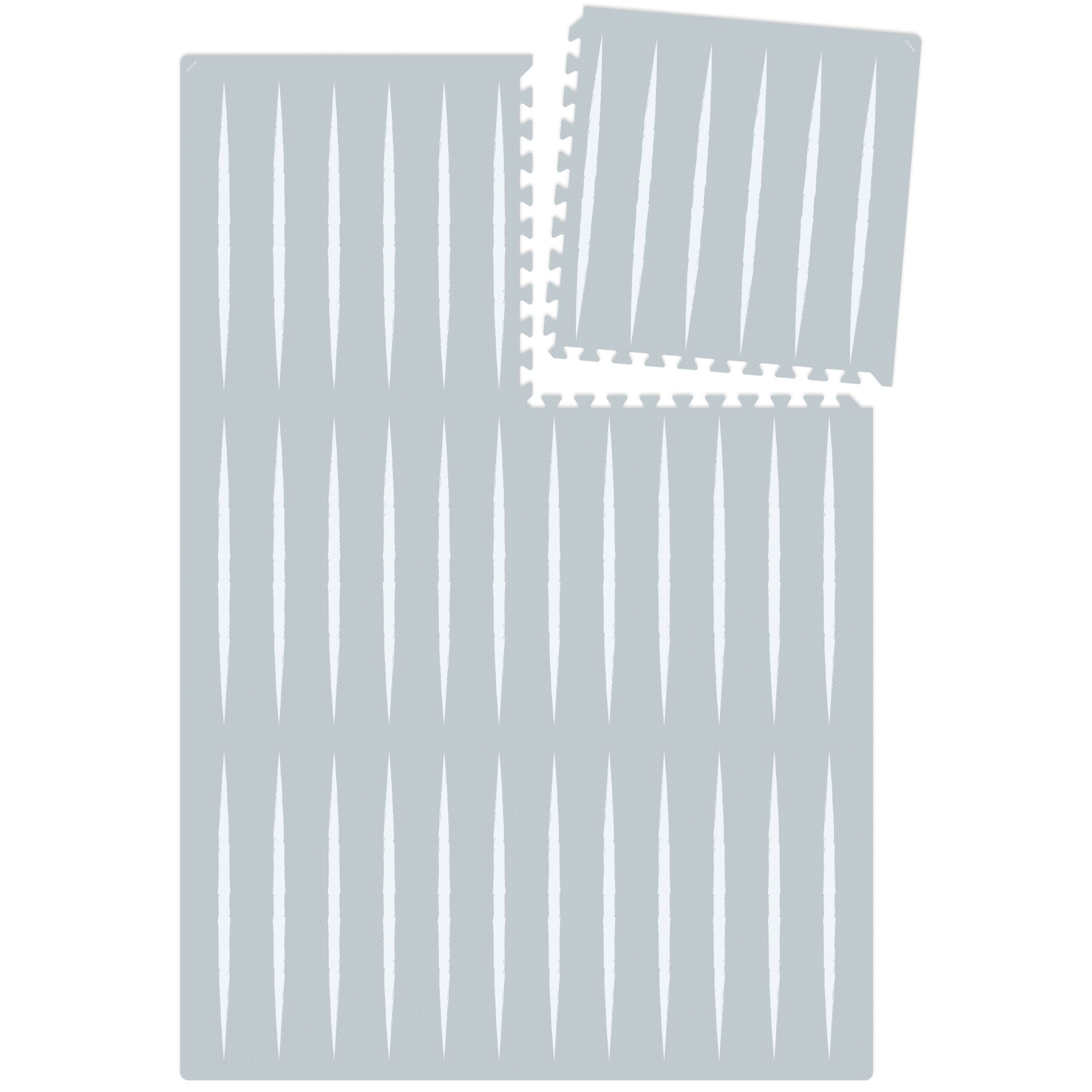
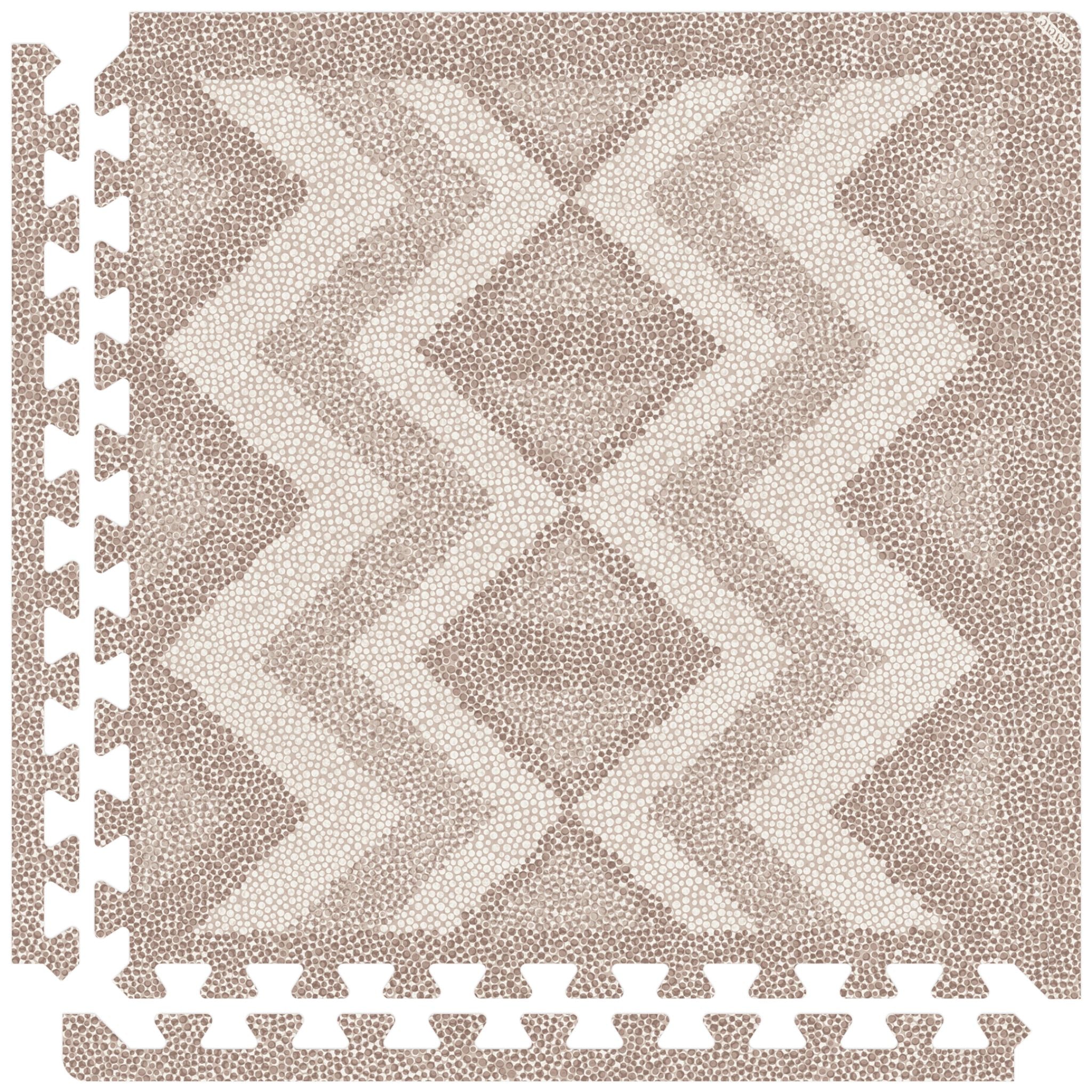
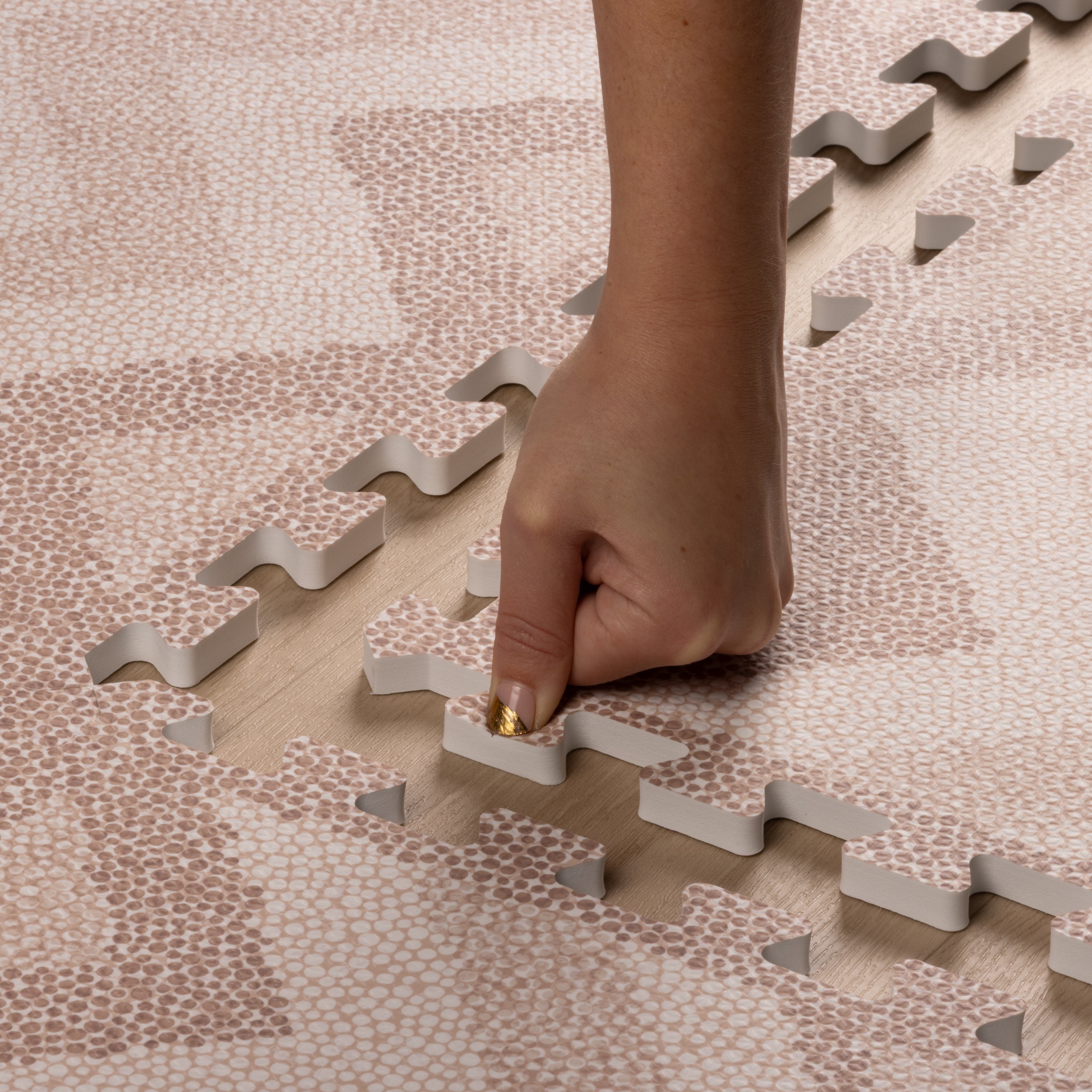
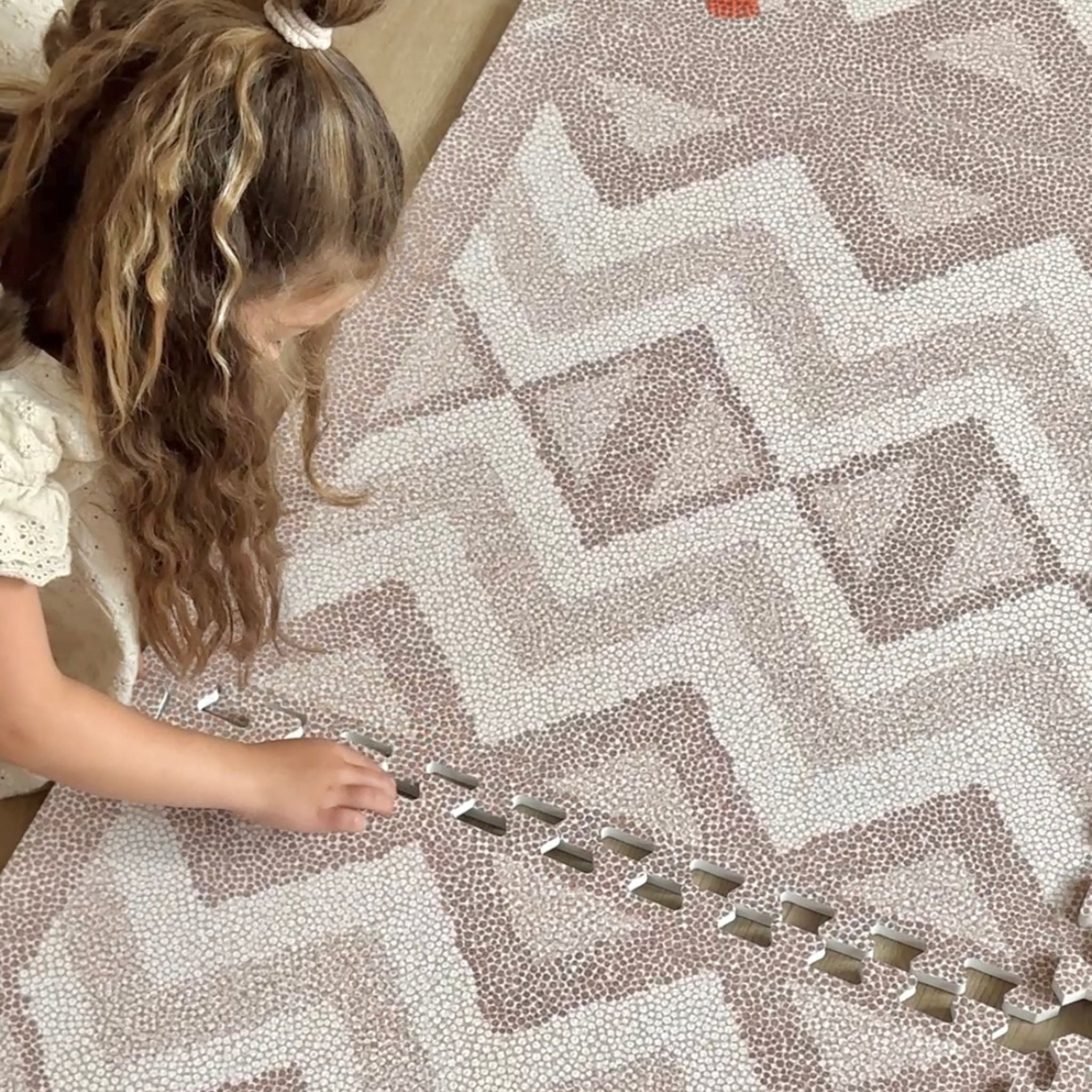
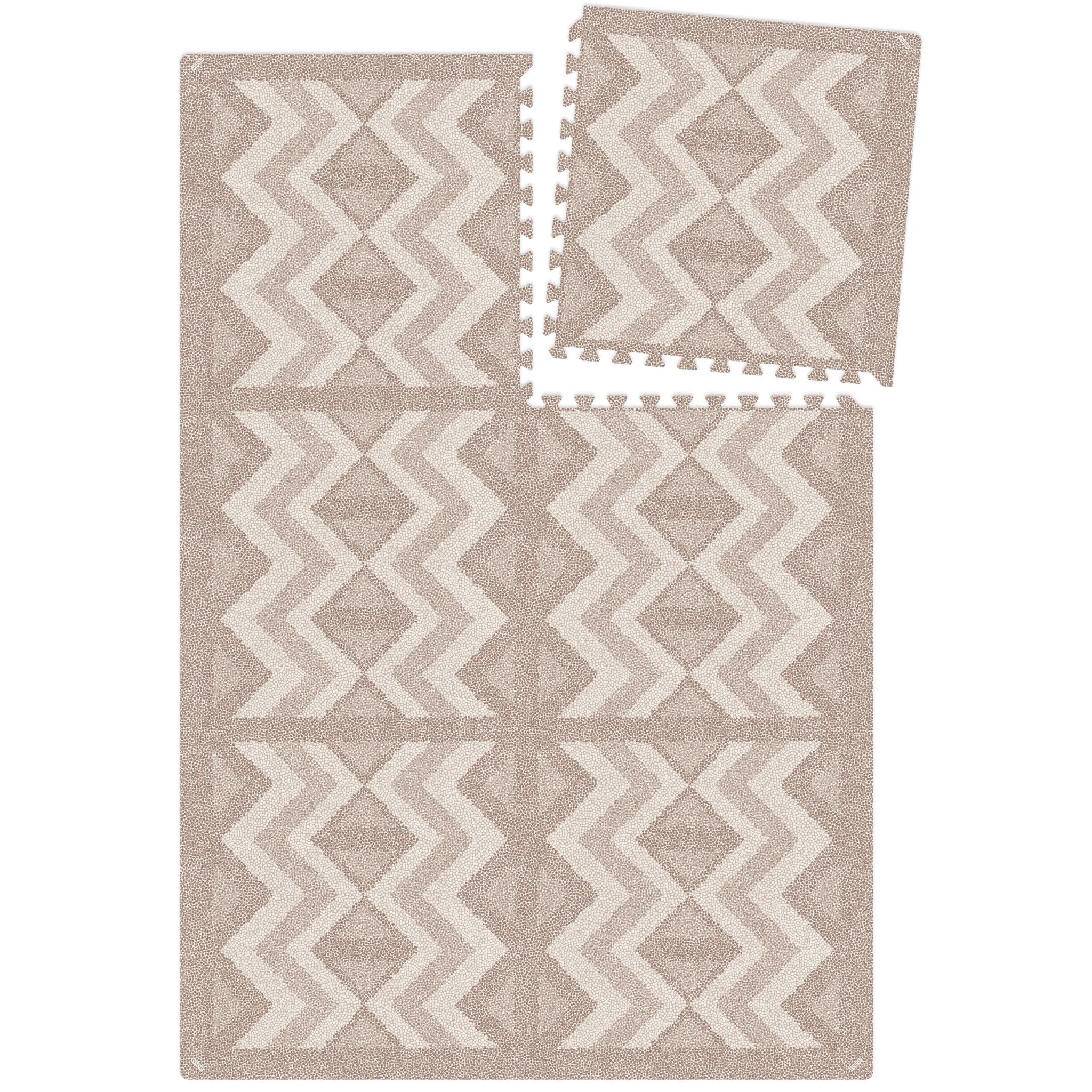
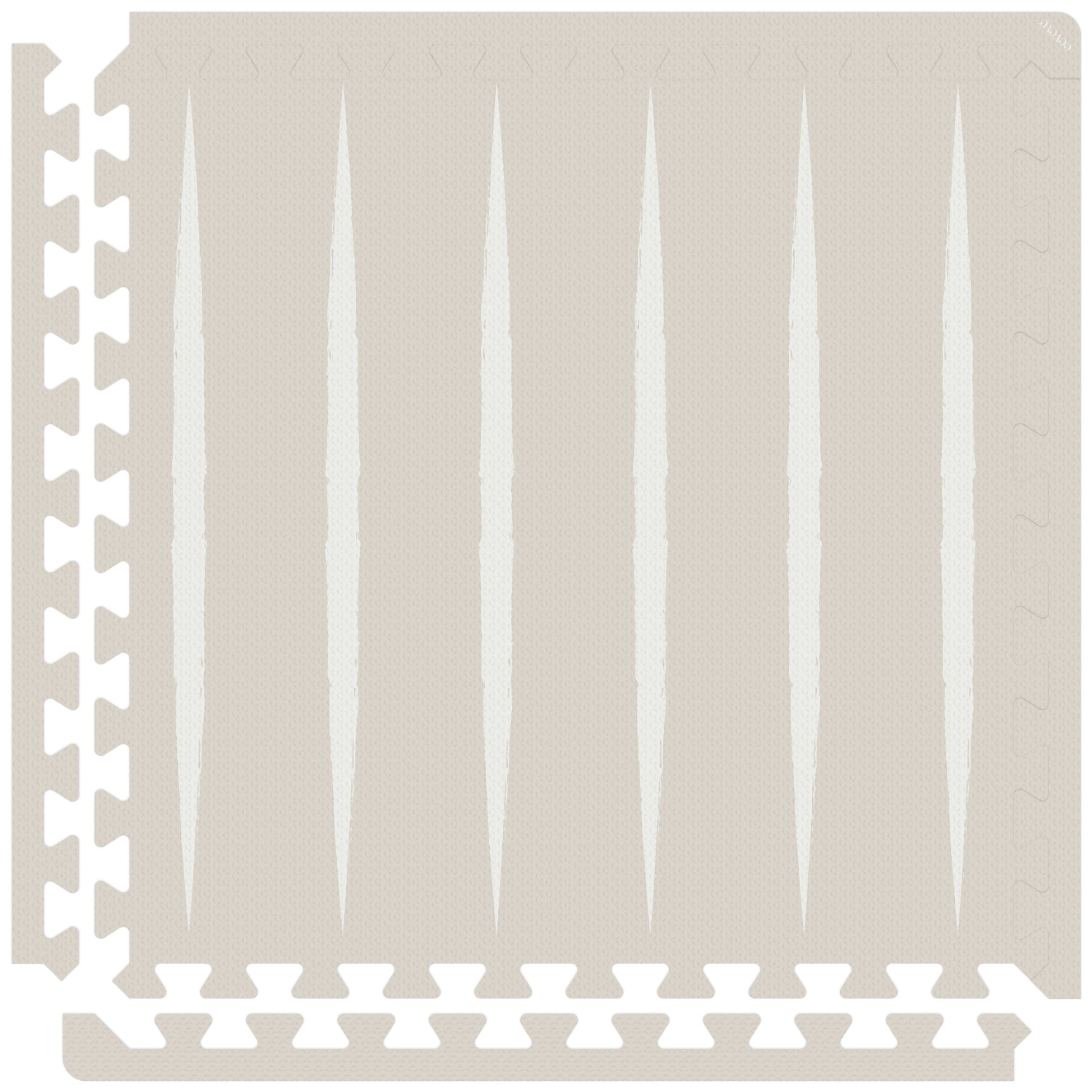
Every tile measures about 2 ft by 2 ft, a little under 60 cm square, and the edges use a puzzle lock rather than a straight butt joint. That is the detail that decides whether a mat stays flat under a crawling baby or creeps apart within a week. A straight edge separates the moment weight shifts near a seam. A puzzle edge resists it, because the two tiles are physically interlocked, not just pushed together.
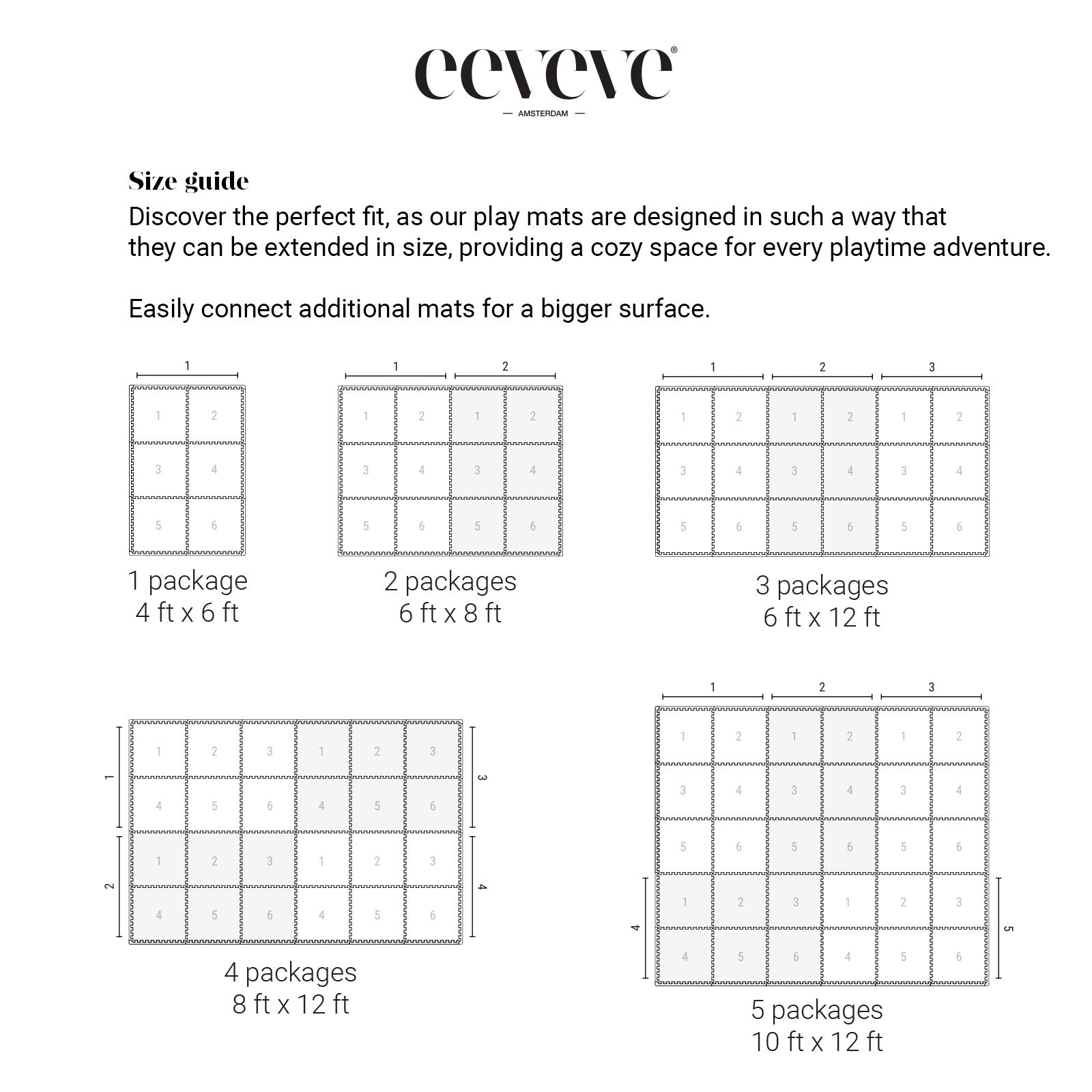
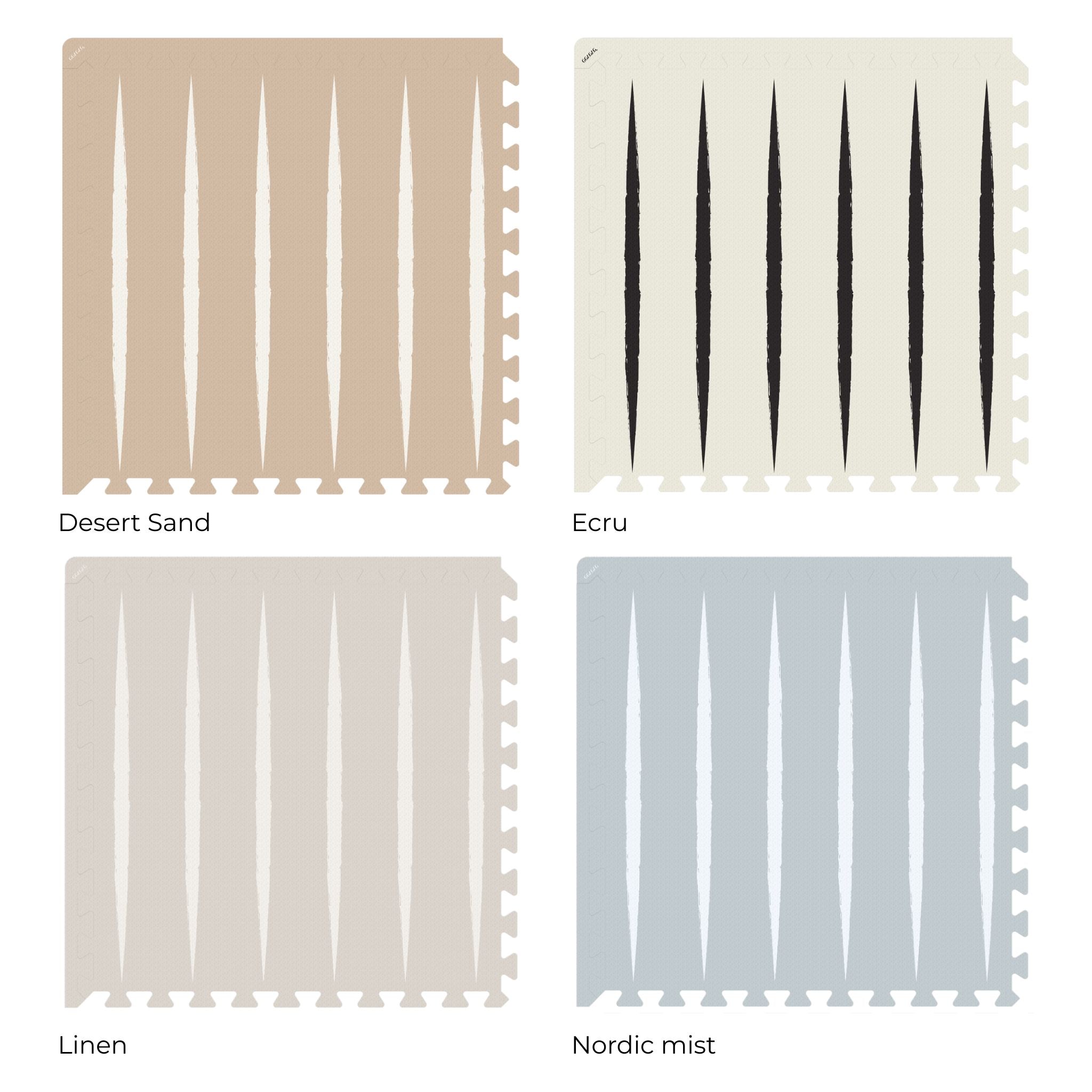
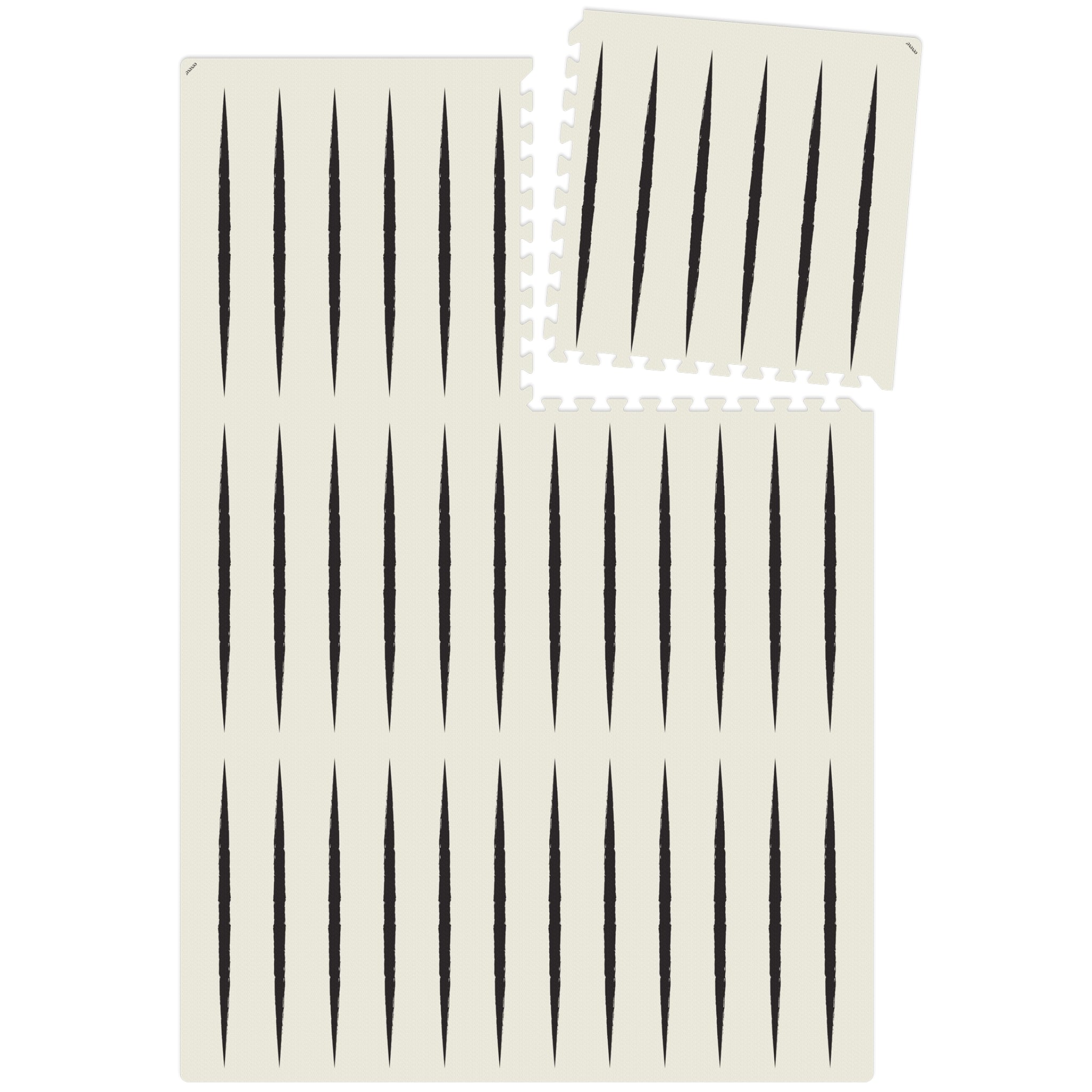
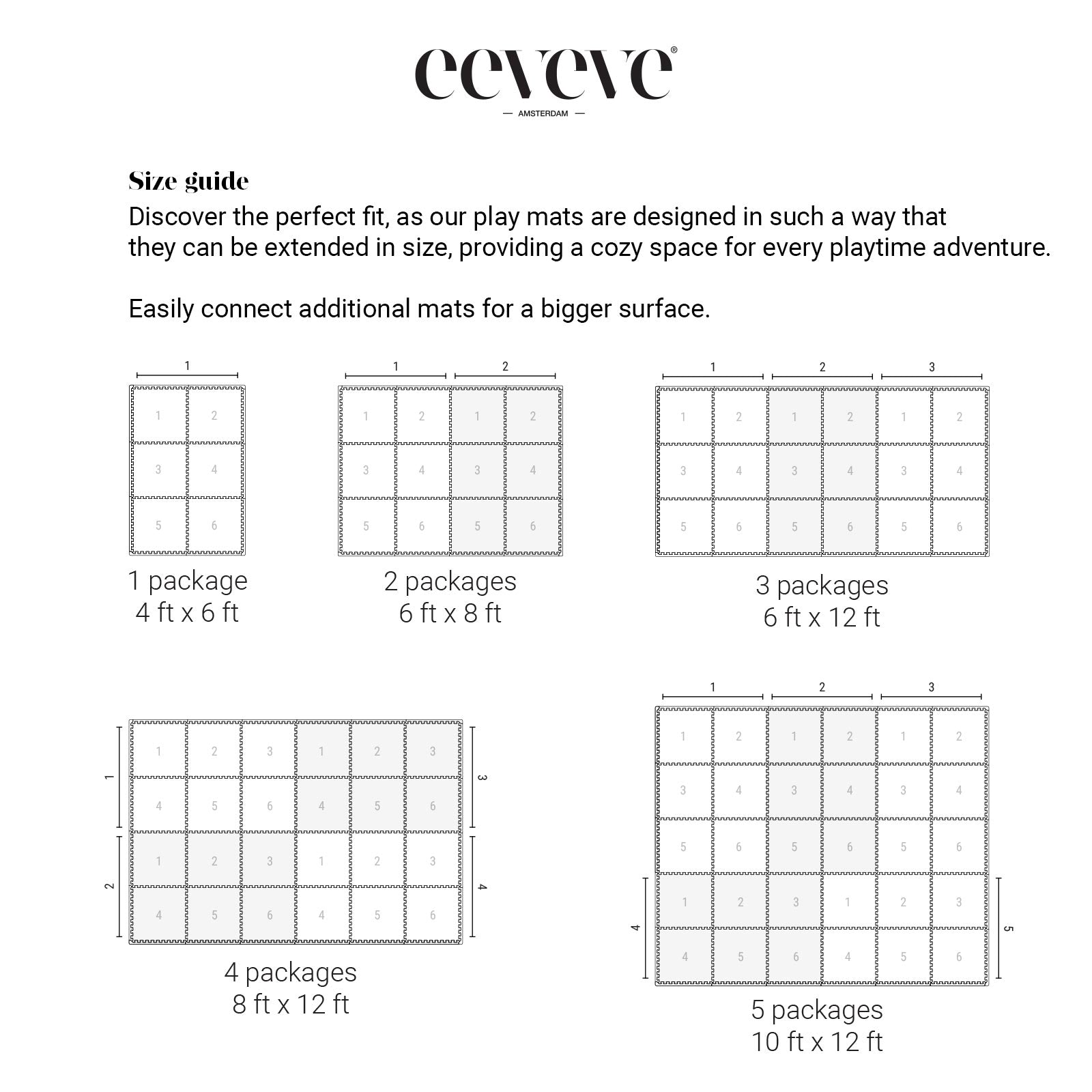
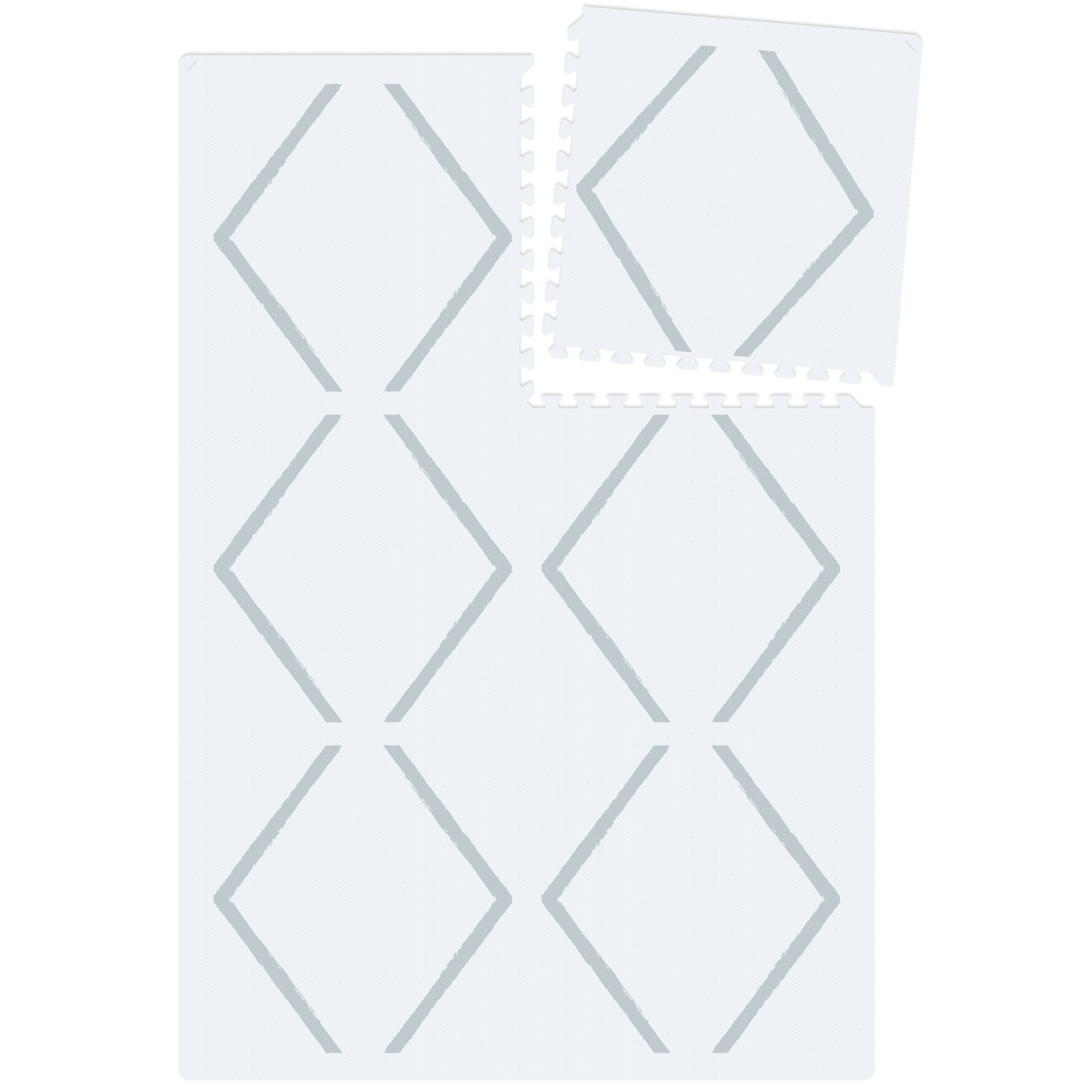
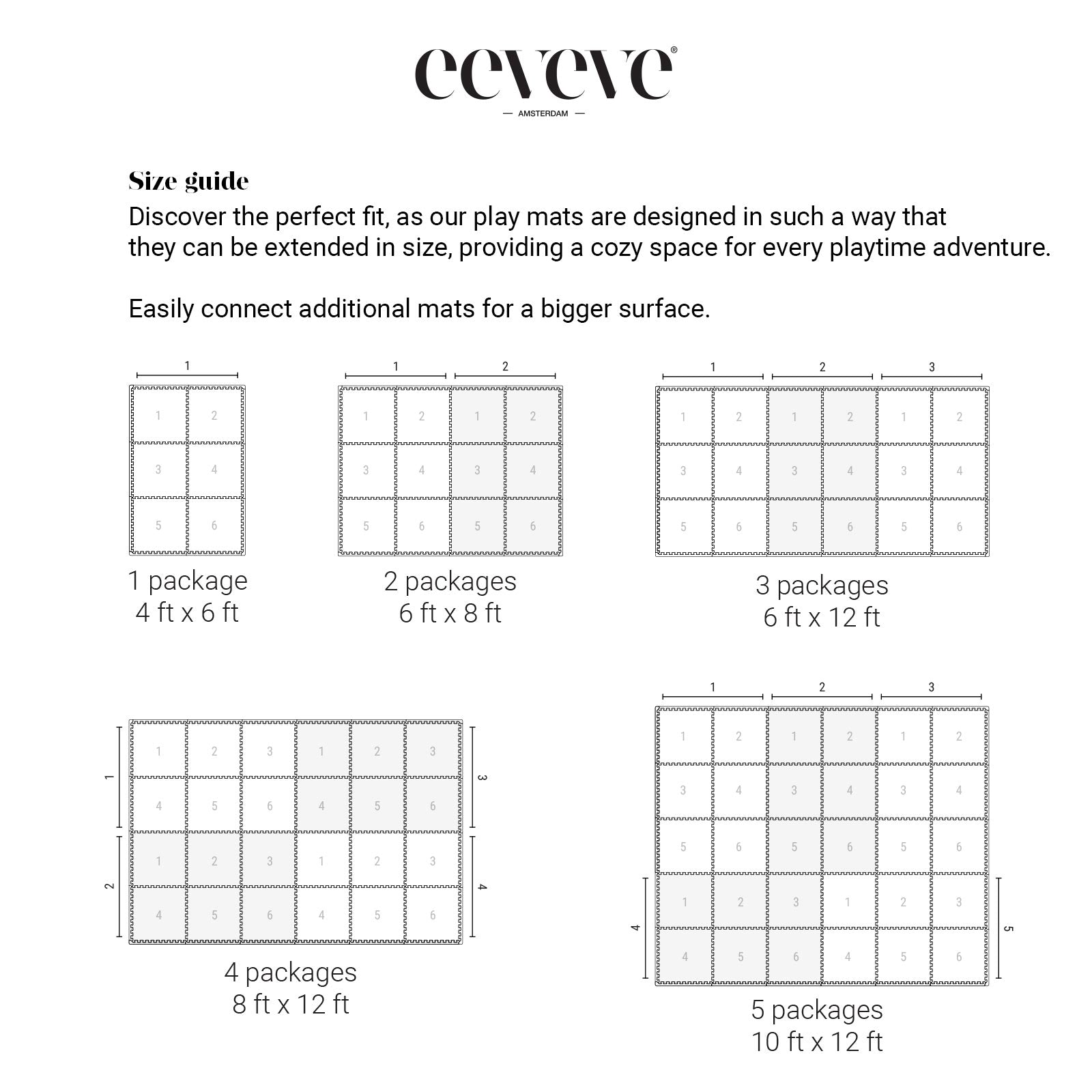
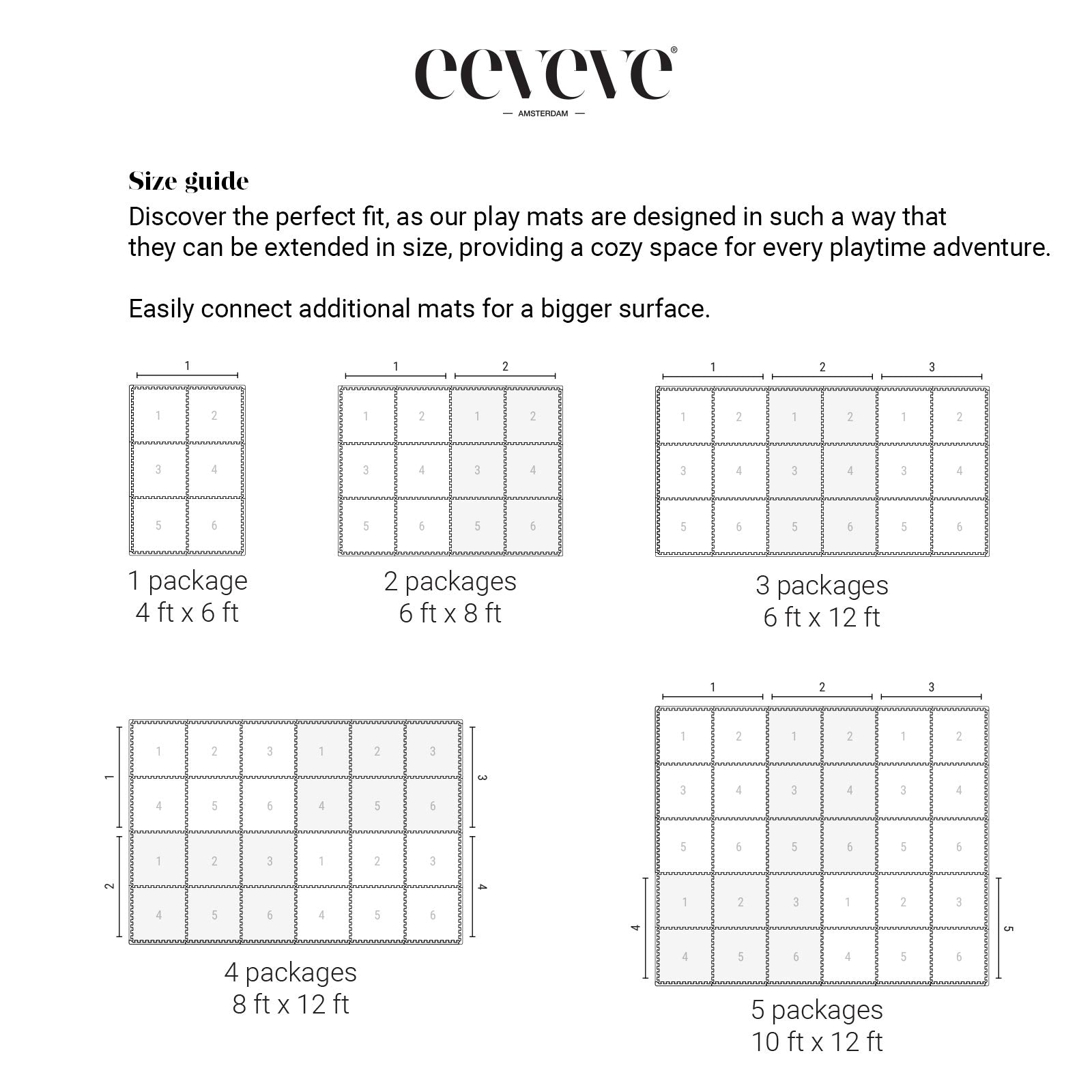
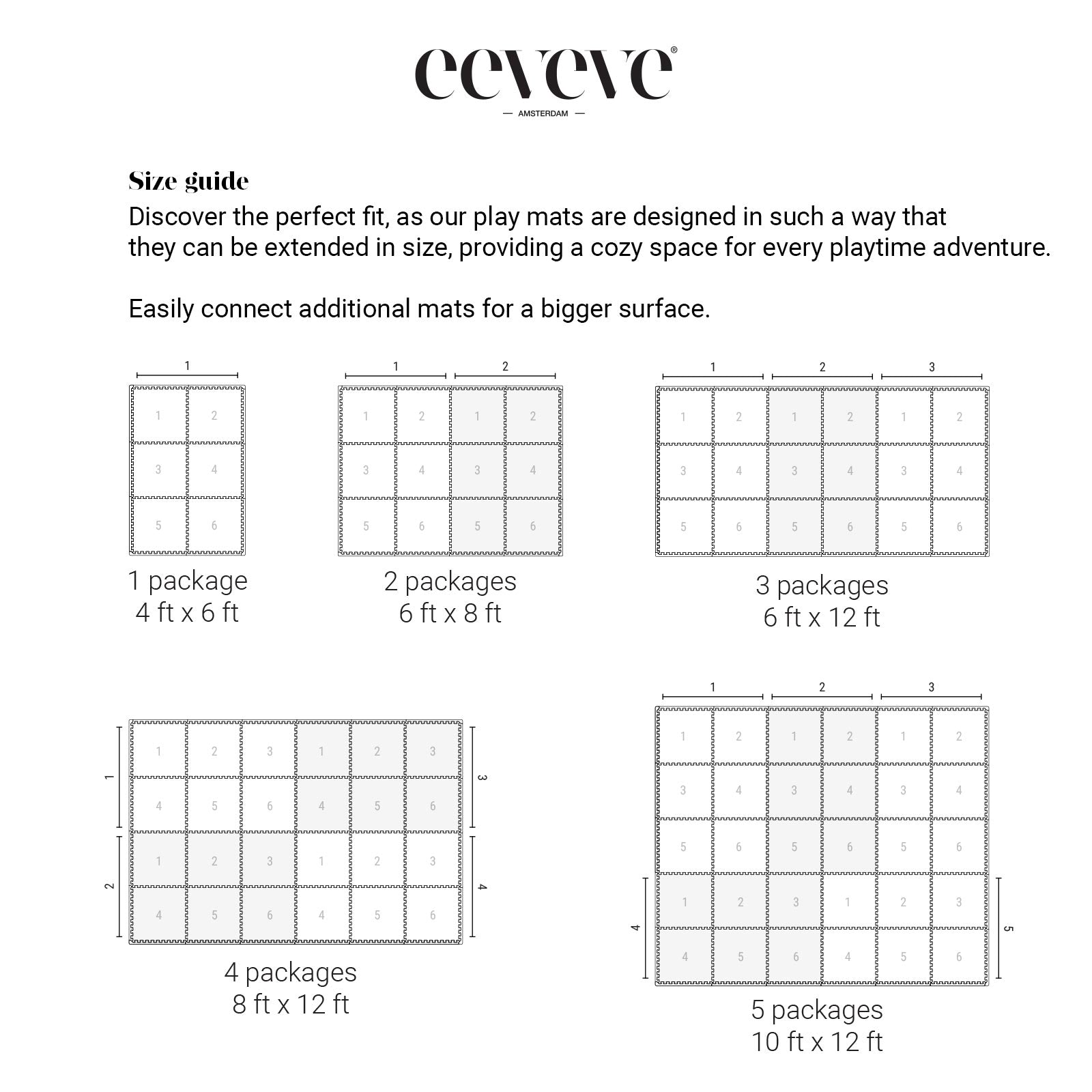
The same tile size is also why you are not stuck with the size you bought on day one. Because every tile from every colorway is the same 2 ft square, you can start with a smaller mat and extend it later with a second one in the same pattern, instead of replacing the whole thing when your crawler becomes a toddler who wants more floor.
How big a mat do you actually need?
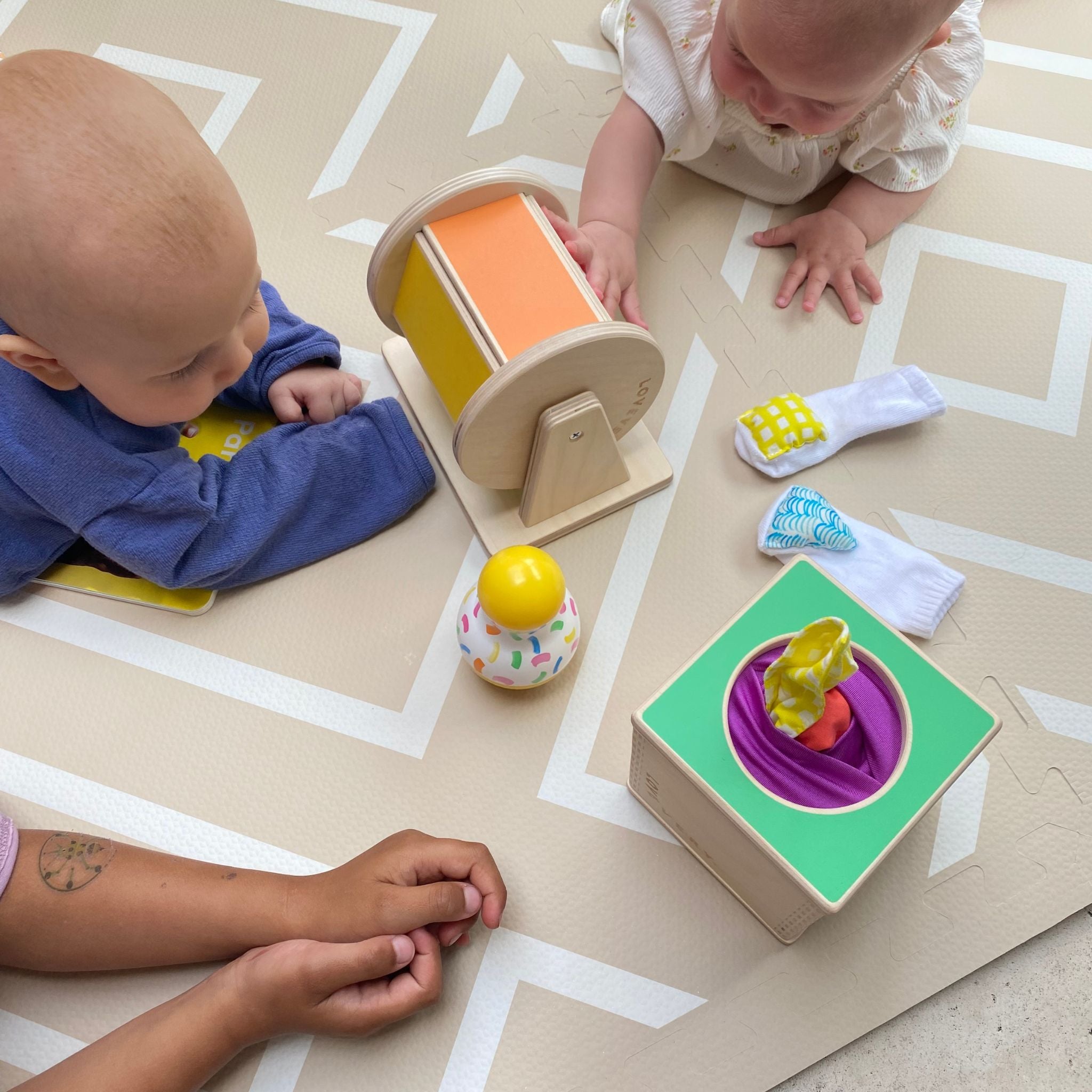
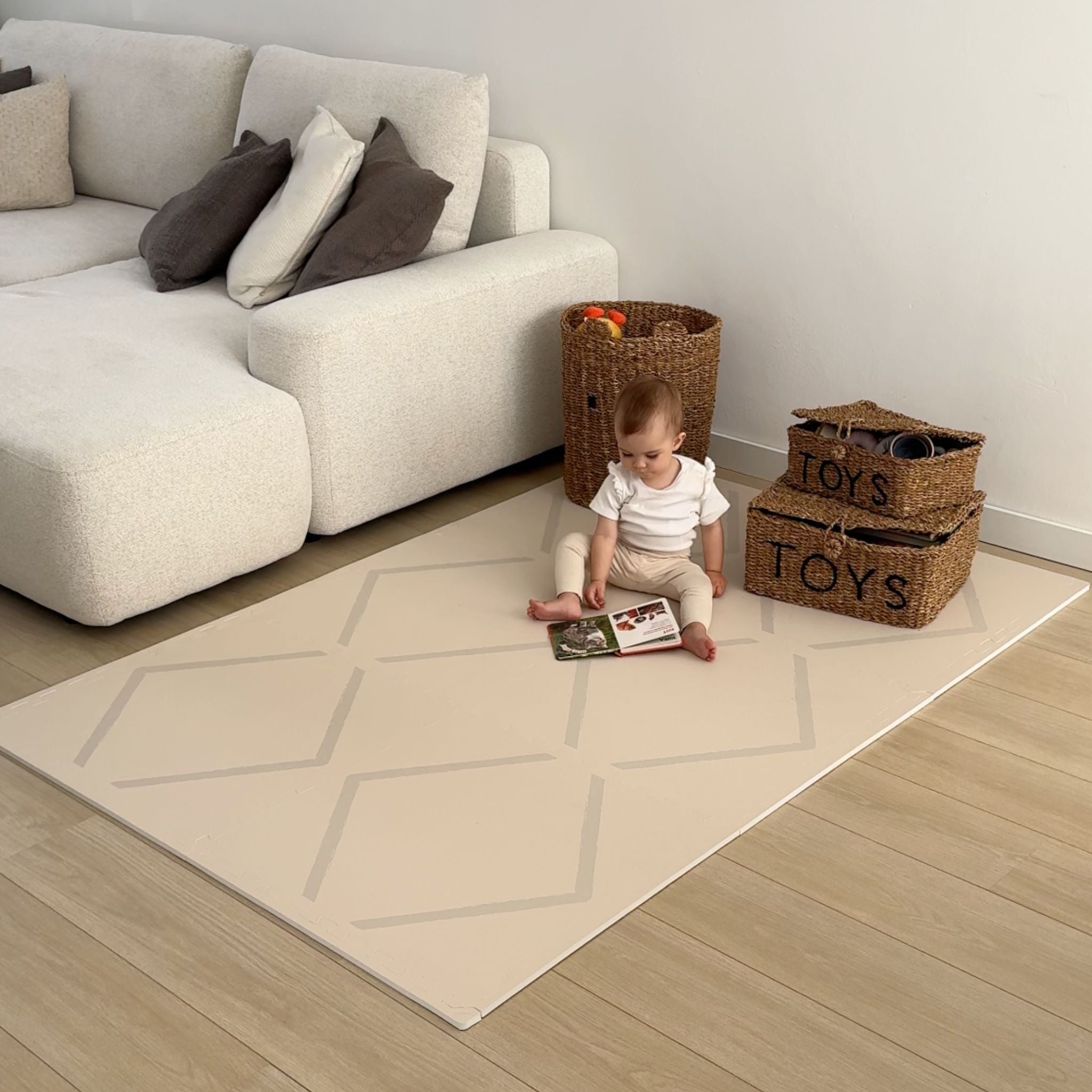
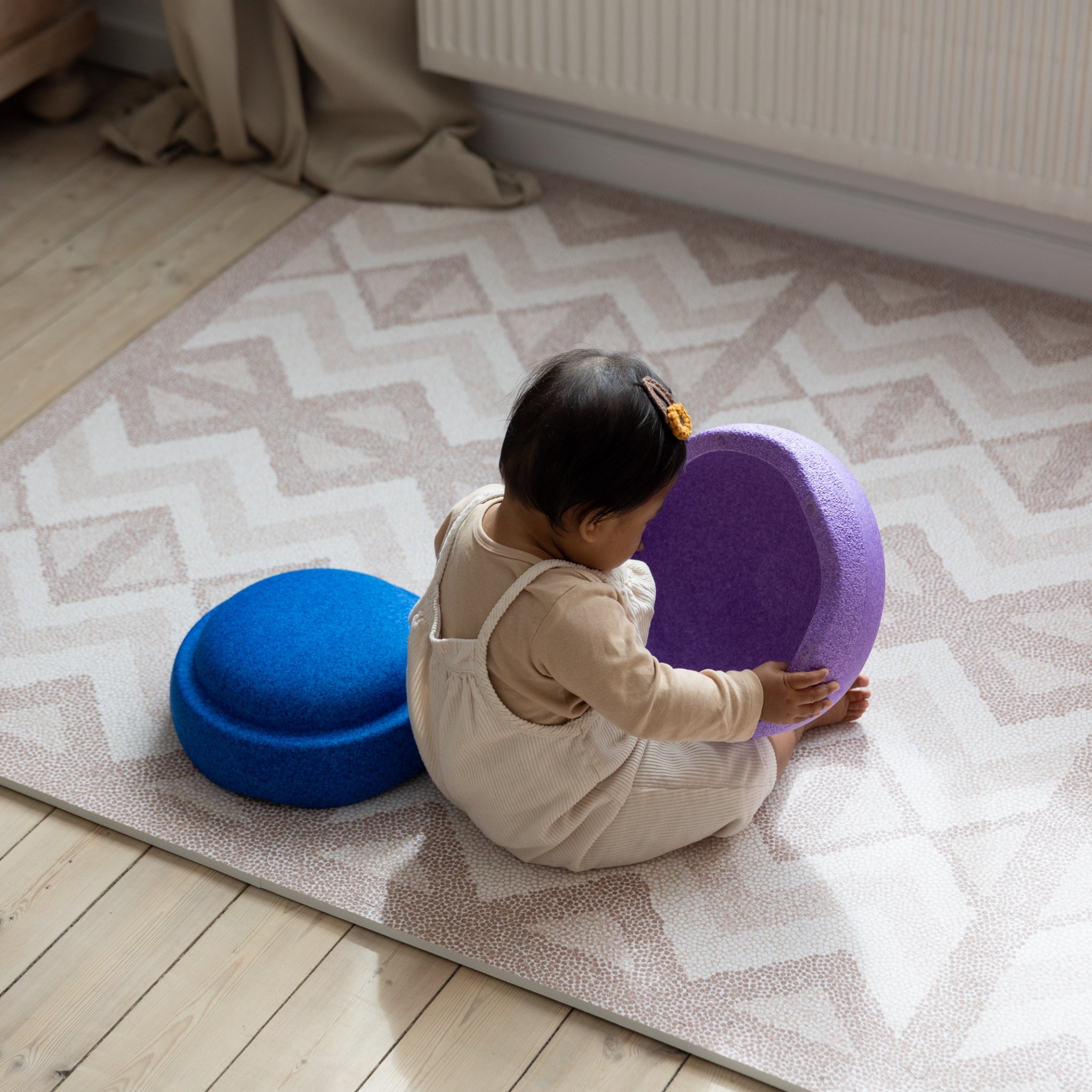
This is the question people get wrong most often, and almost always in the same direction: too small. A newborn doing a few minutes of tummy time barely needs floor space at all. A baby who has started rolling needs noticeably more, and a crawler who is pulling up on furniture needs a mat that reaches past where they are likely to land, not just where they currently sit.
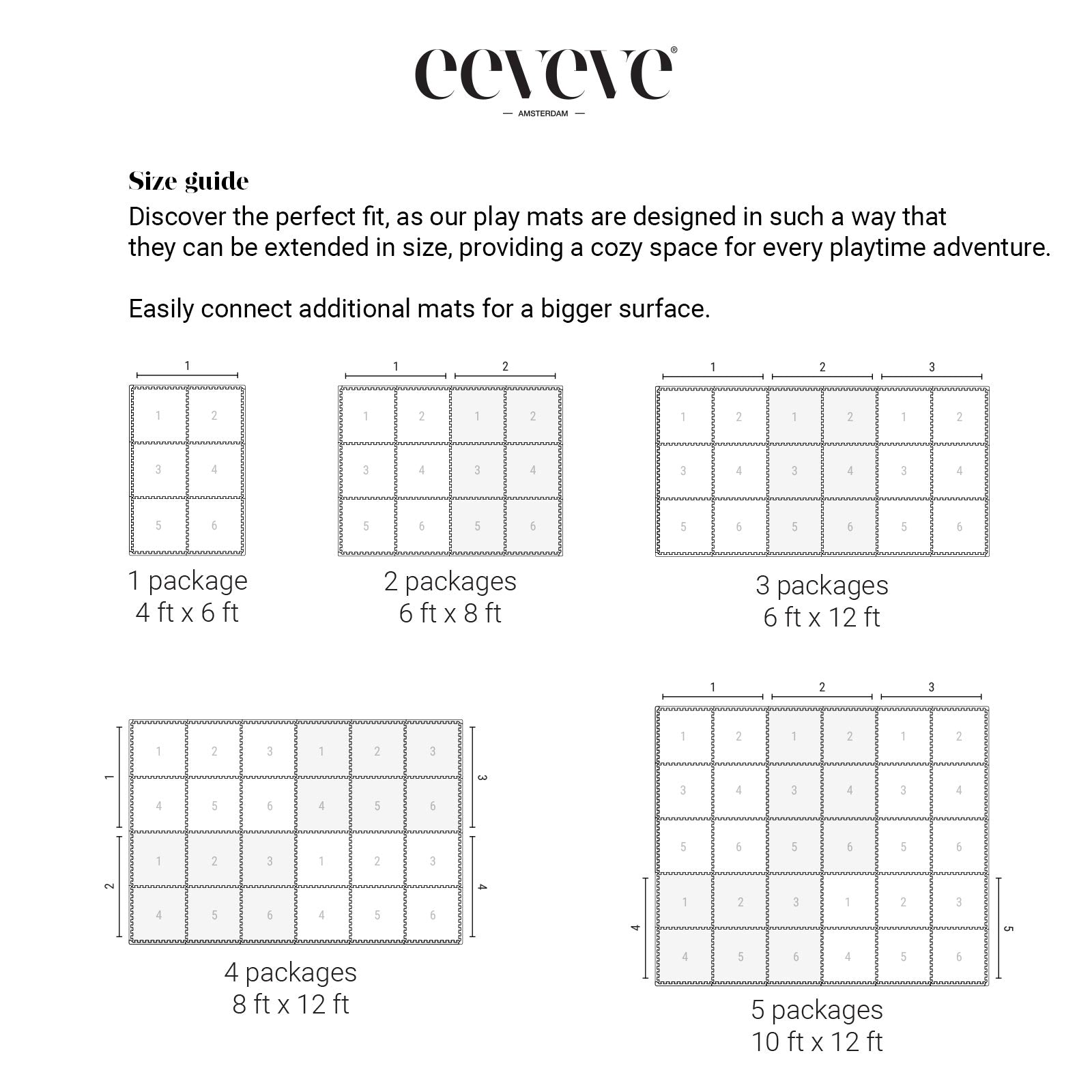
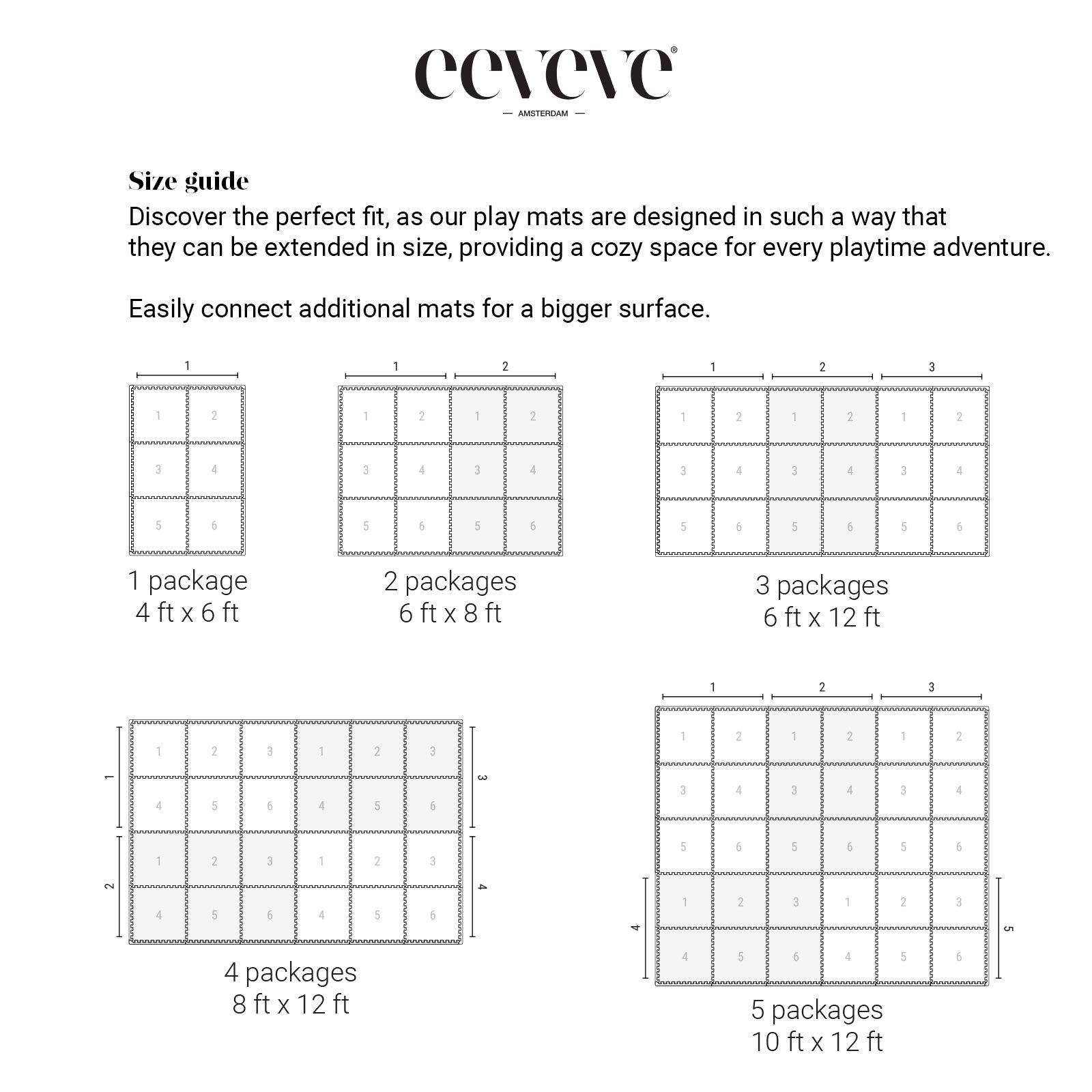
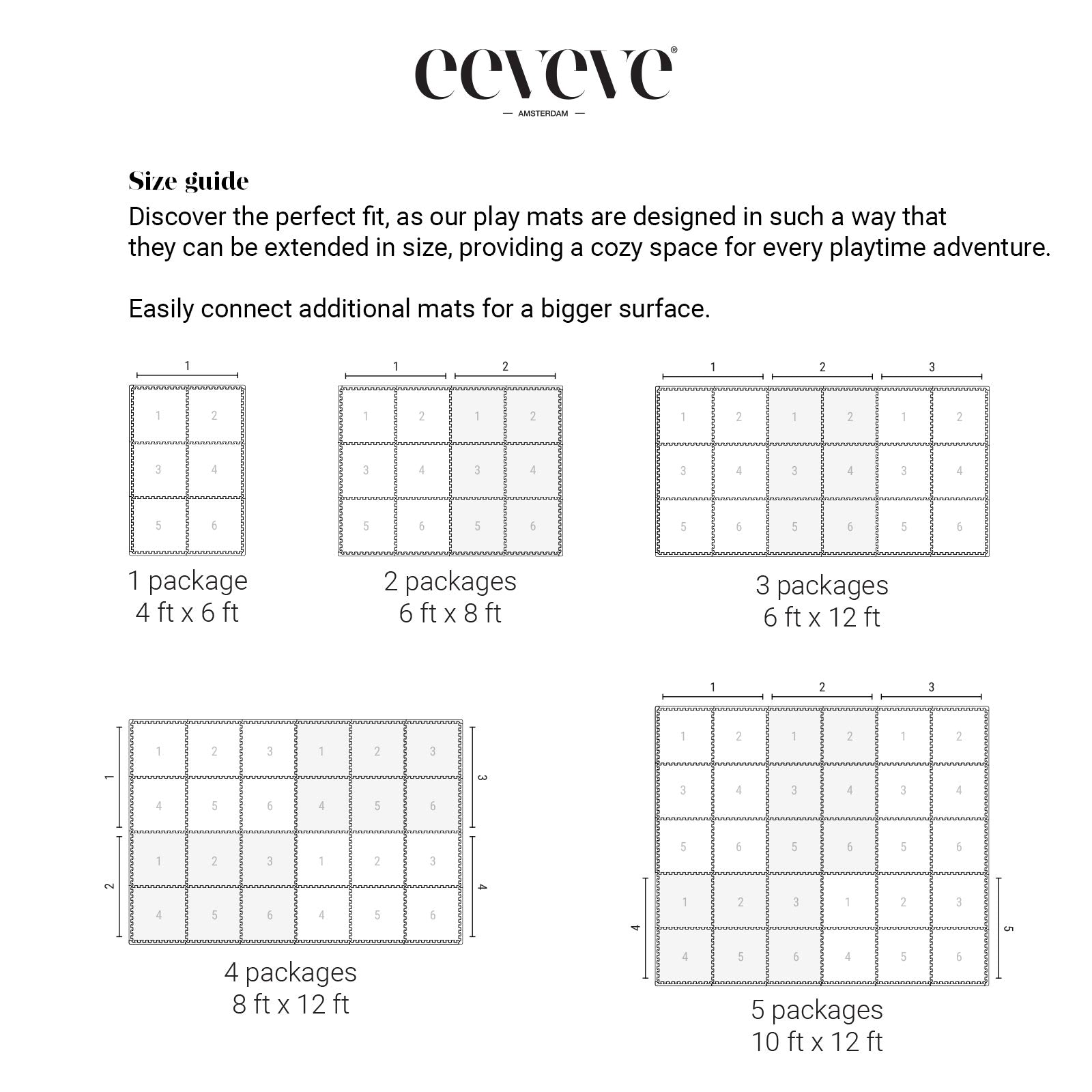
Our sizes run from 4 ft by 6 ft, which suits a small room or a first mat for the early months, up to 16 ft by 12 ft for a dedicated playroom or two children sharing one space. The table below shows what we actually charge for each, from the lowest price across our colorways, since a few shades run slightly higher than others at the same size.
| Size | Tiles (approx.) | From |
|---|---|---|
| 4 ft x 6 ft | 6 | $119 |
| 6 ft x 8 ft | 12 | $229 |
| 6 ft x 12 ft | 18 | $314 |
| 8 ft x 12 ft | 24 | $399 |
| 10 ft x 12 ft | 30 | $499 |
| 12 ft x 12 ft | 36 | $579 |
| 14 ft x 12 ft | 42 | $649 |
| 16 ft x 12 ft | 48 | $729 |
If you are between two sizes, size up: a crawling baby uses more floor than you expect.
Not sure which size fits your room?
Every pattern comes in all eight sizes, from 4 ft by 6 ft up to 16 ft by 12 ft, and a second mat in the same pattern locks onto the first if your space changes.


Can a foam play mat be rolled up?
No, not ours. Because the mat is built from individual puzzle tiles rather than one continuous sheet, it does not roll. To store it or move it, you separate the tiles and stack them, which is flatter than a rolled mat but a different motion, and worth knowing before you buy rather than after. If daily rolling and unrolling is what you actually need, a tile system is the wrong shape for you.
How do you clean a foam play mat?
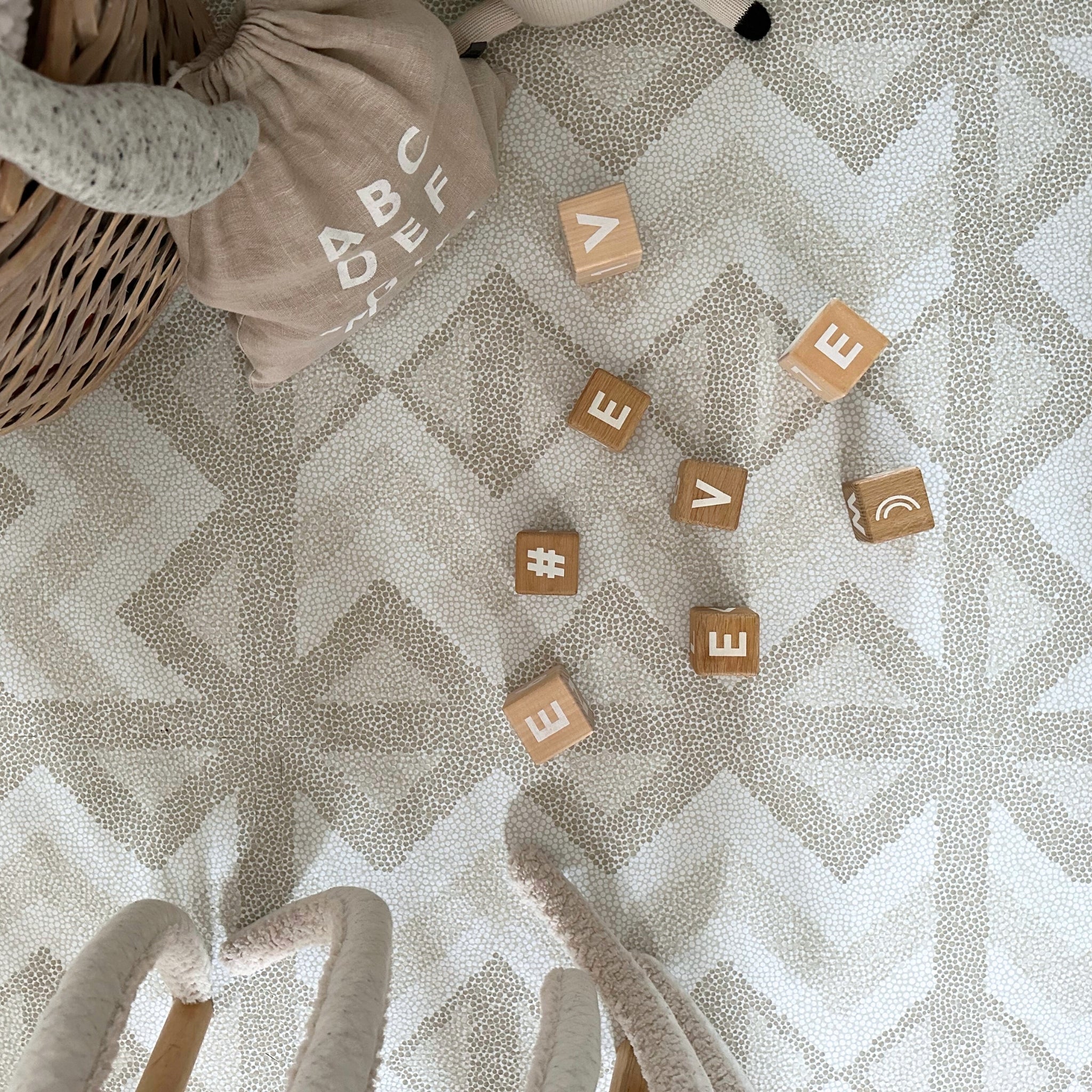
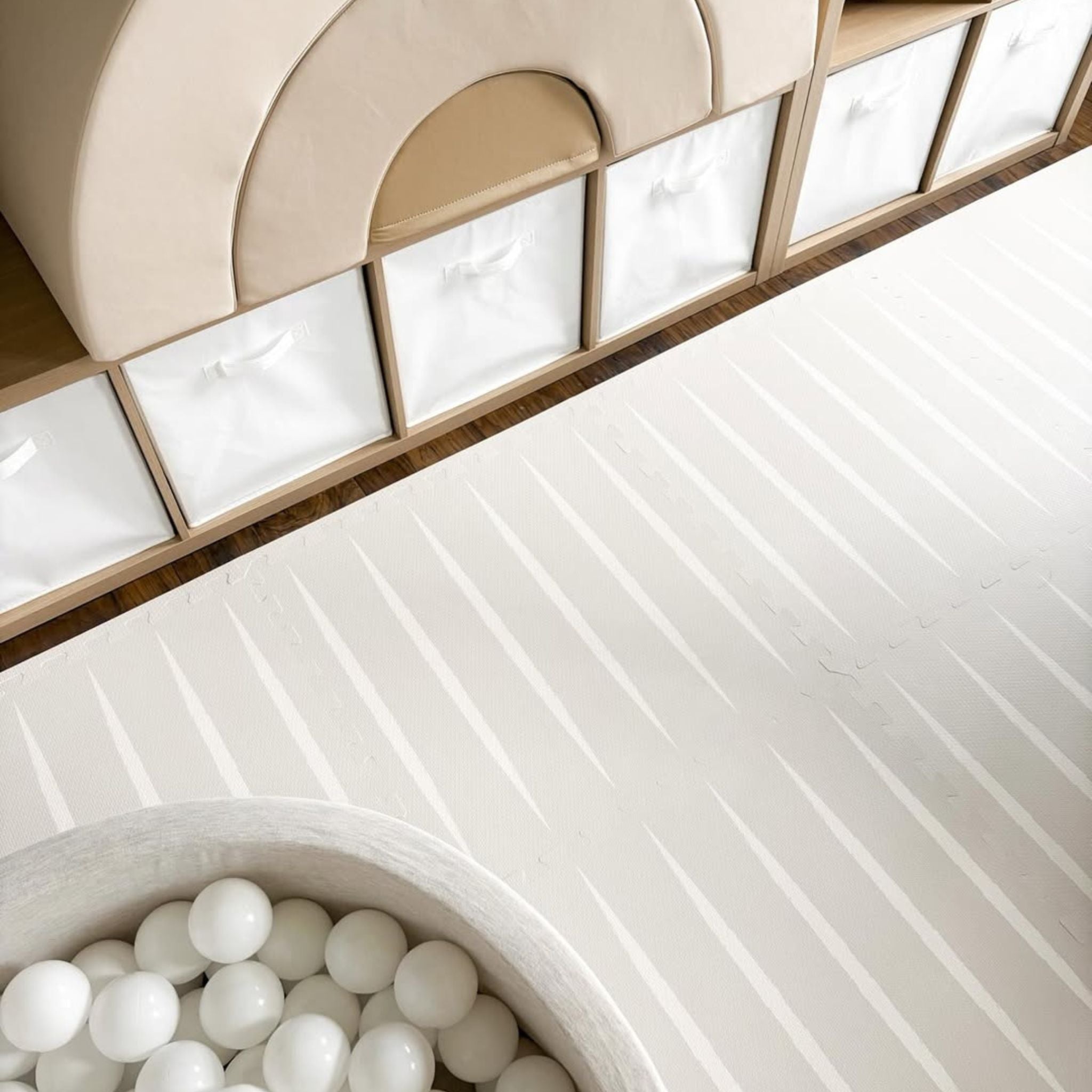
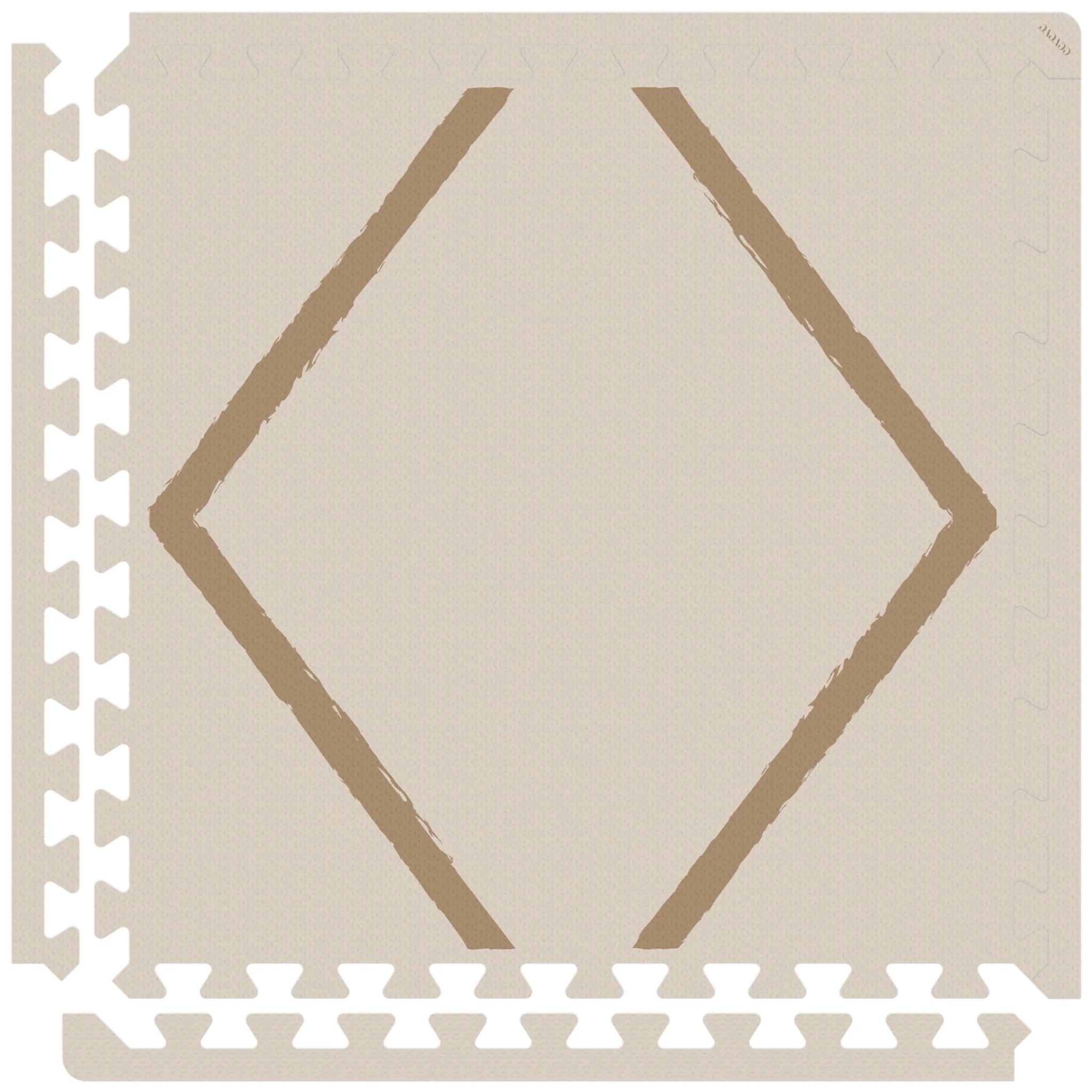
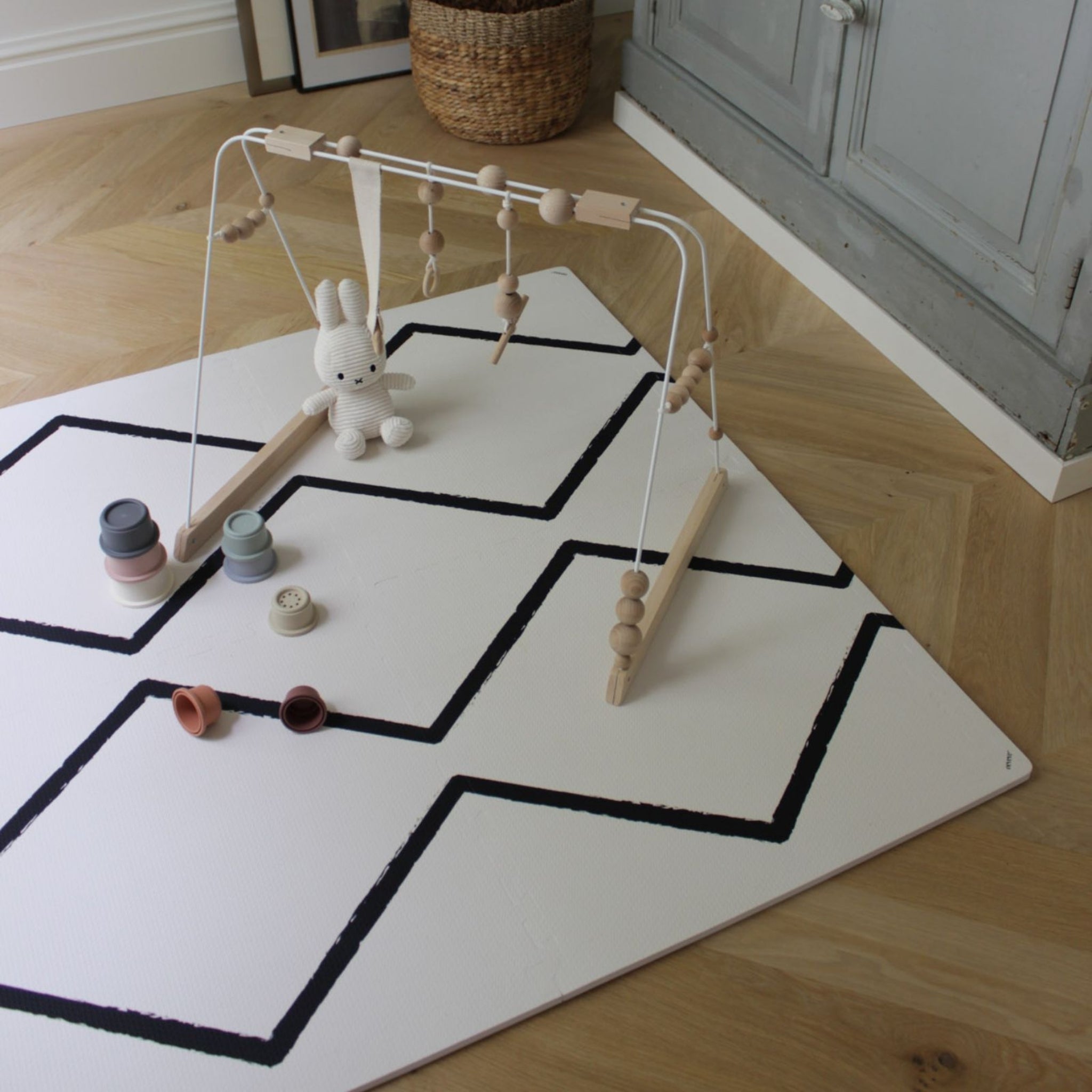
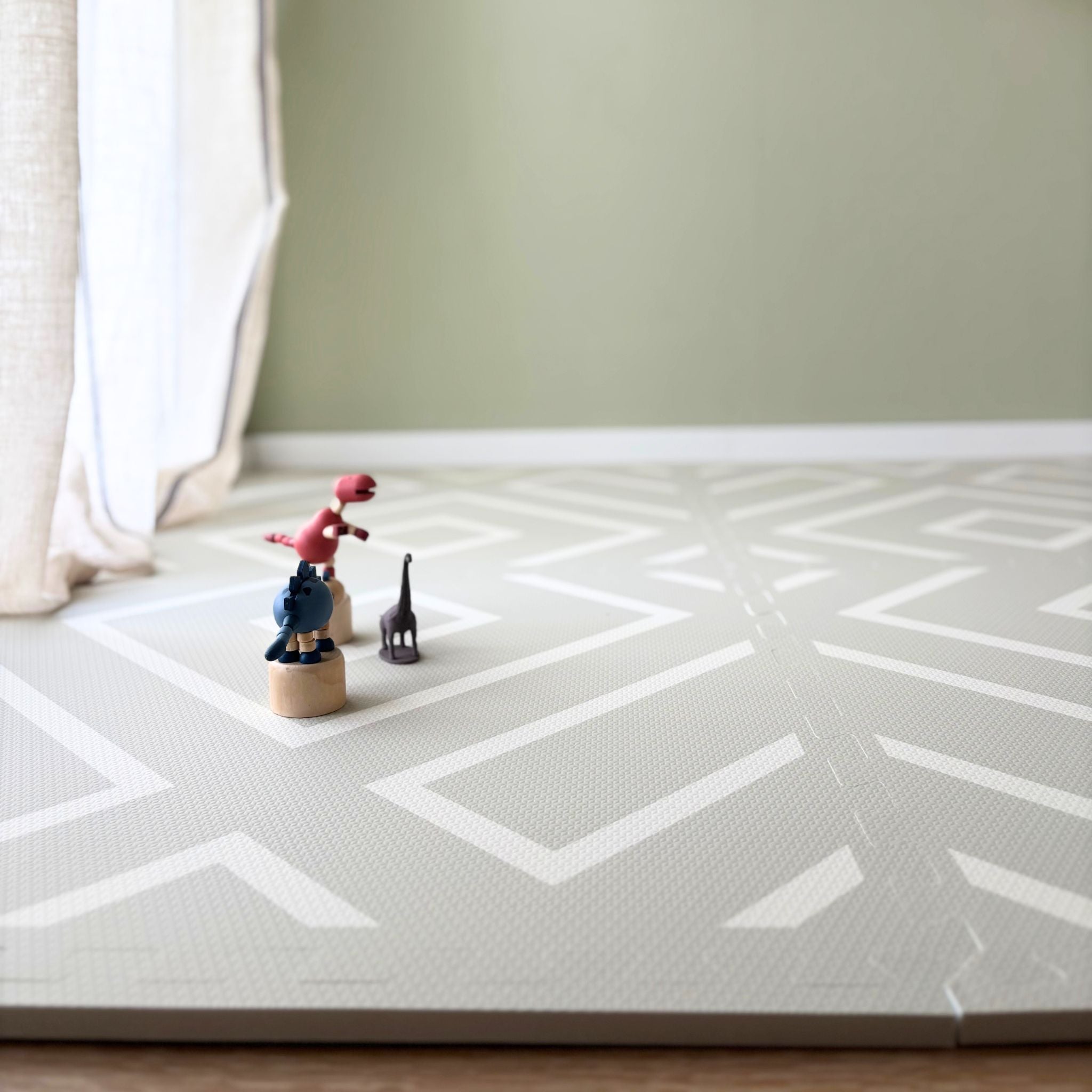
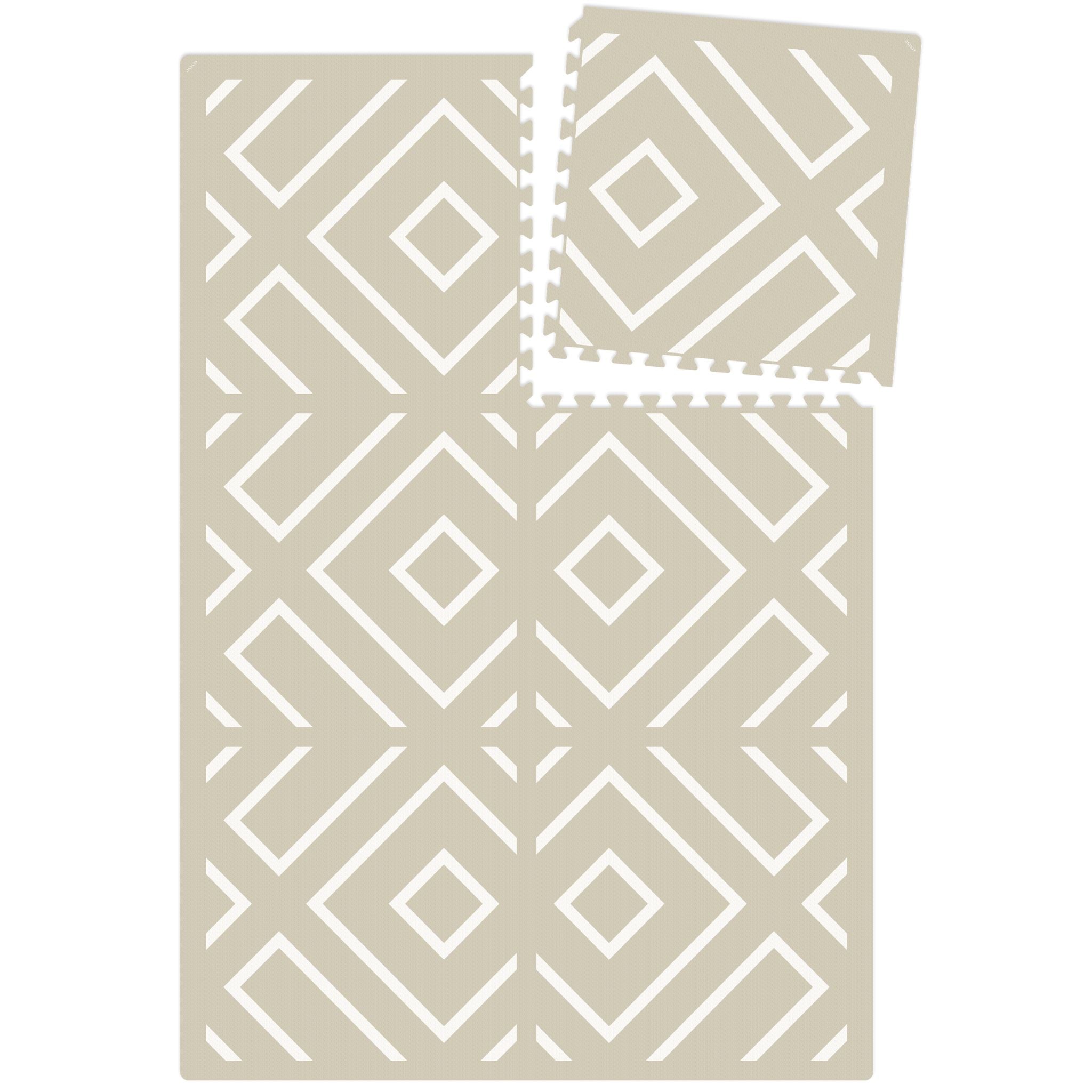
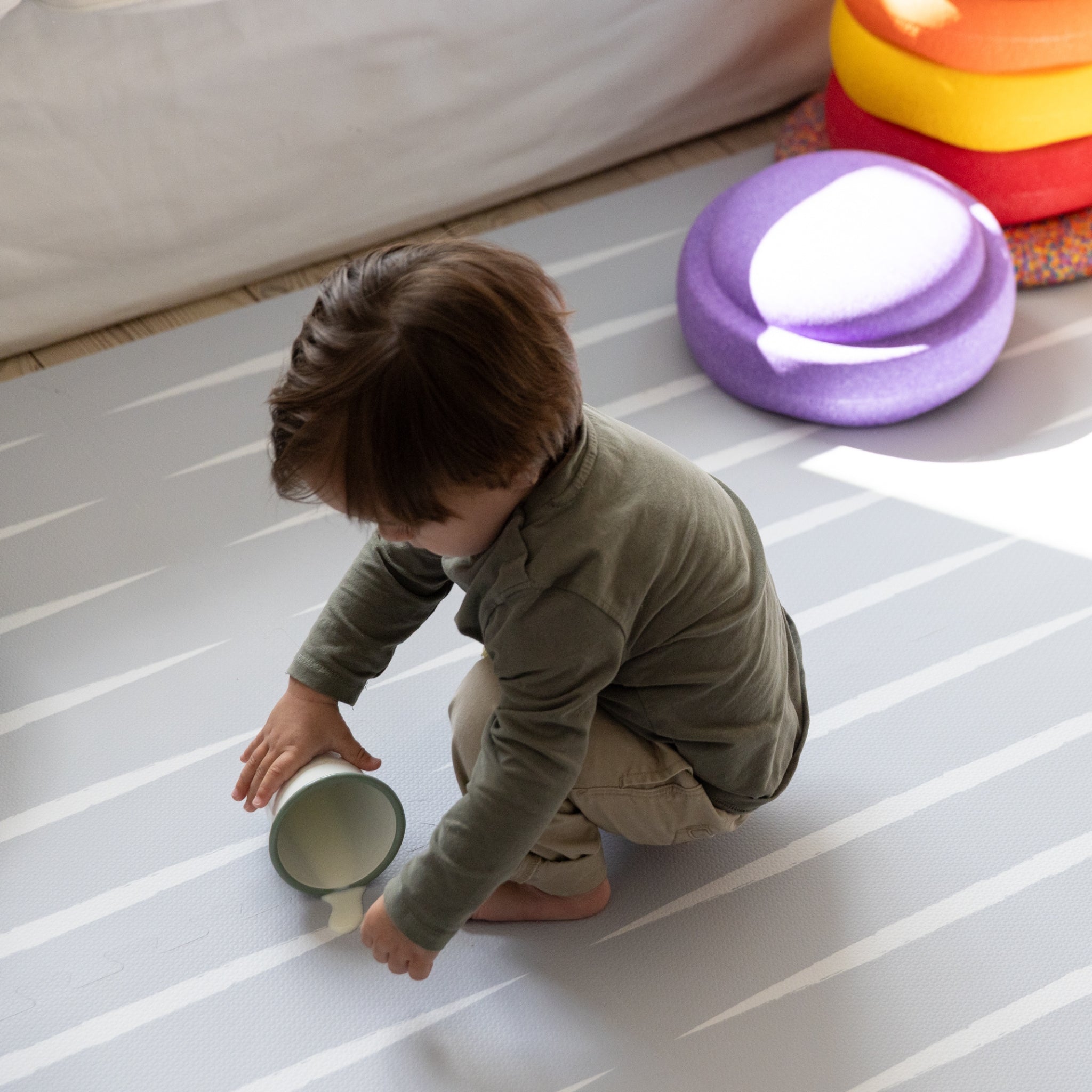
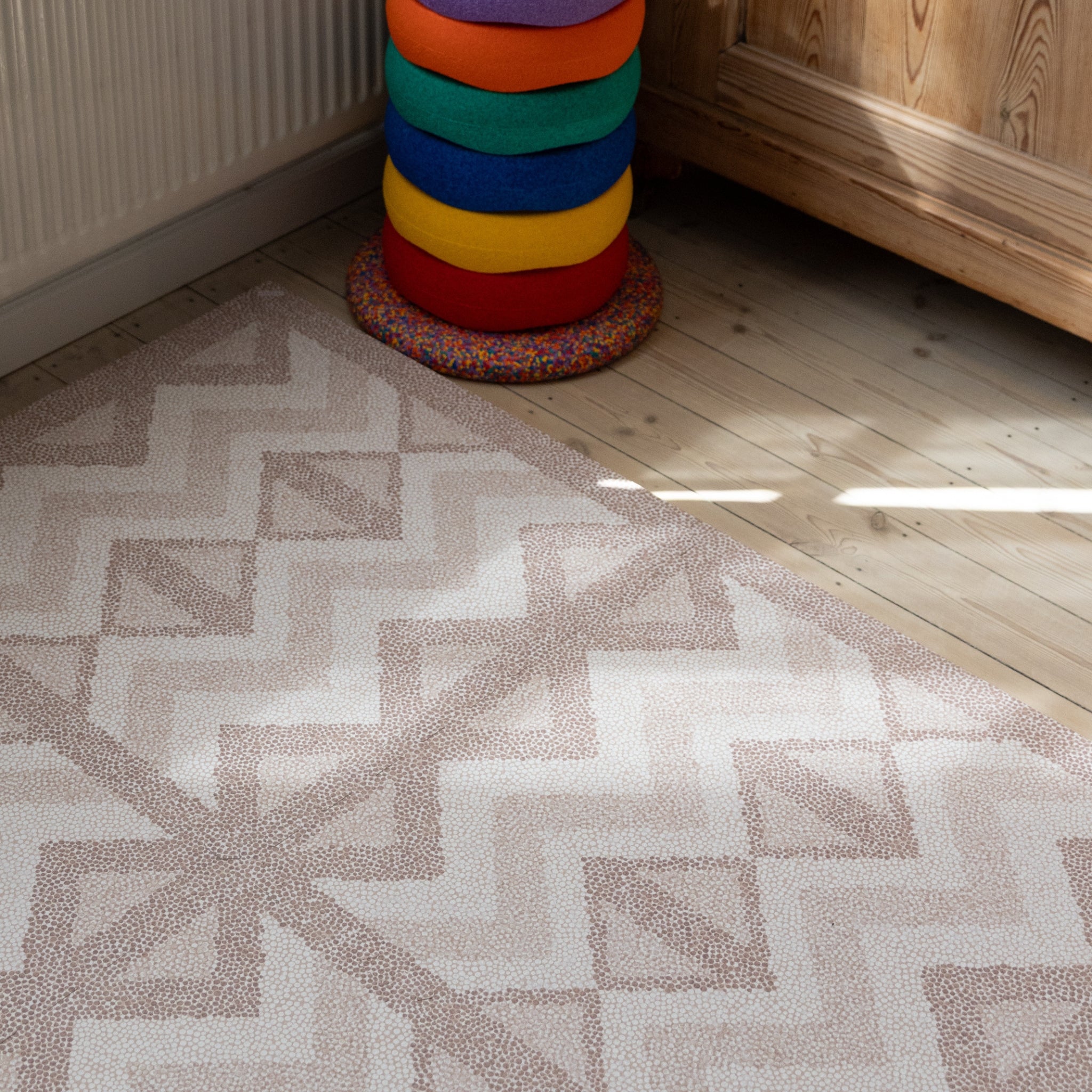
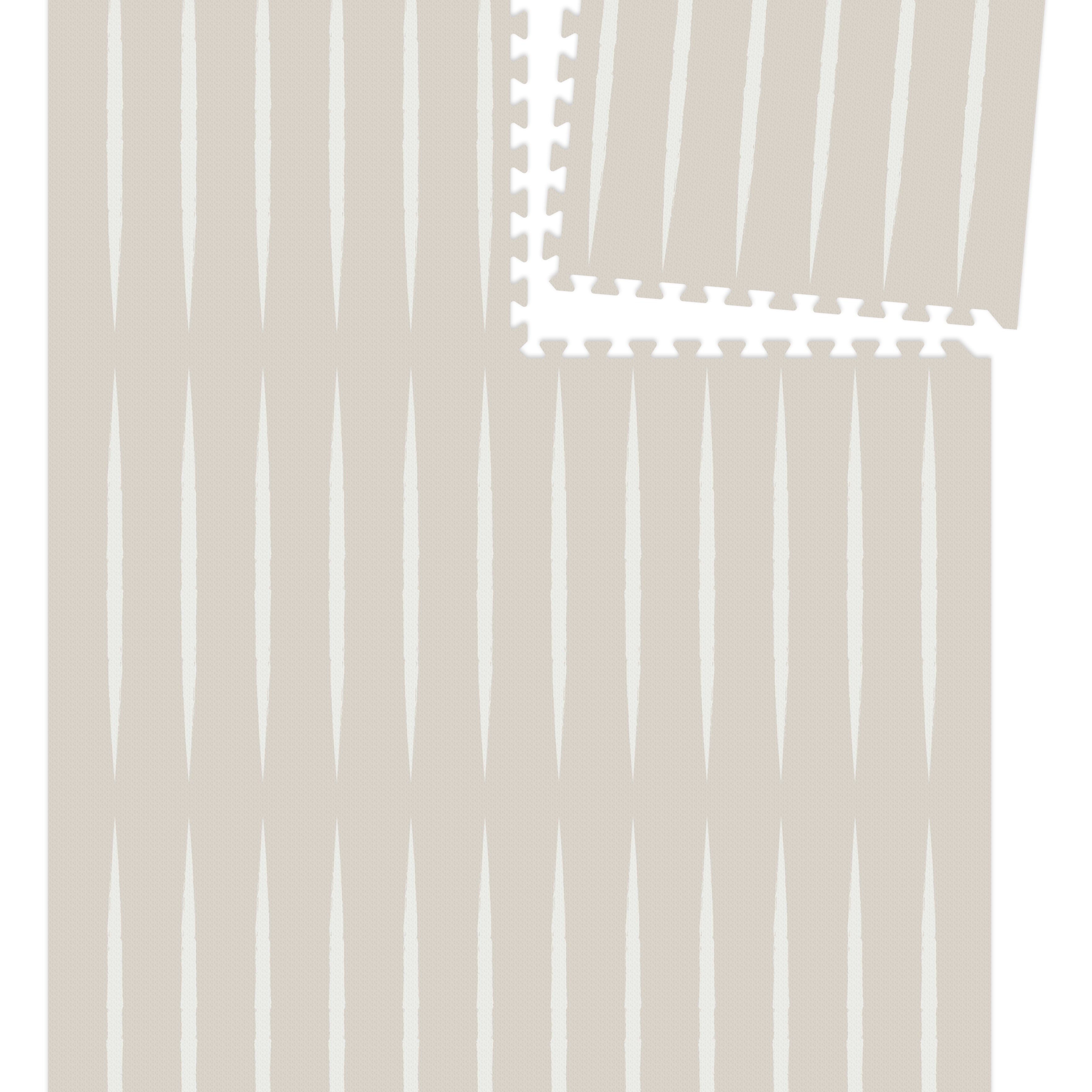
You wipe it with a damp cloth. The foam is a closed cell material, our Kilim Soft Clay tile is a good example of the surface up close, which means spilled milk or juice sits on top instead of soaking in, so it comes up with a cloth instead of a wash. Avoid scouring pads and harsh abrasive cleaners, they wear down the top layer faster than normal use does. It is not machine washable and should not go in a dryer.
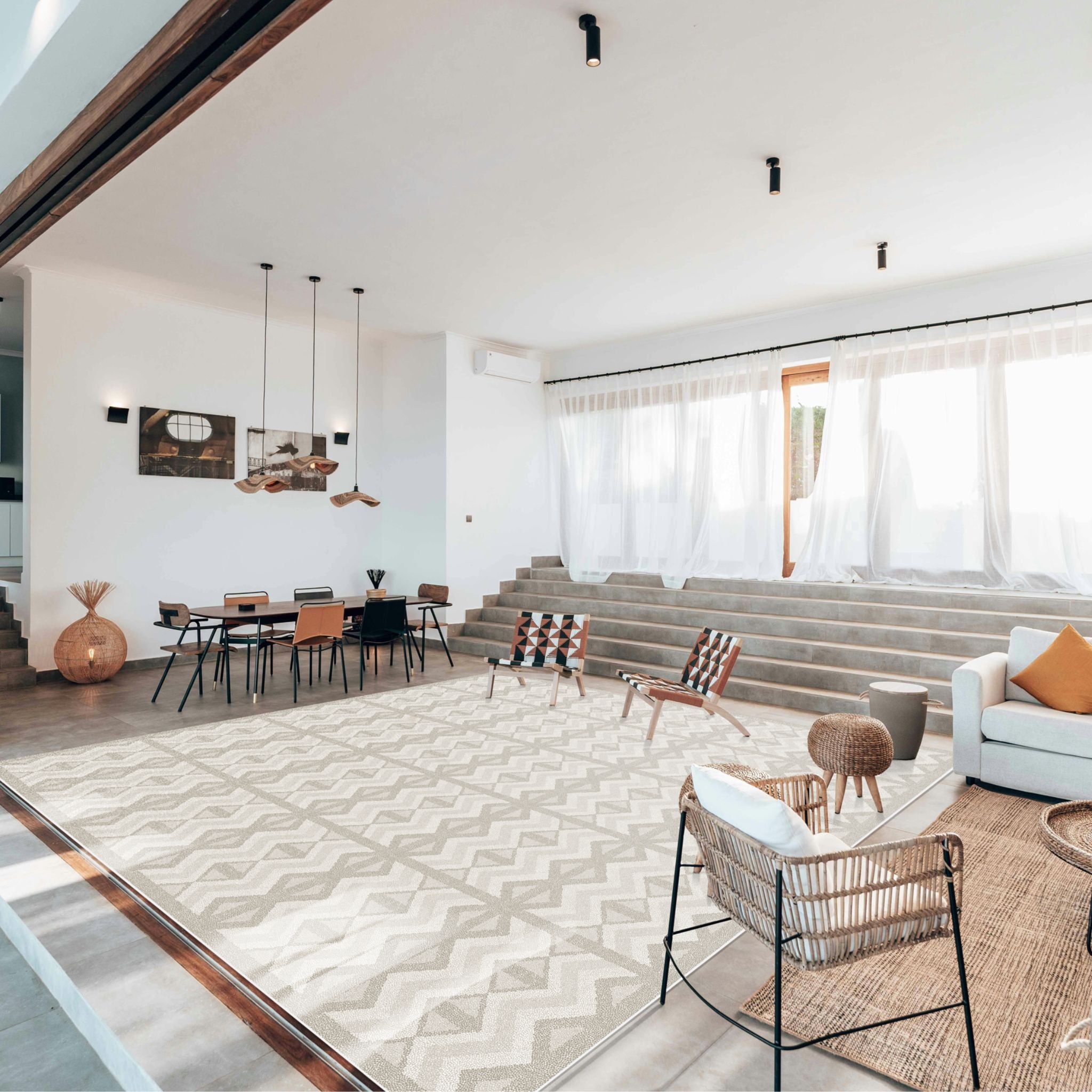
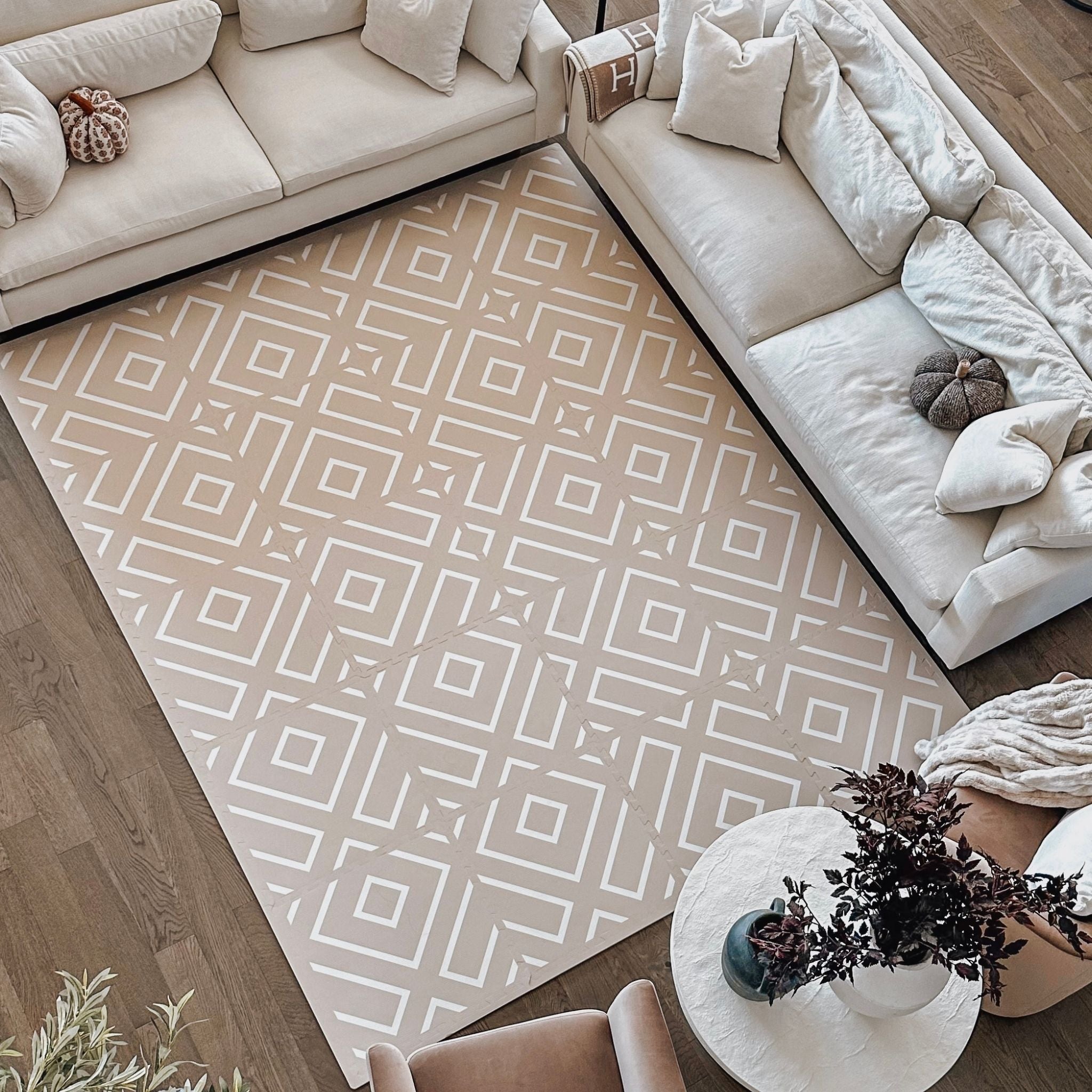
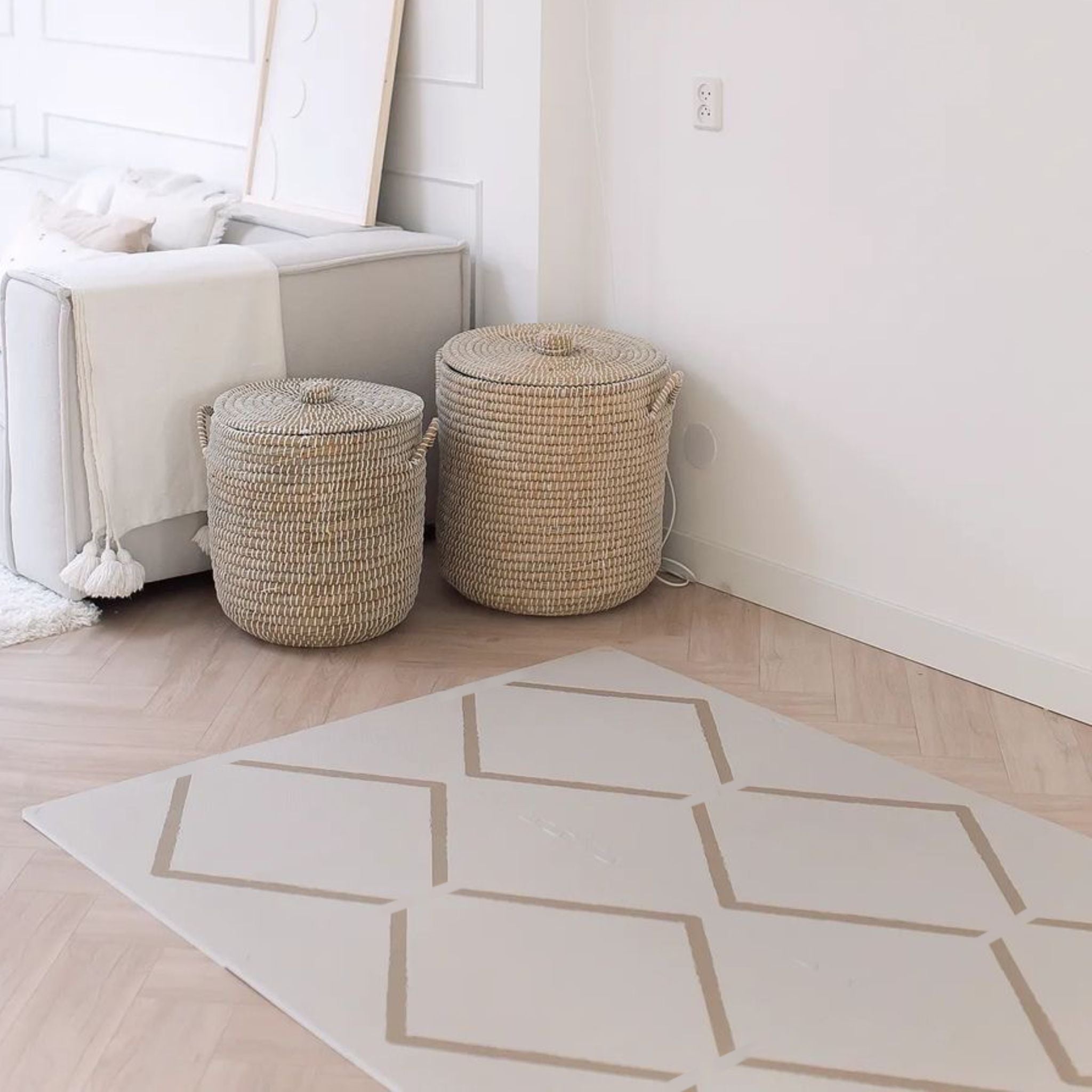
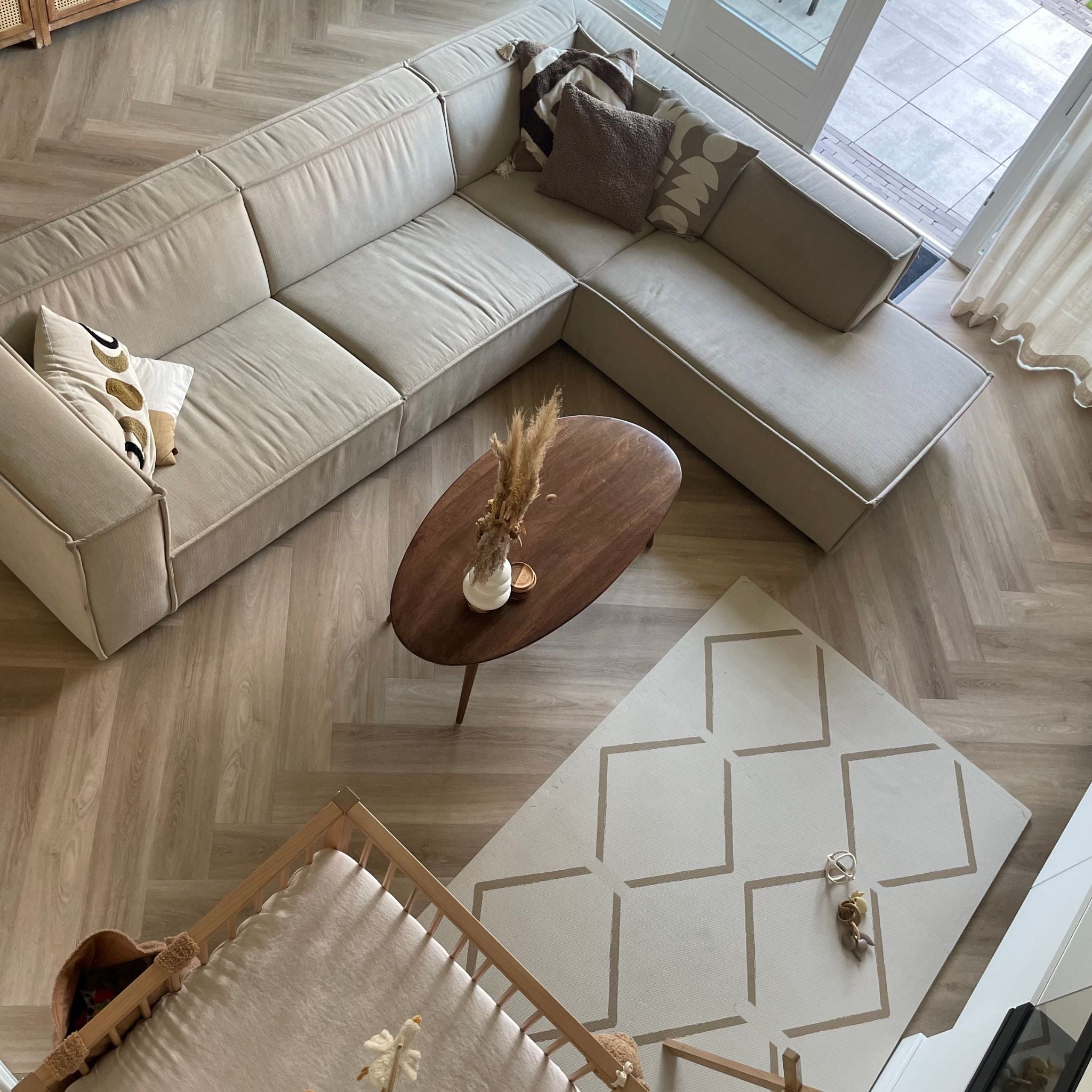
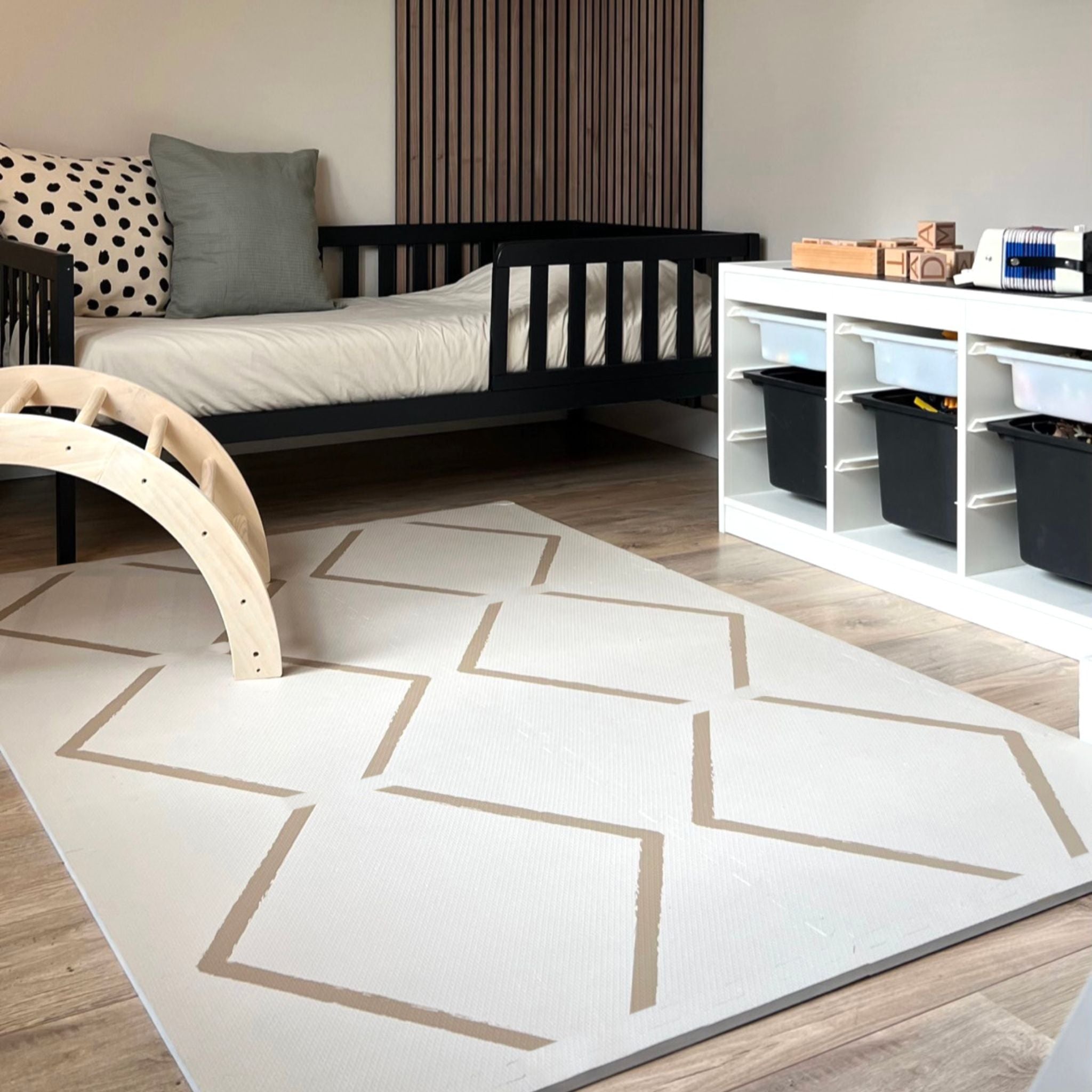
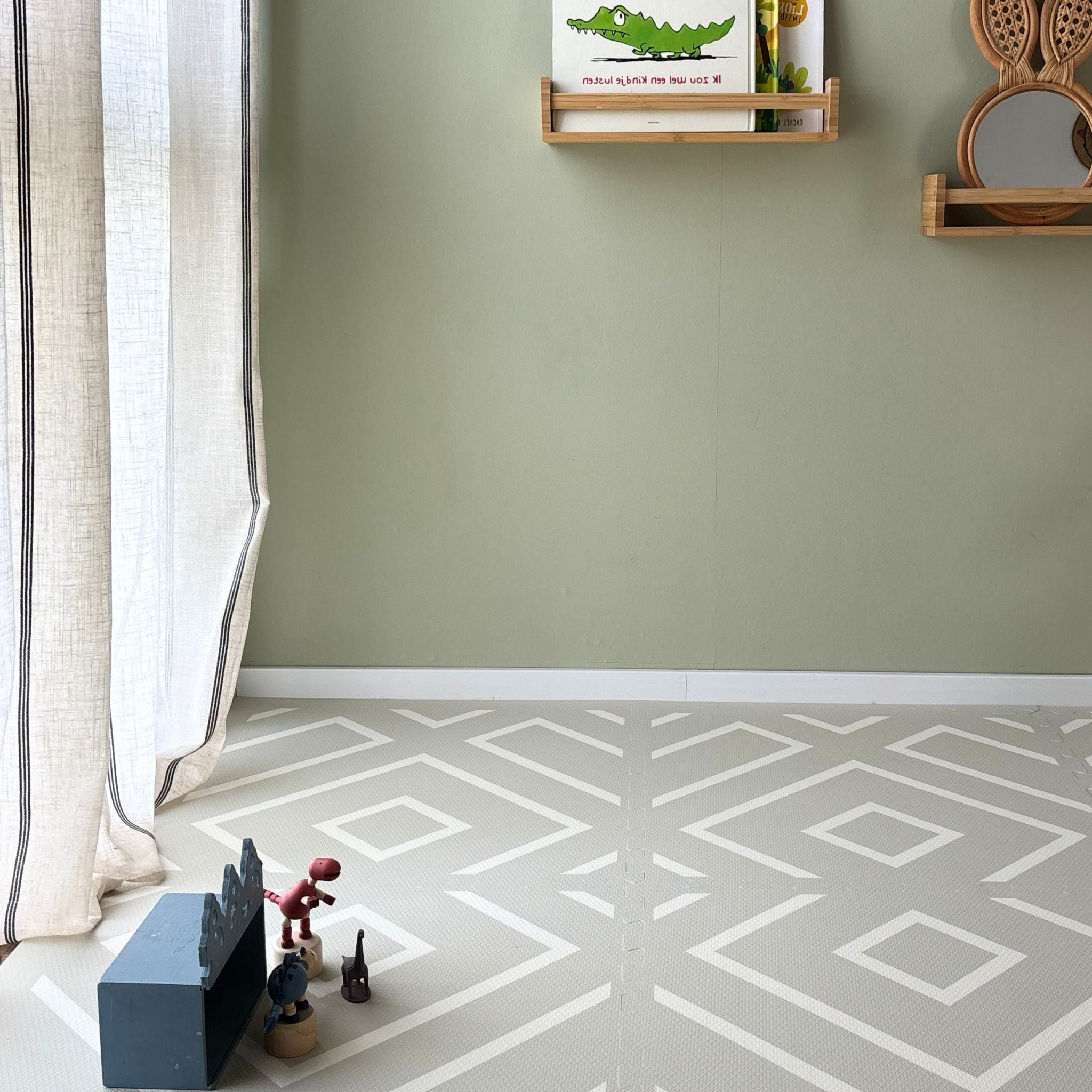
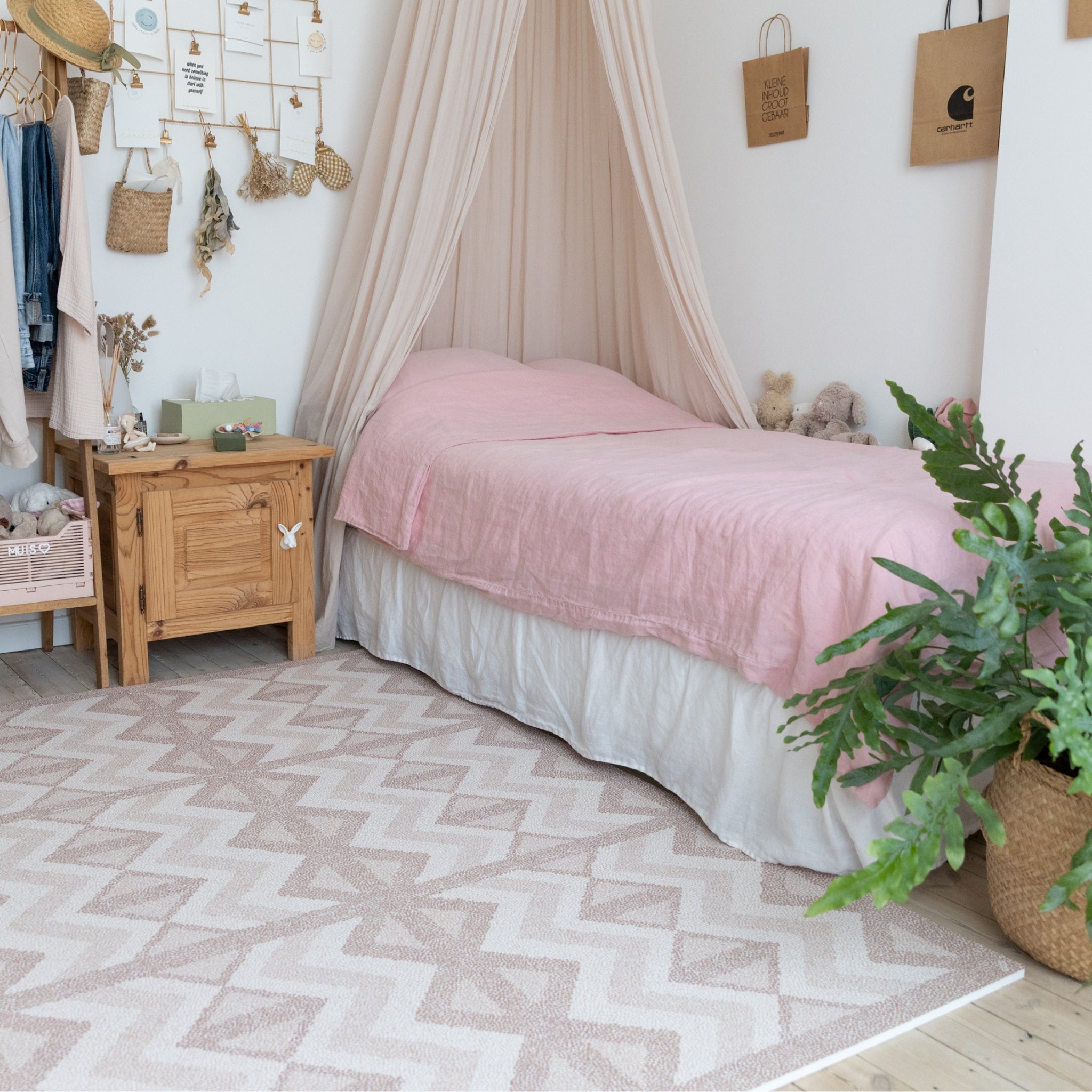
What does a foam play mat look like outside the nursery?

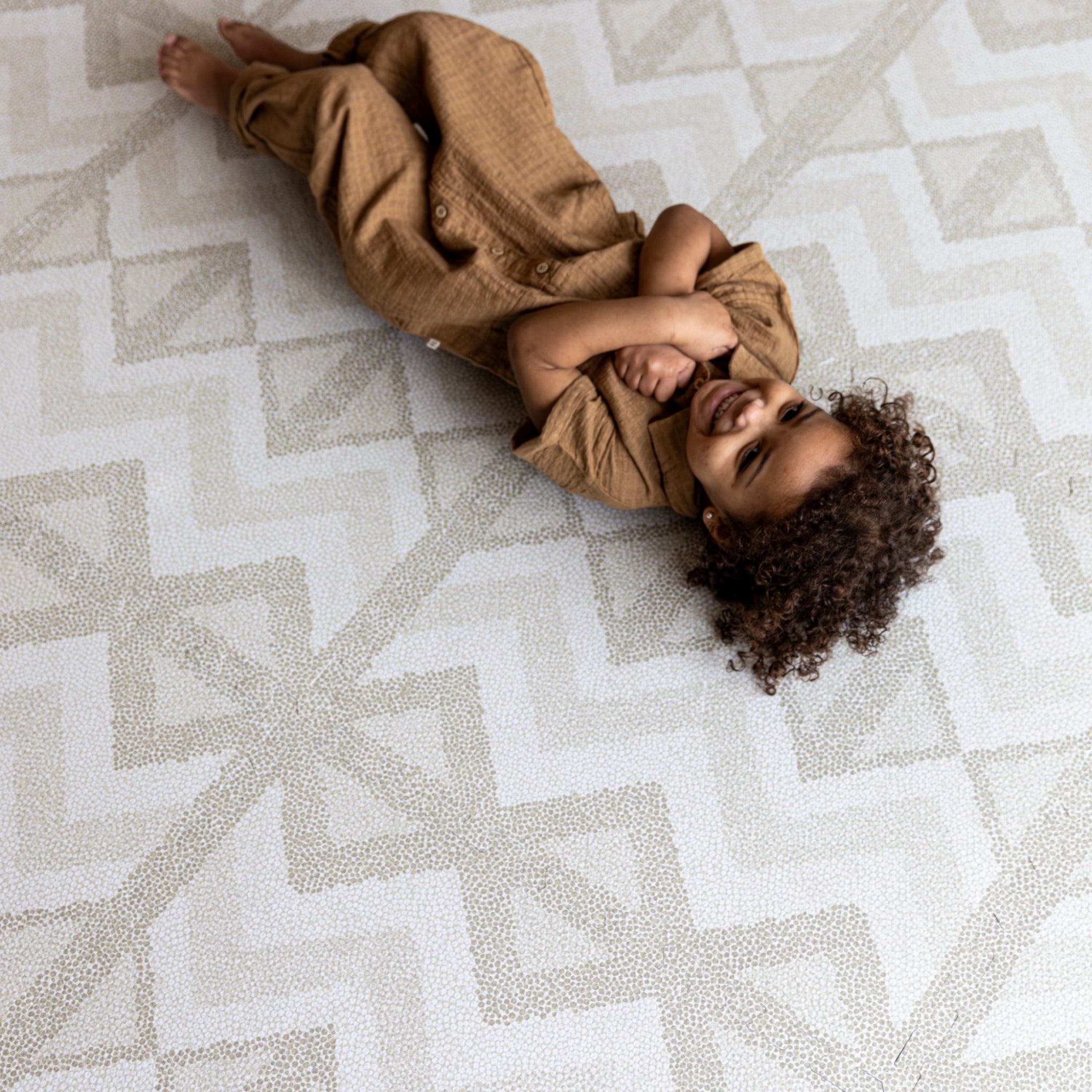
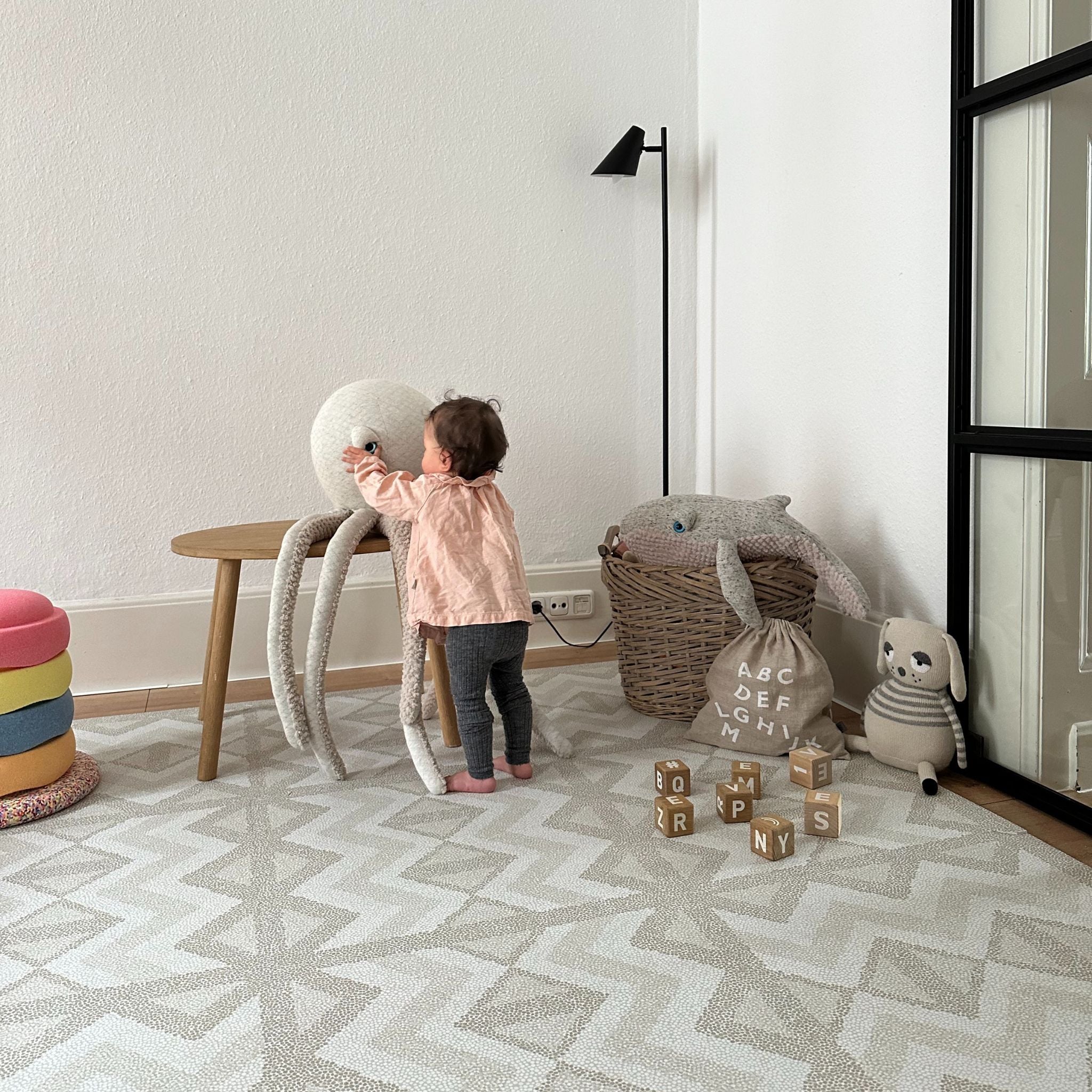
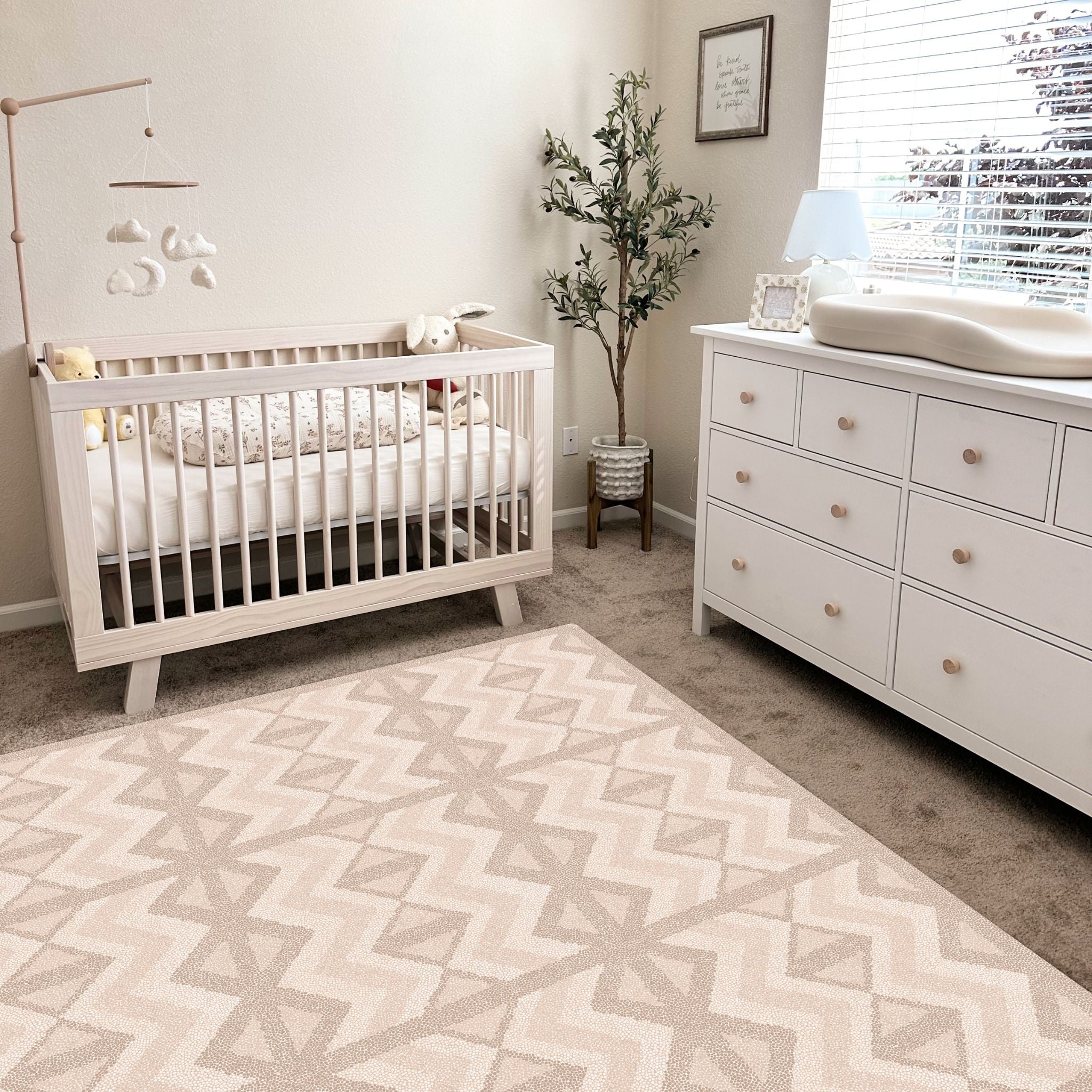
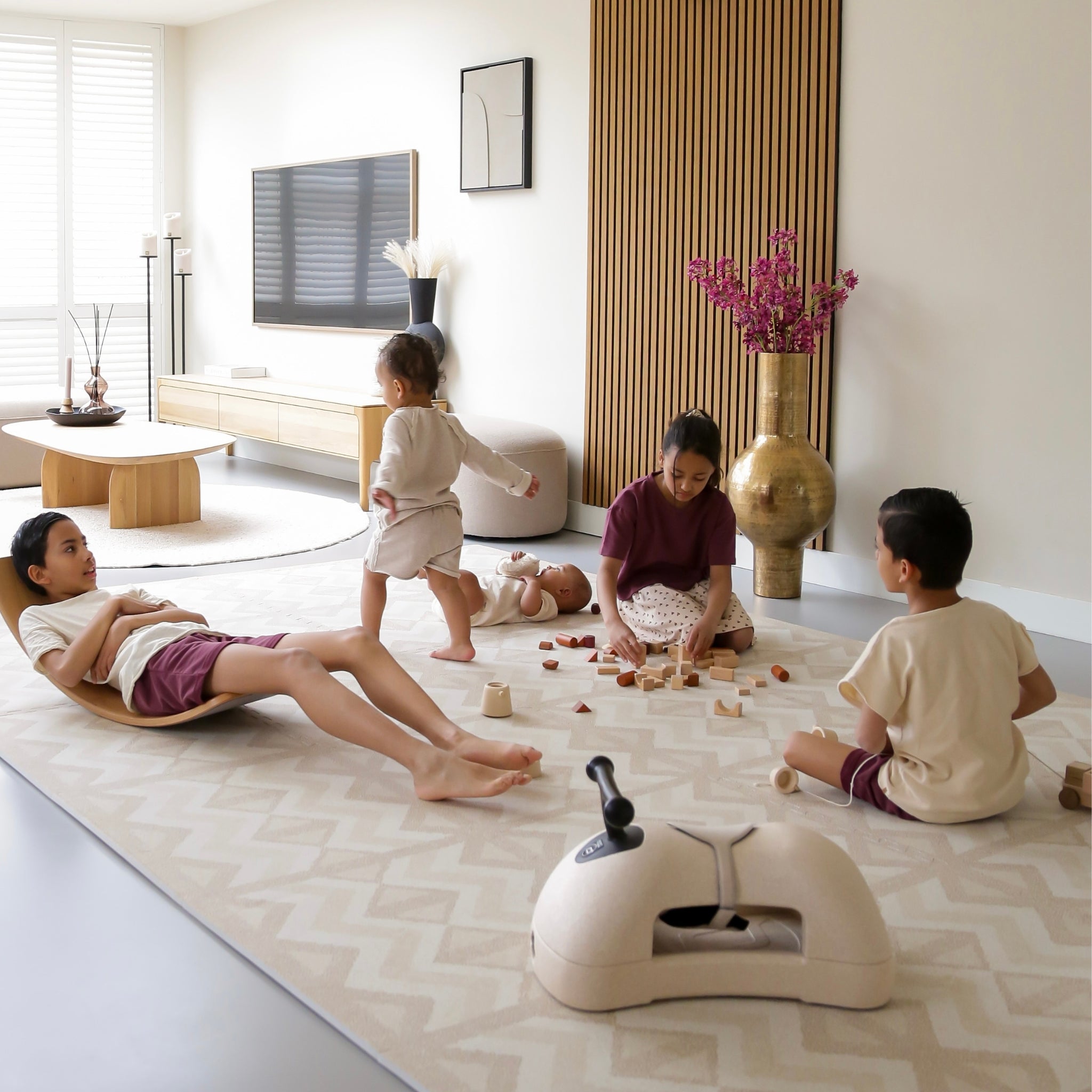
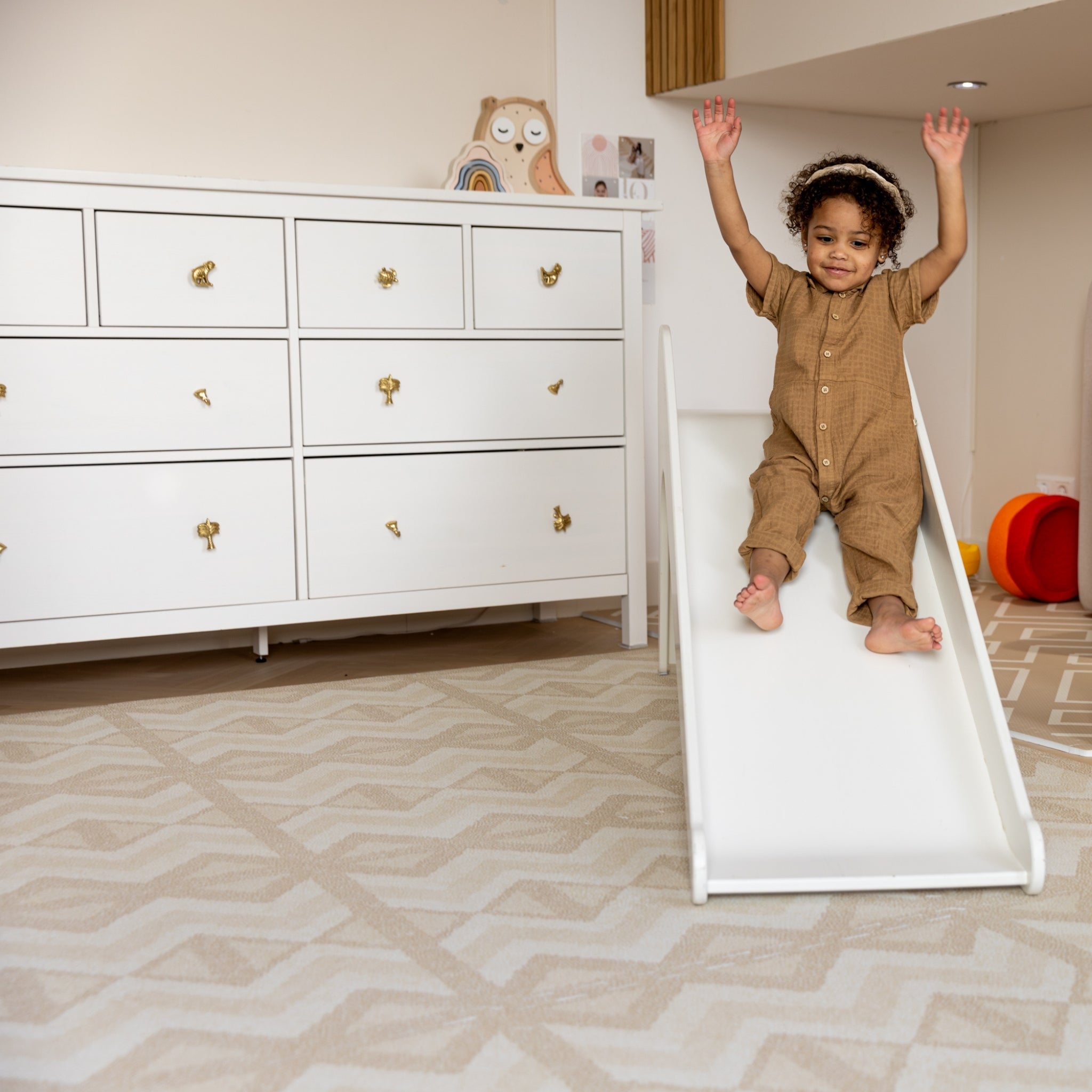
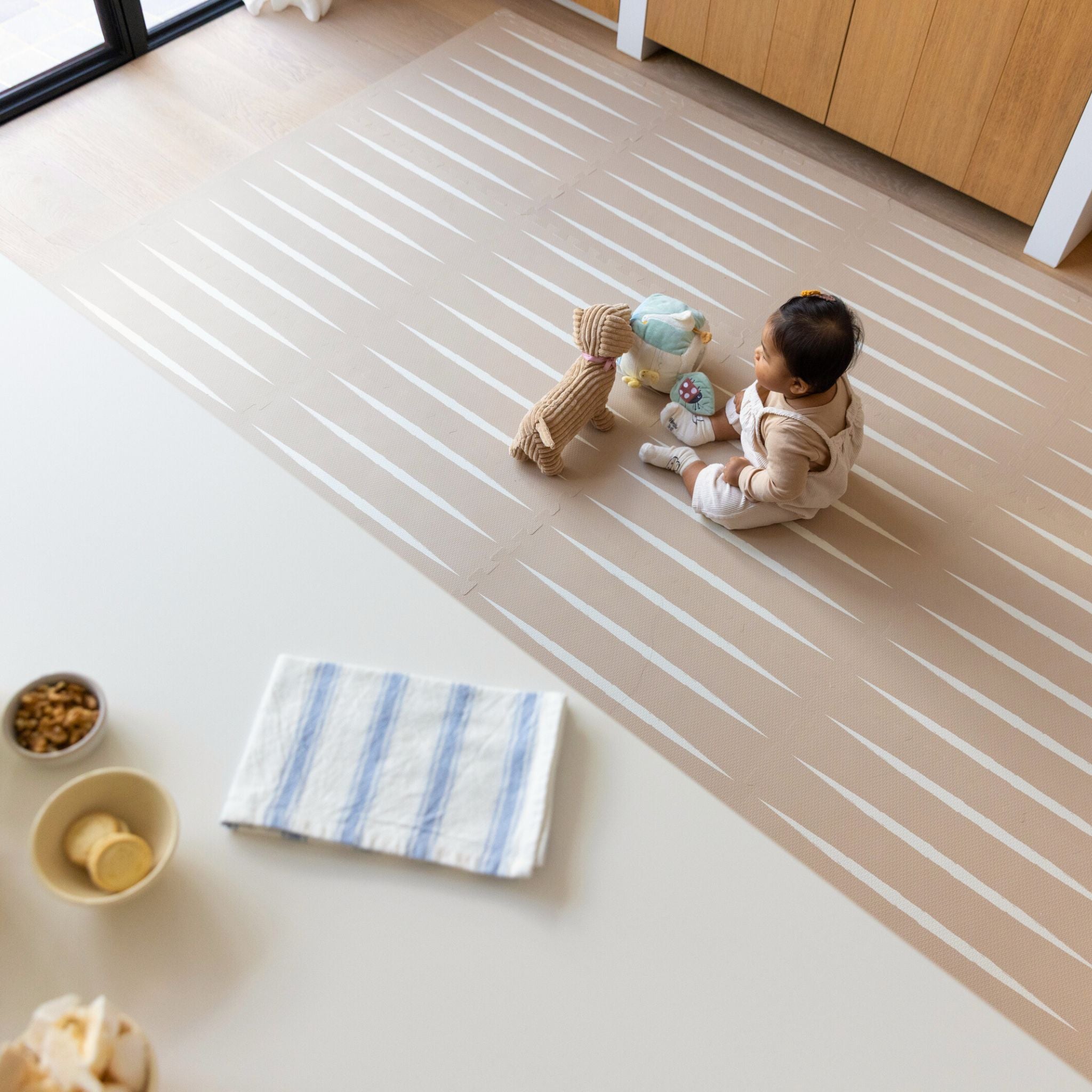
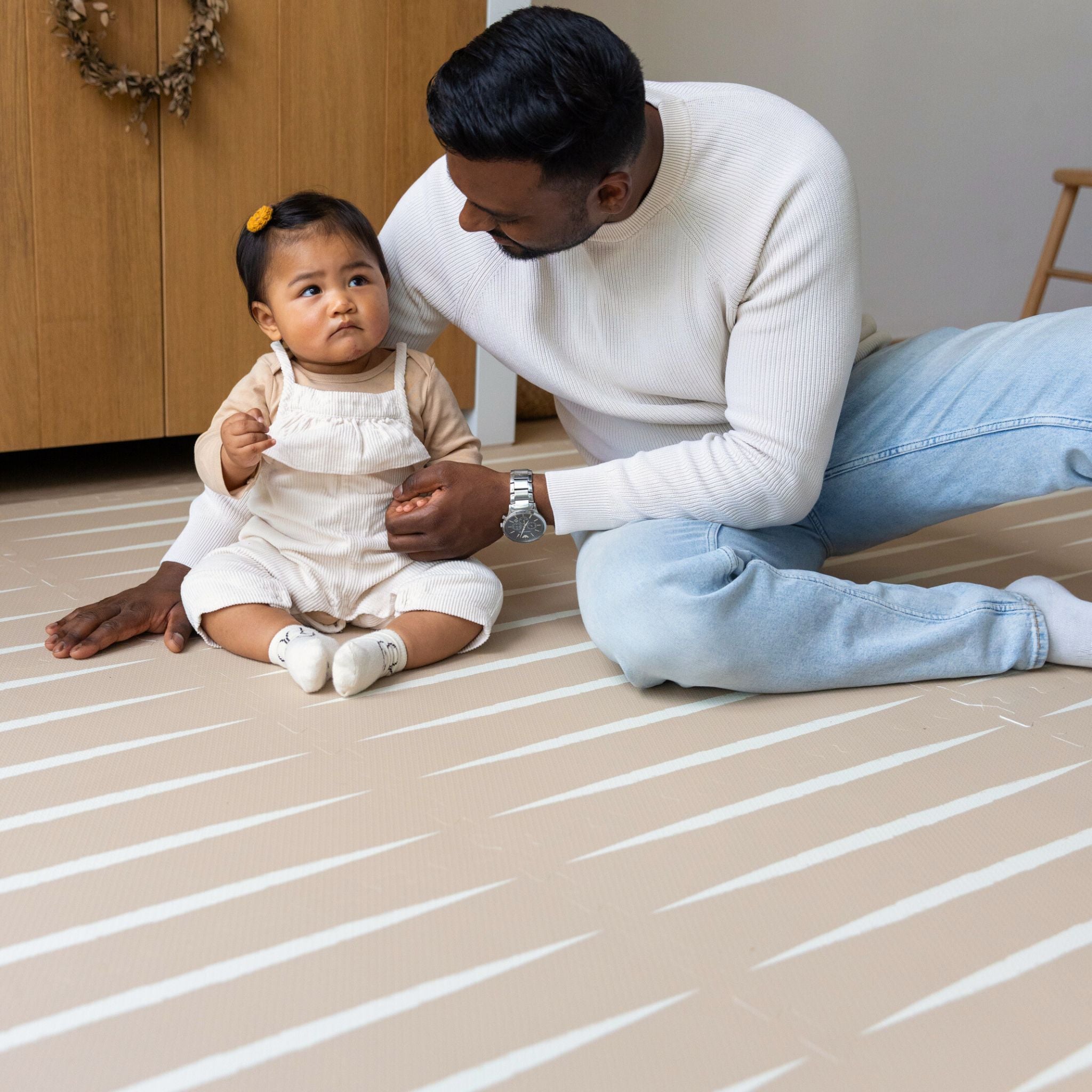
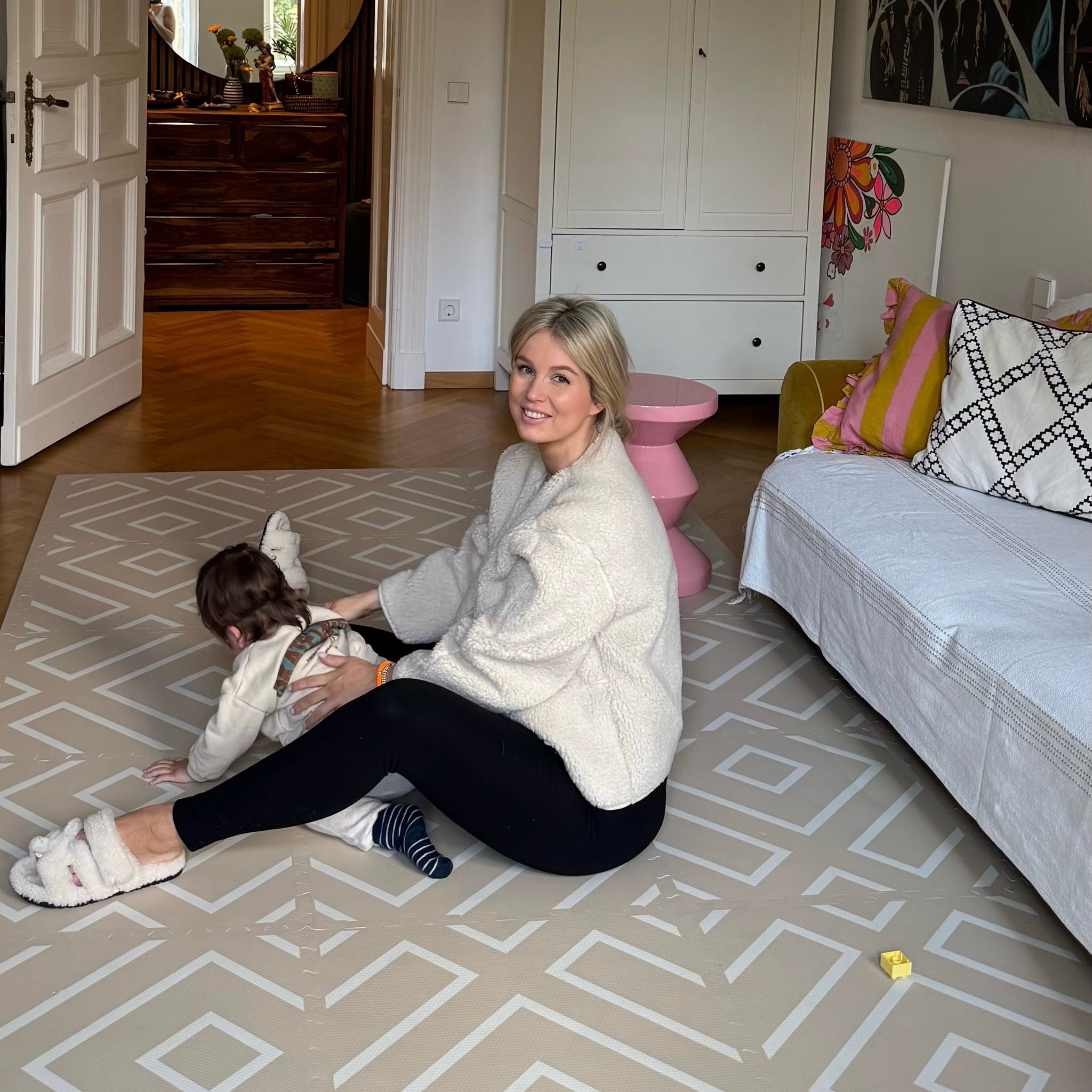
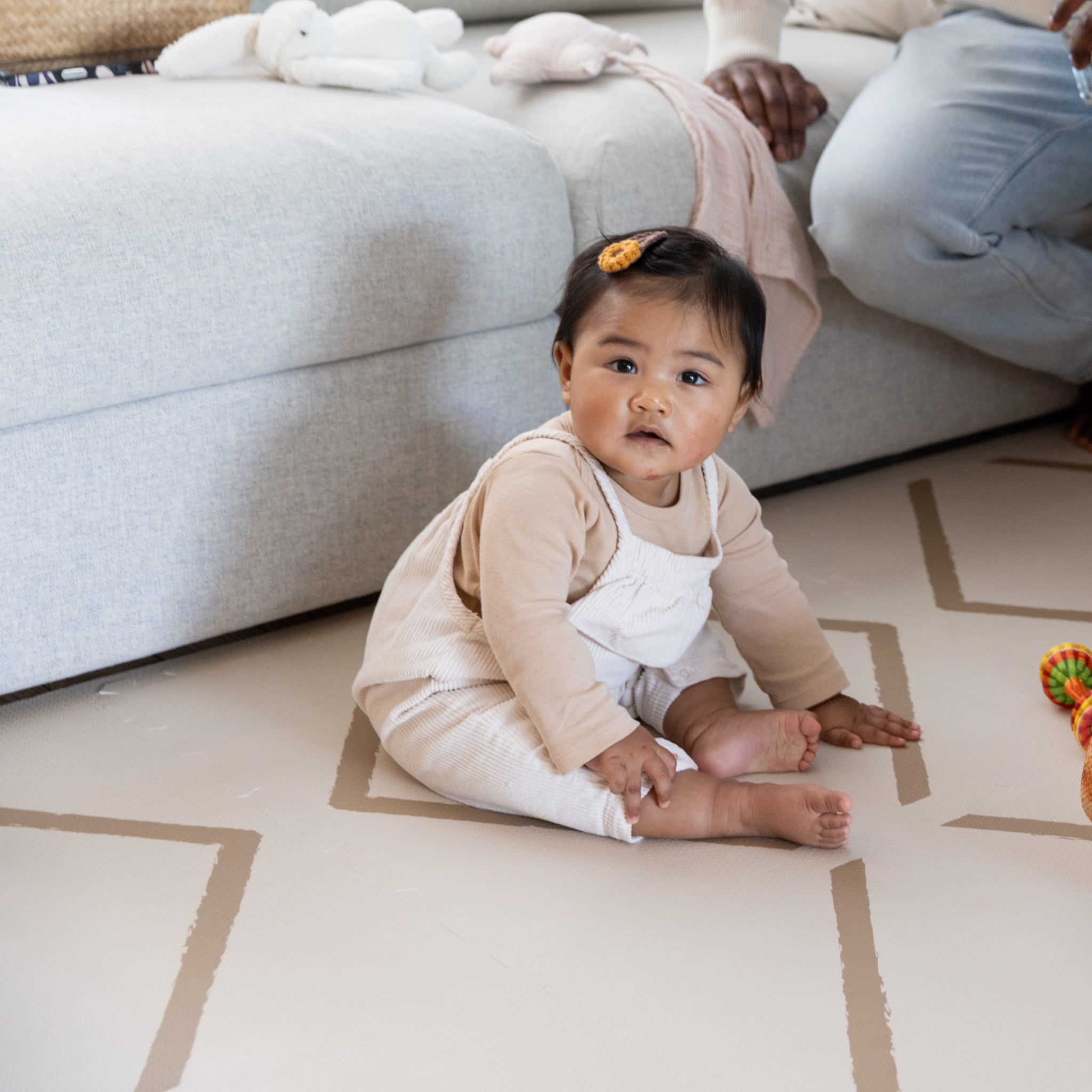
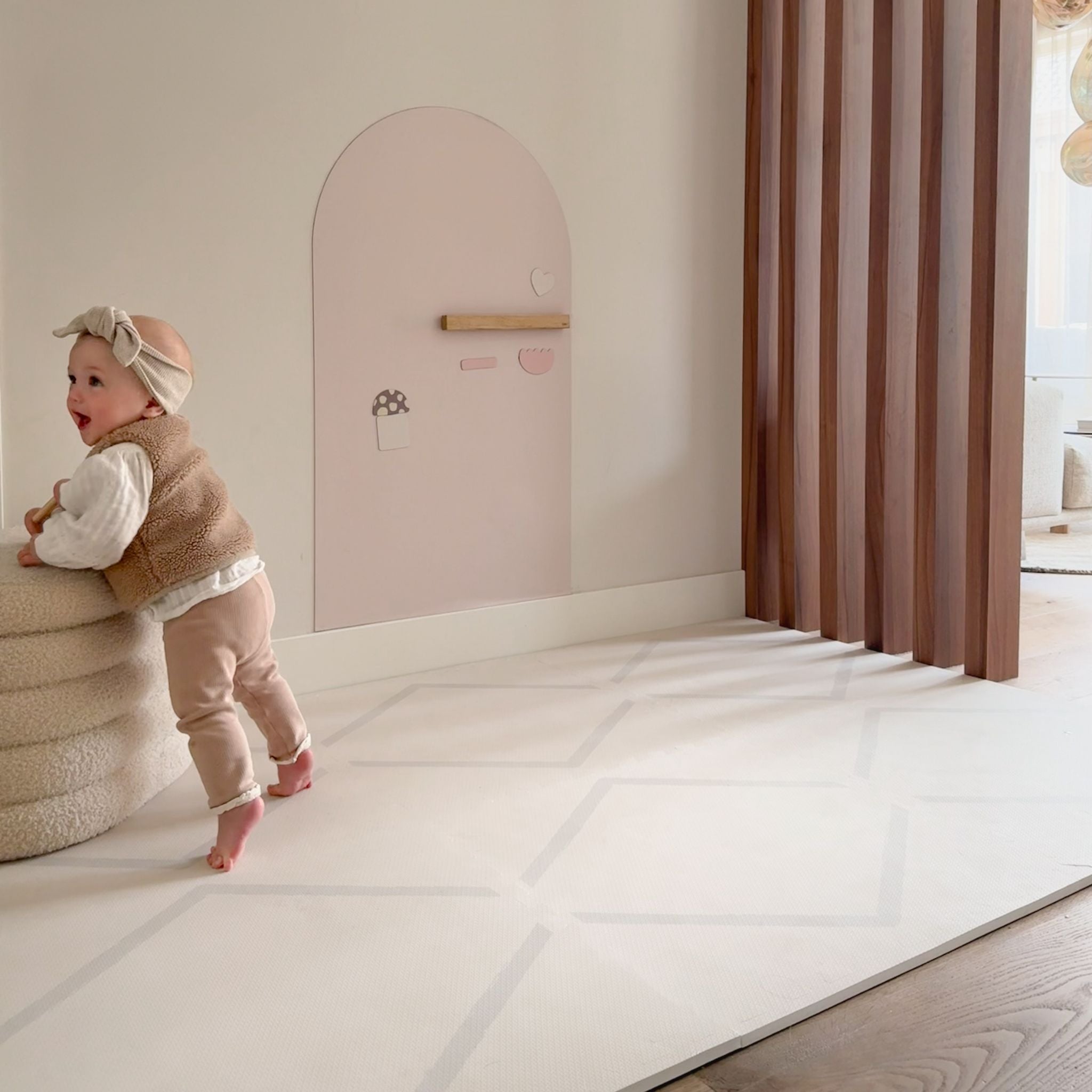
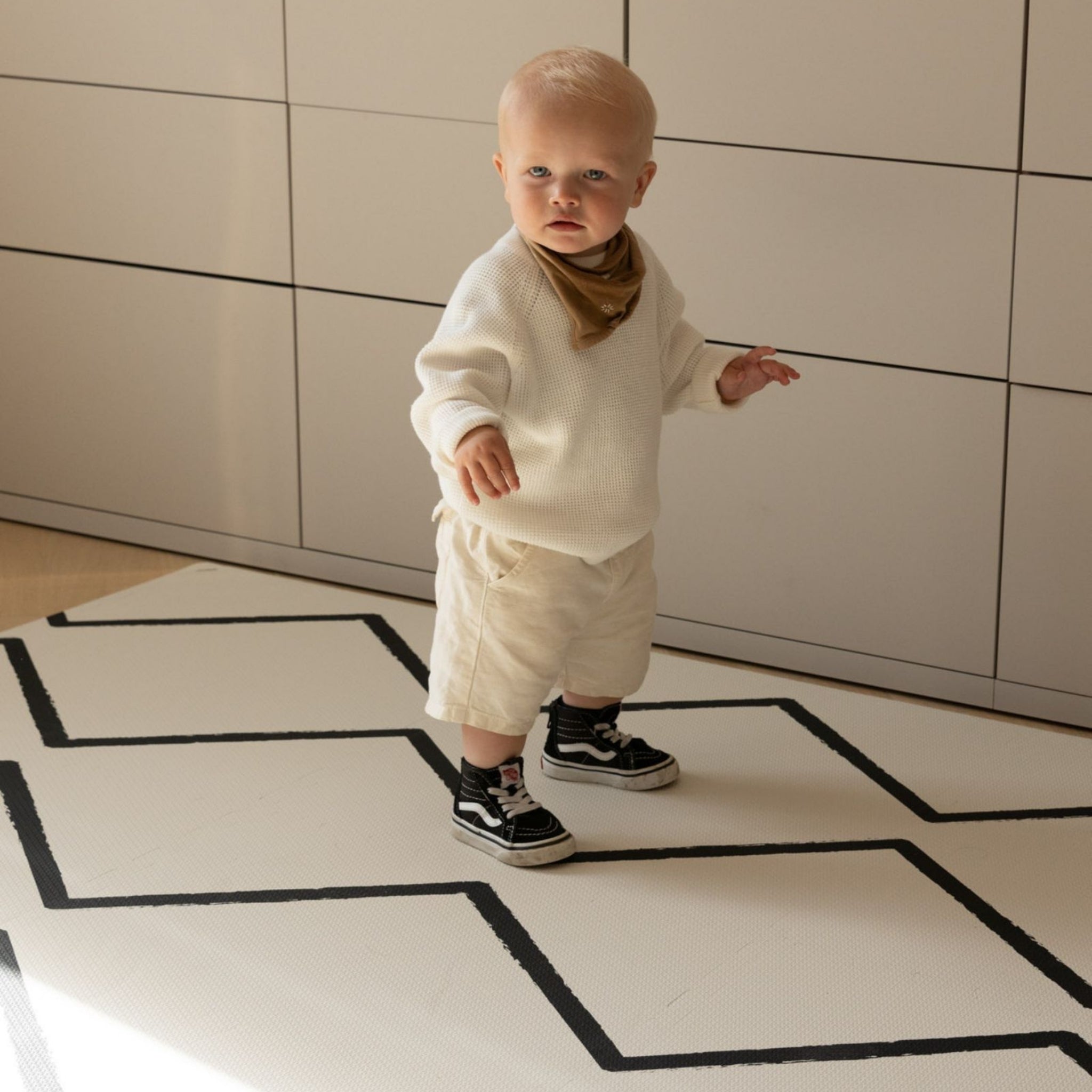
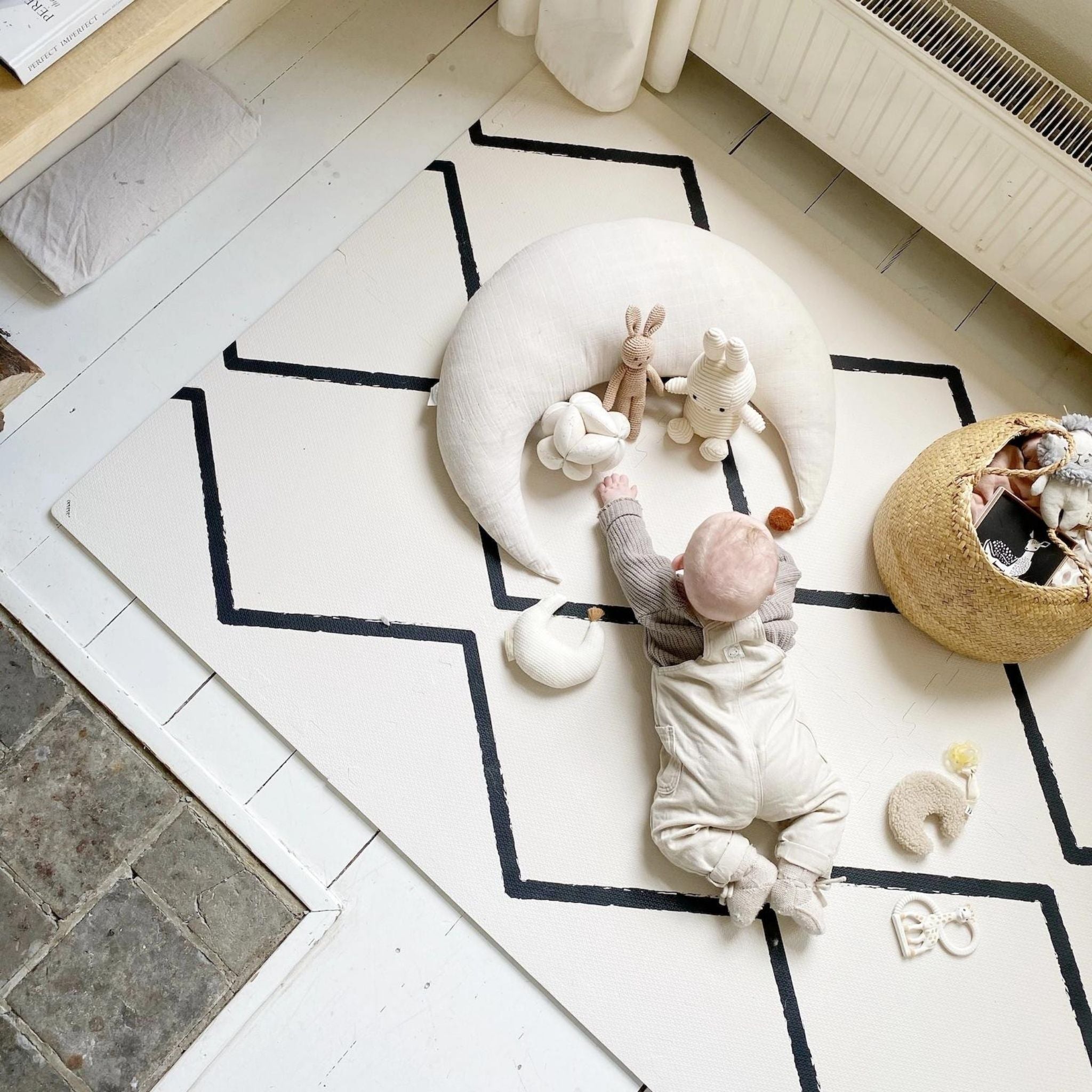
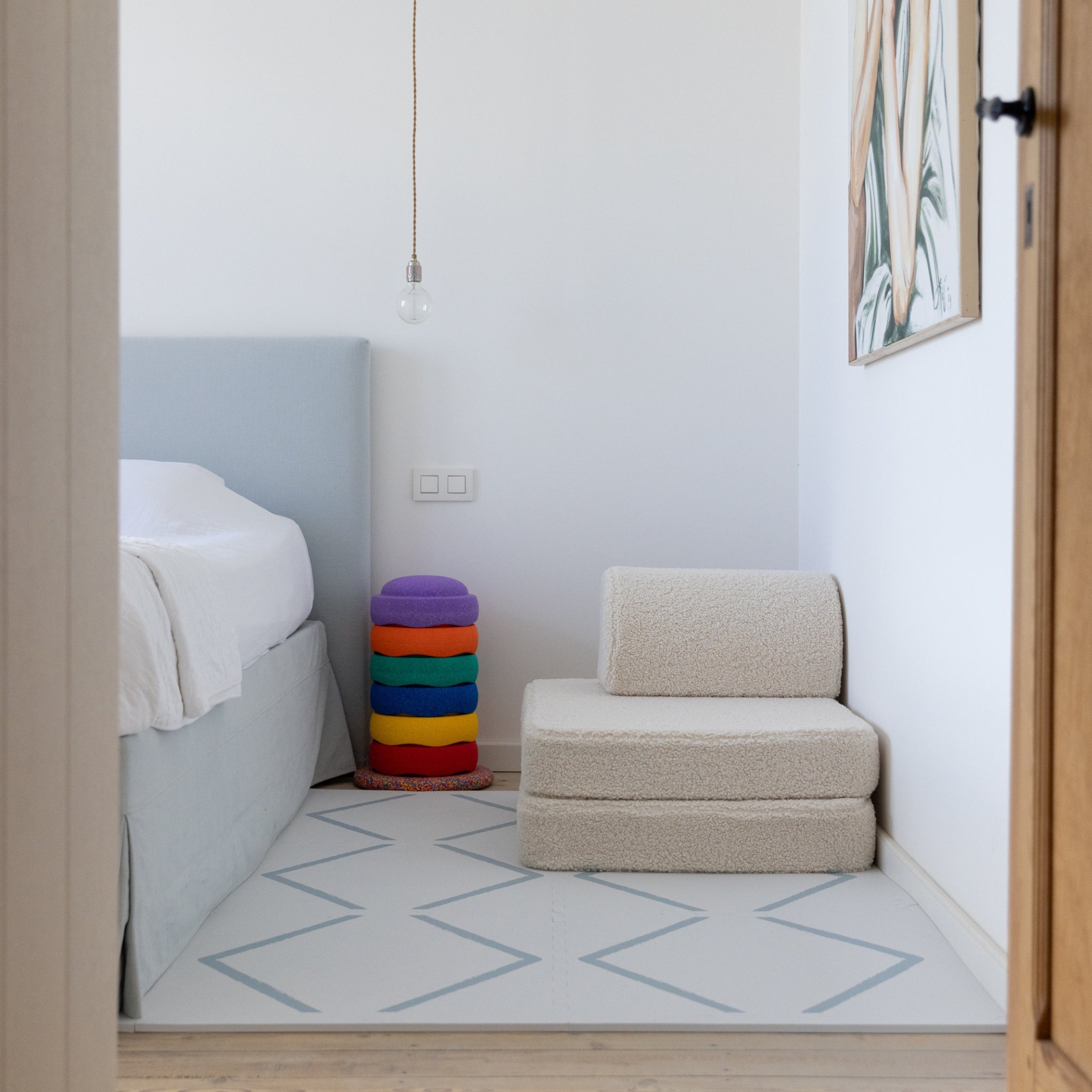
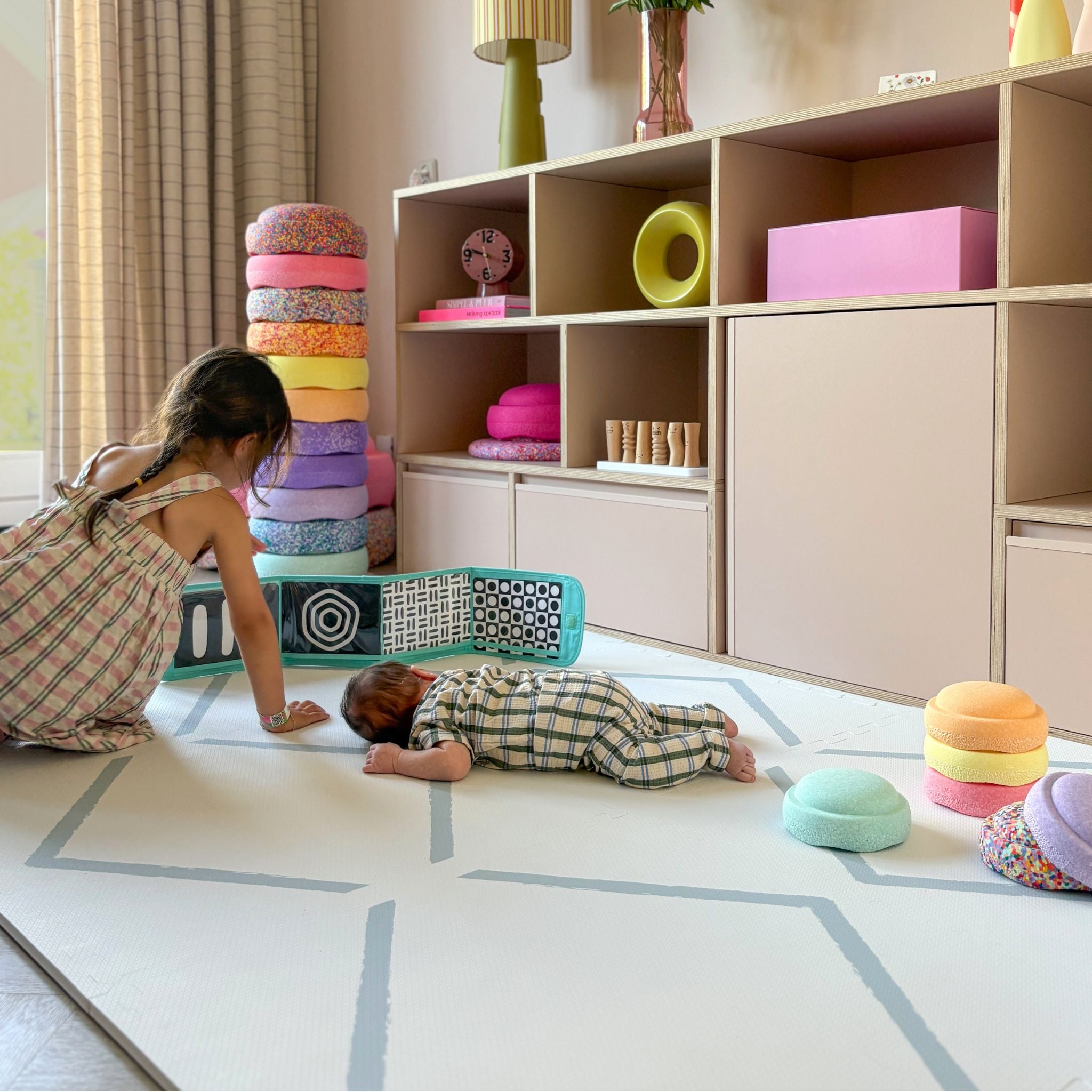
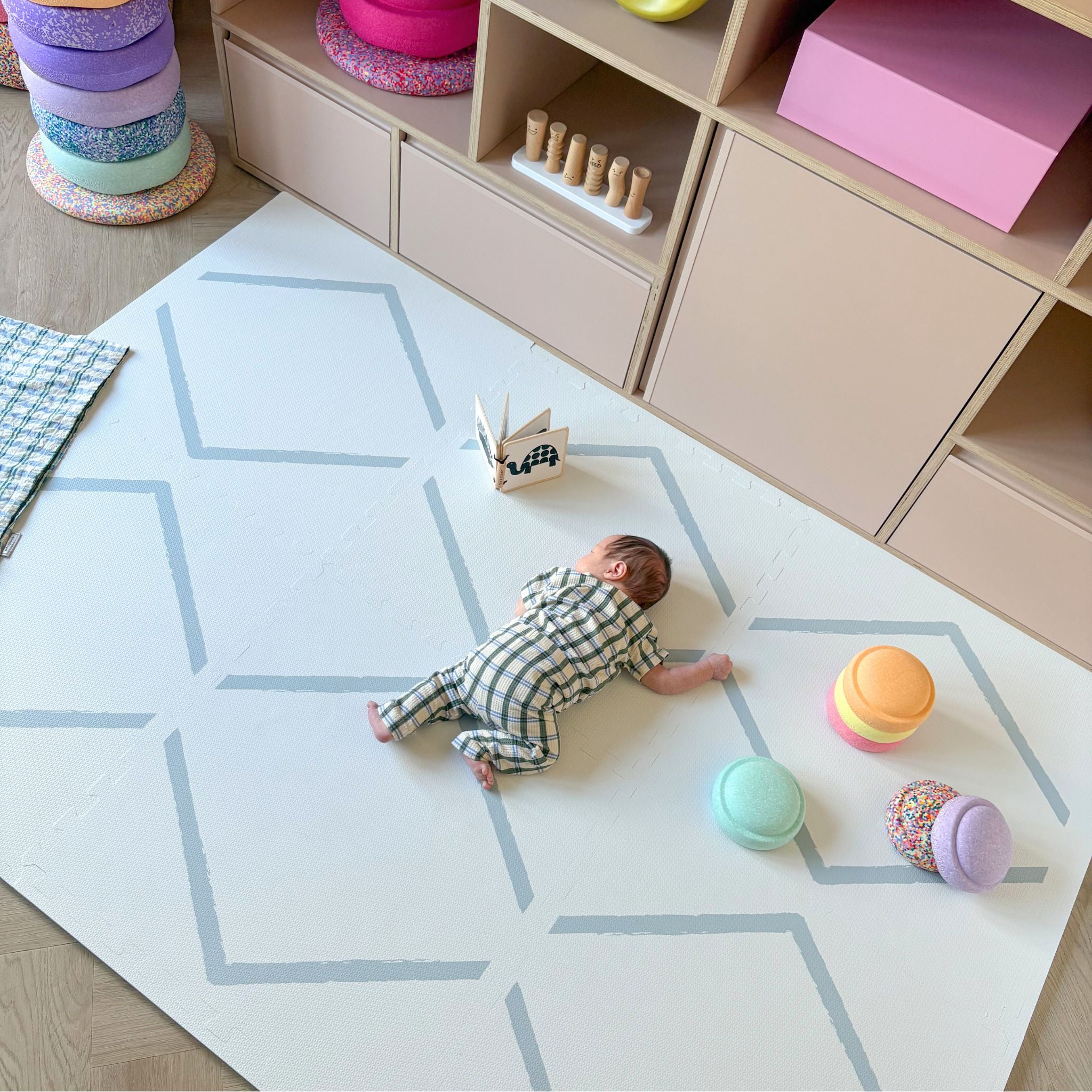
Early on, while your baby is still mostly doing tummy time rather than crawling across the whole room, looks matter even more, since the mat spends most of its day as a piece of furniture rather than an active play surface.
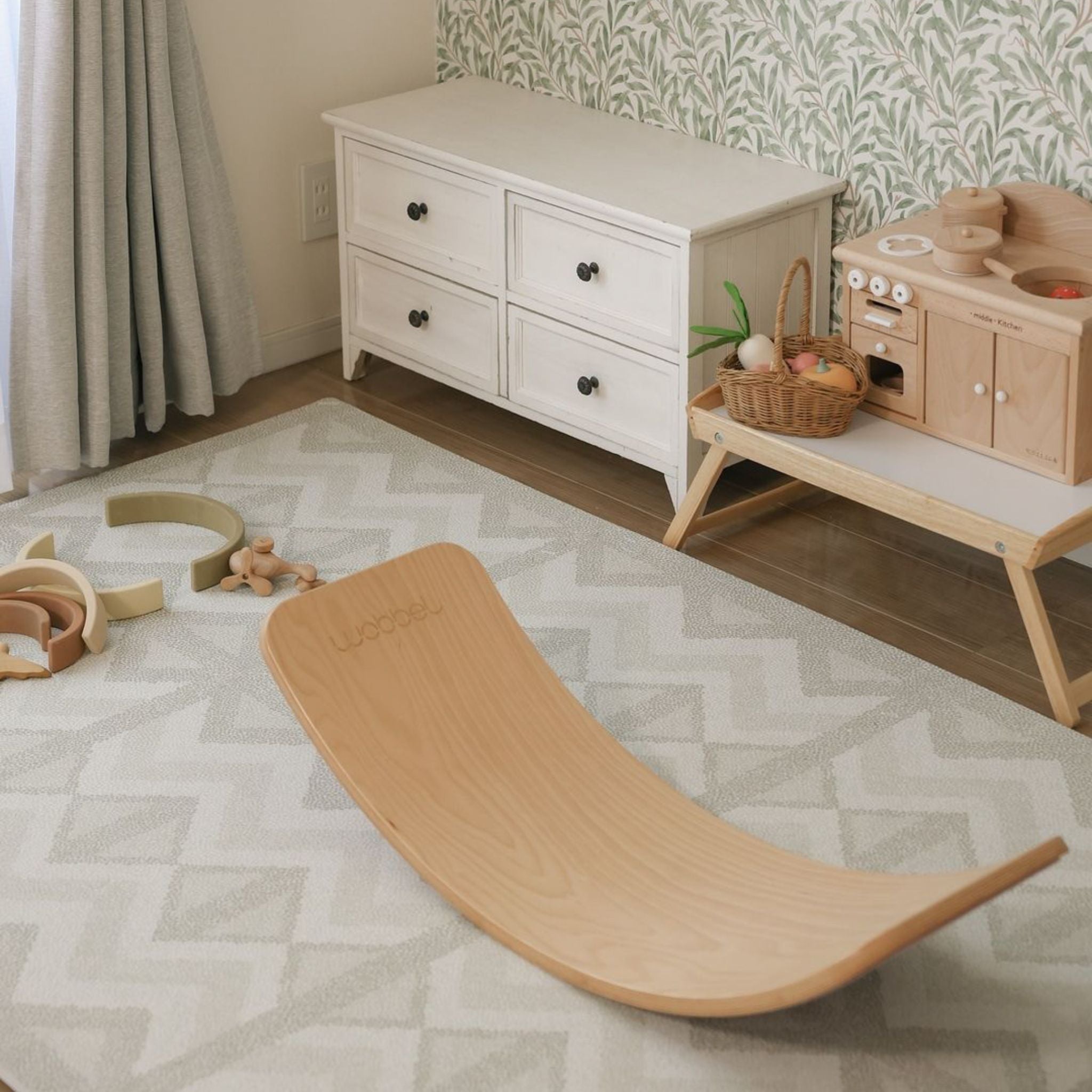
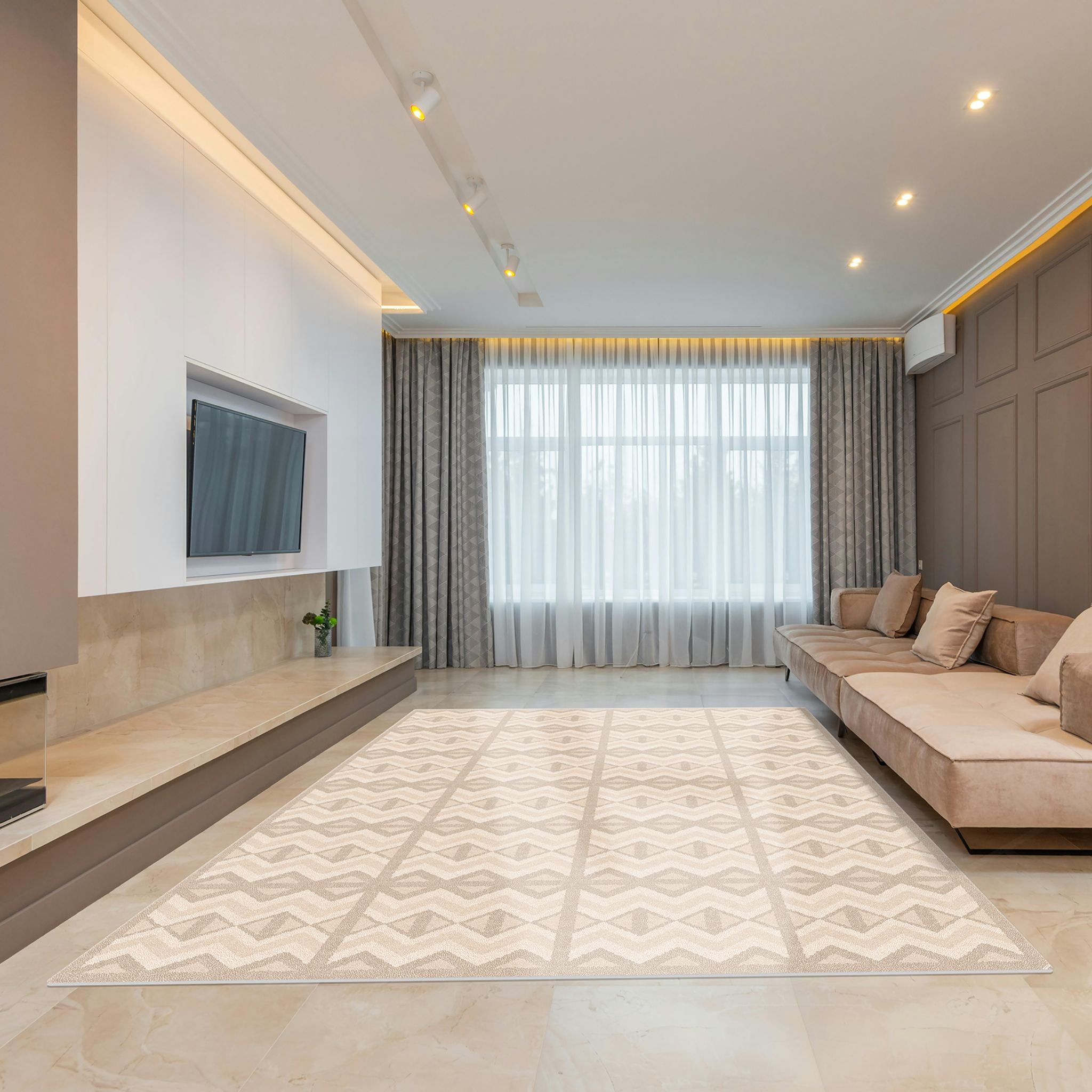
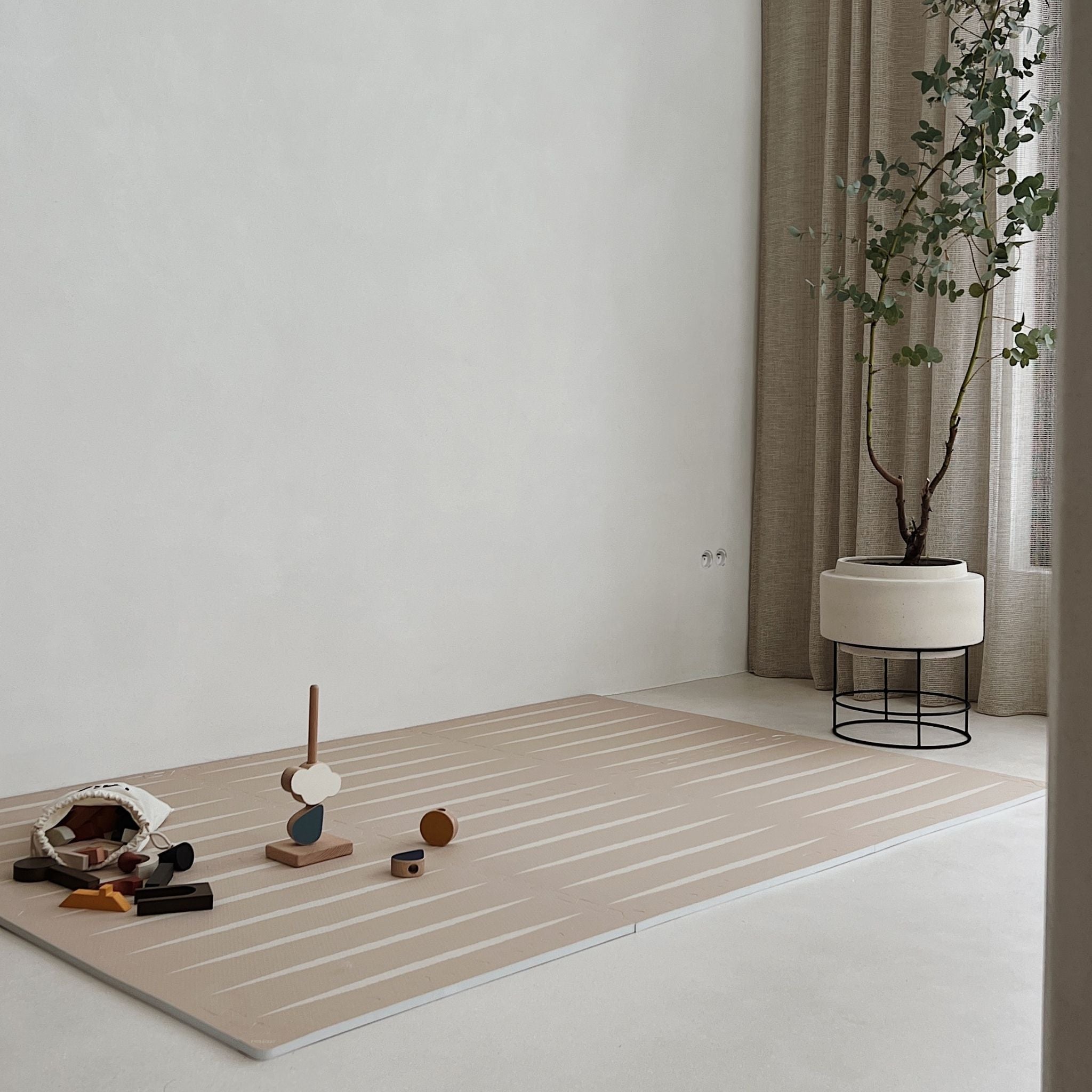
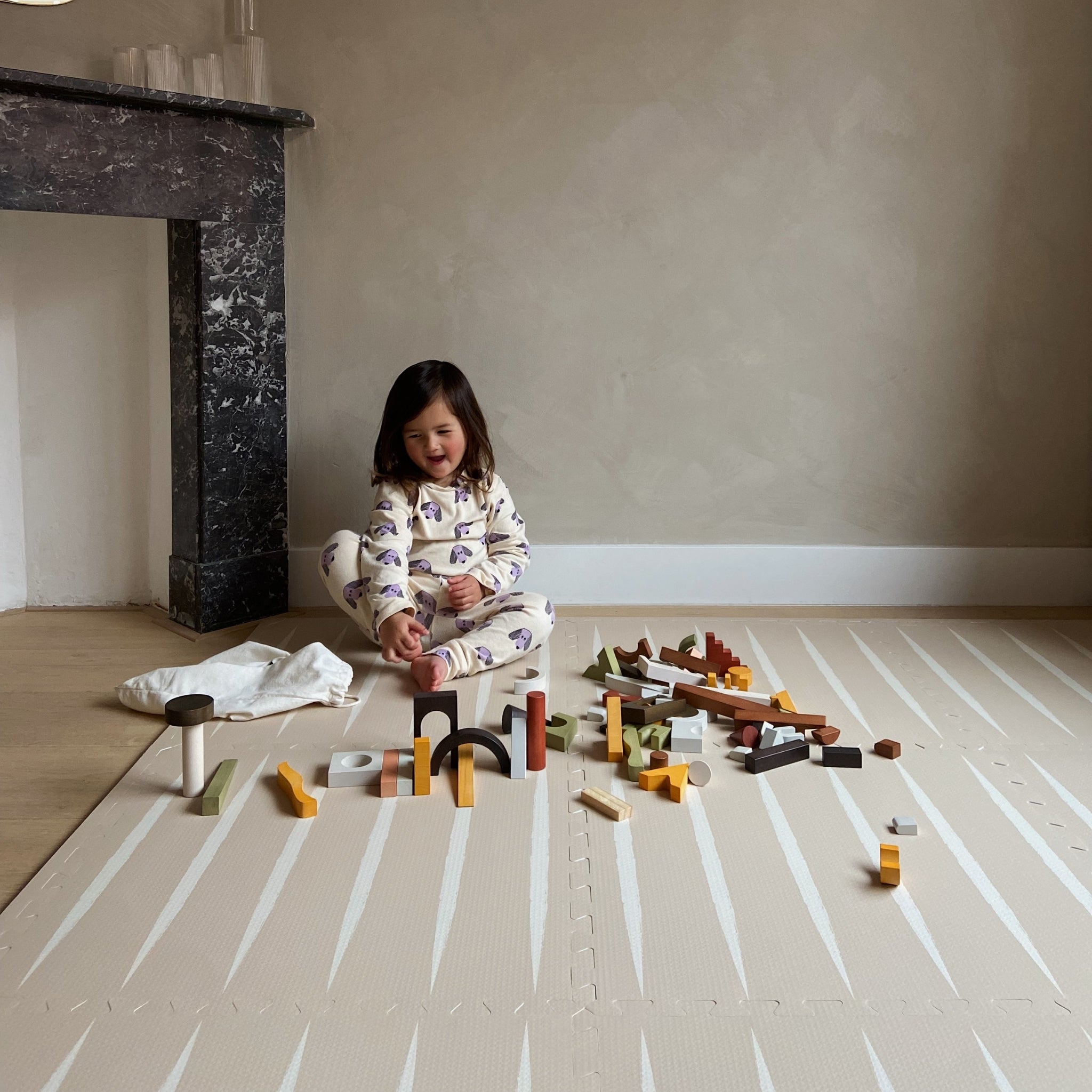
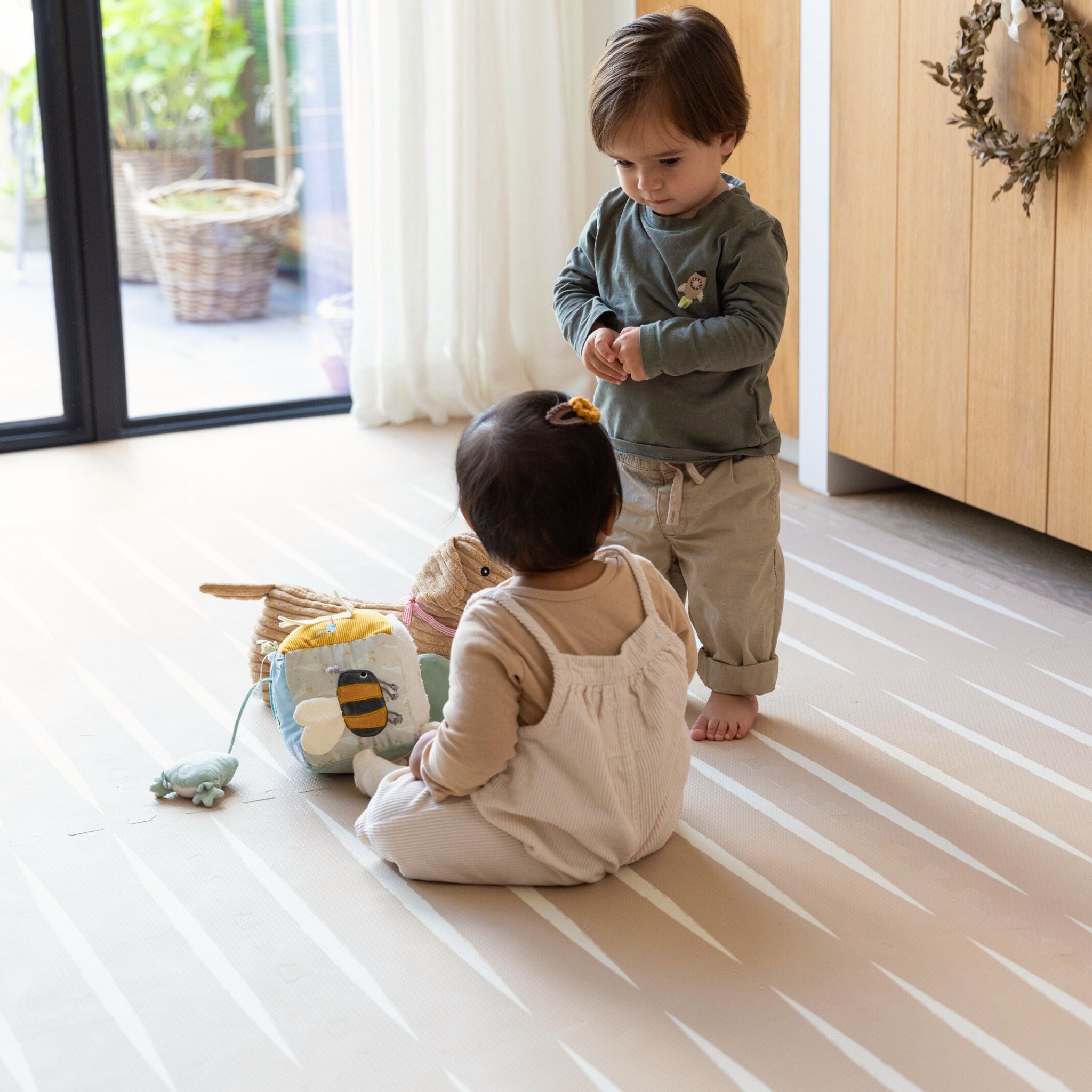
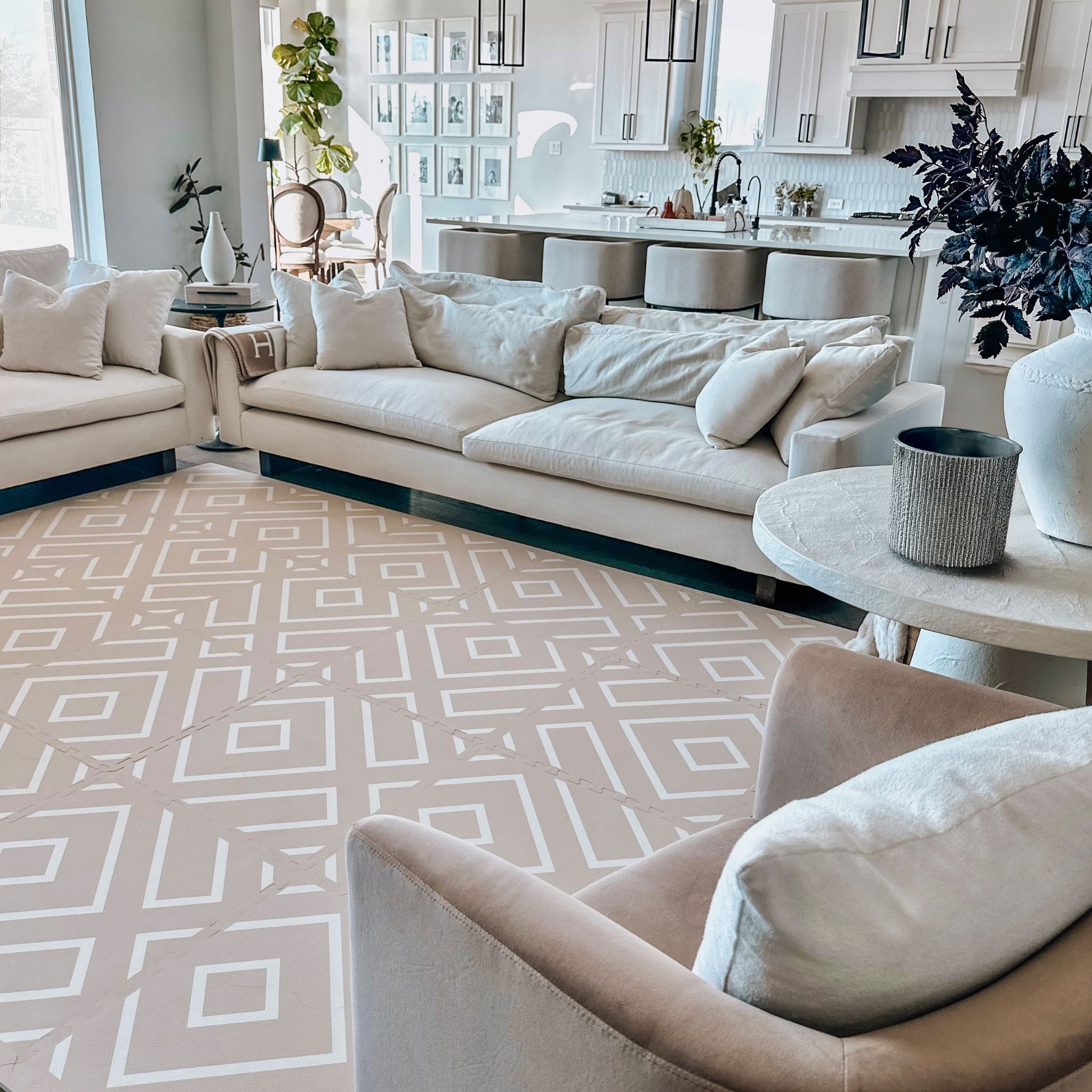
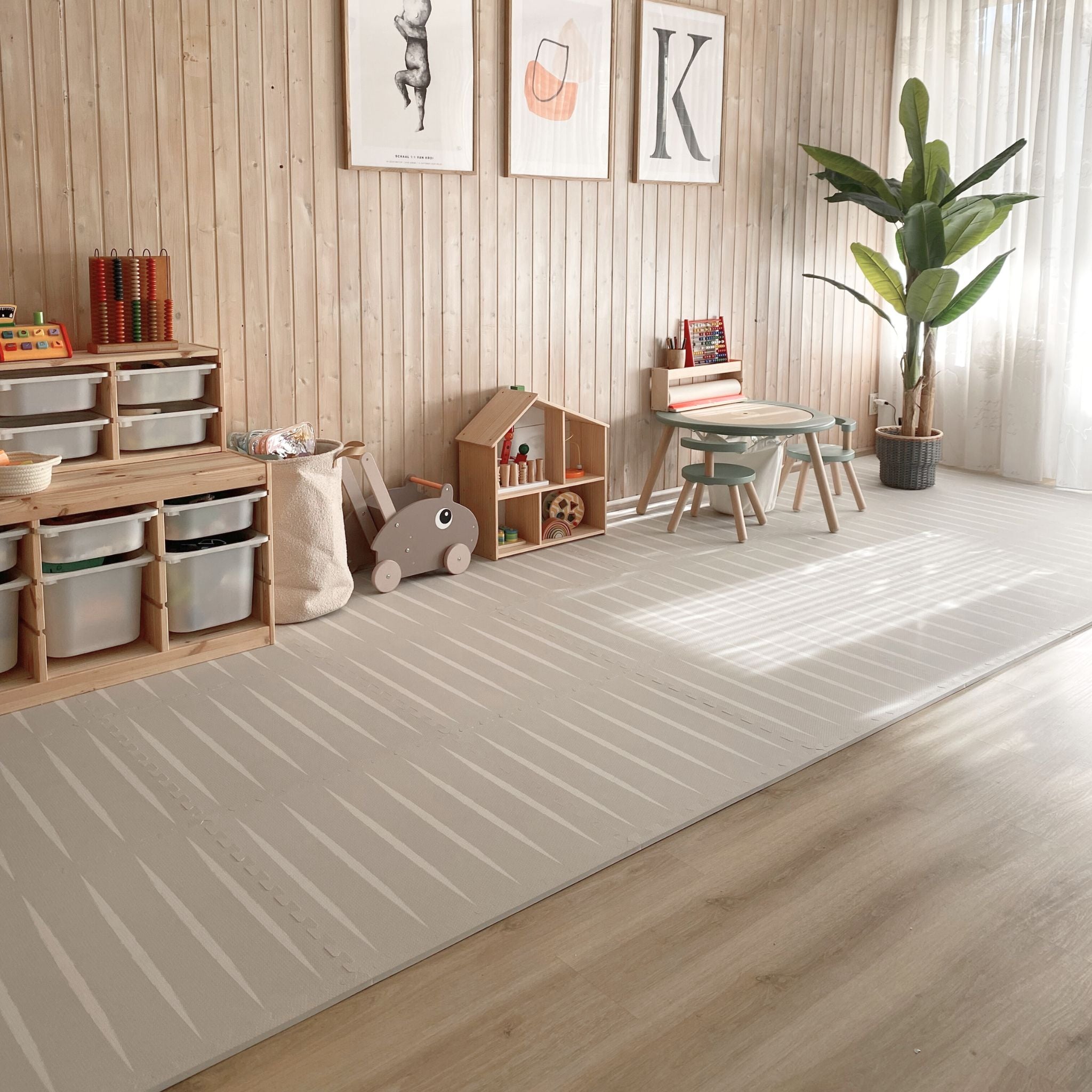
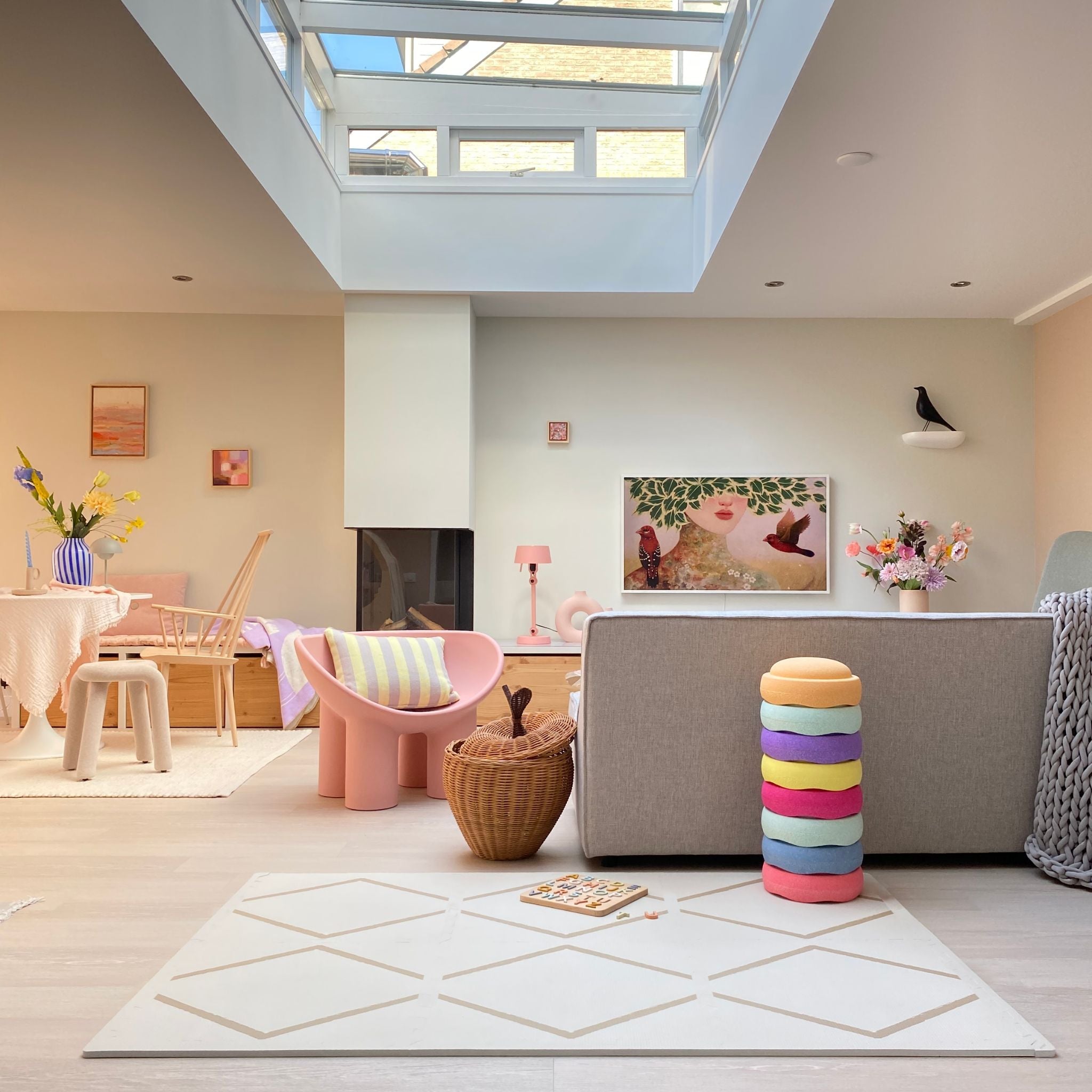
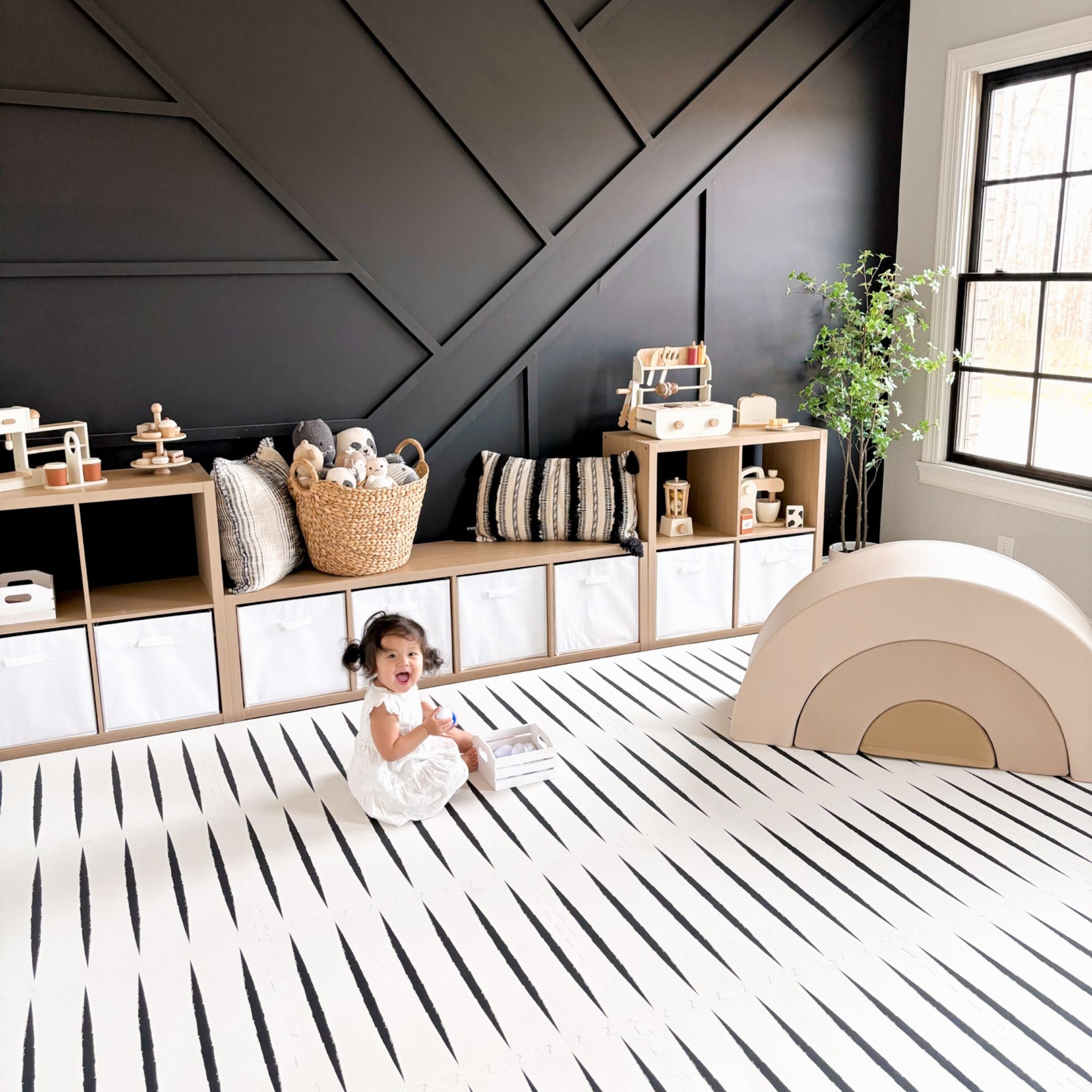
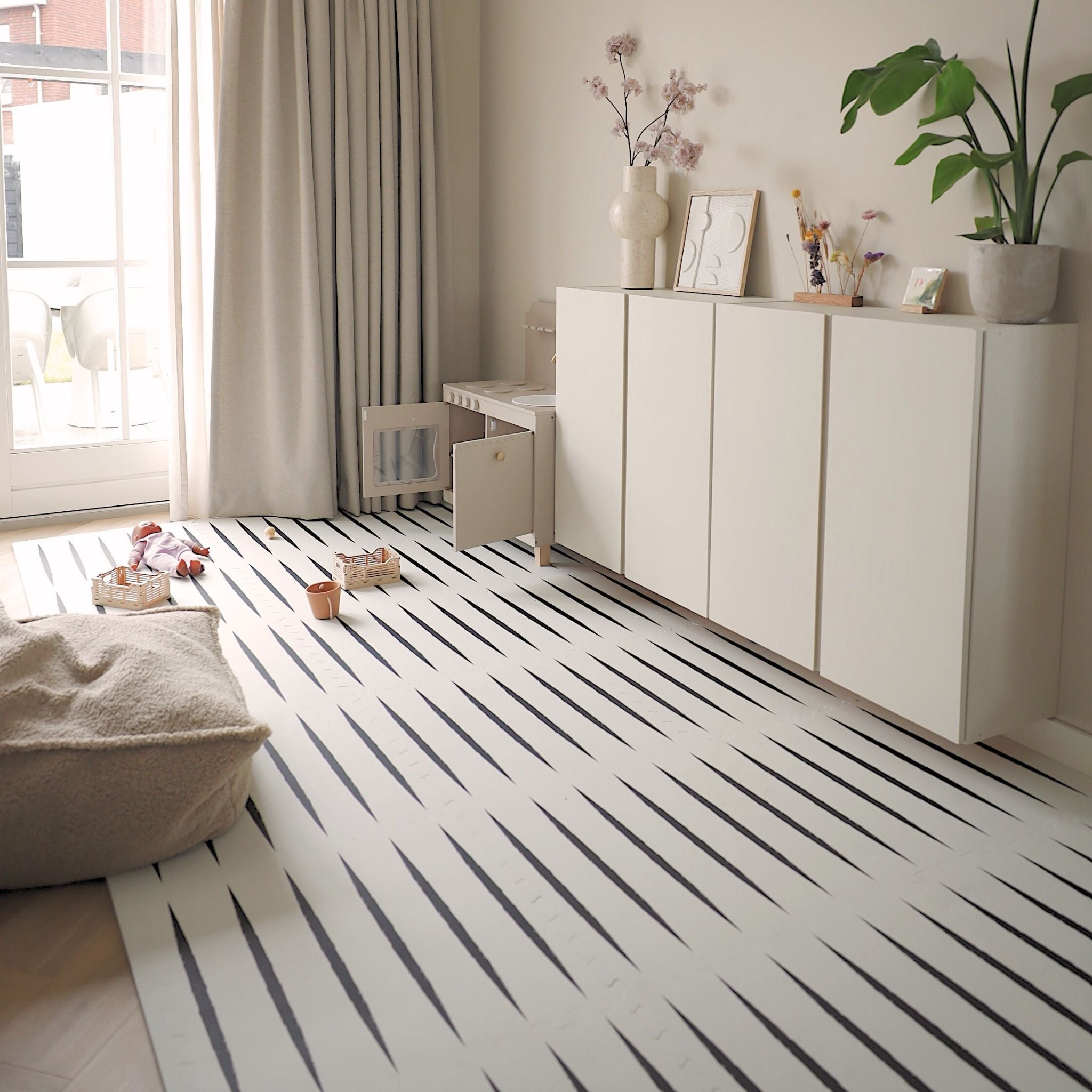
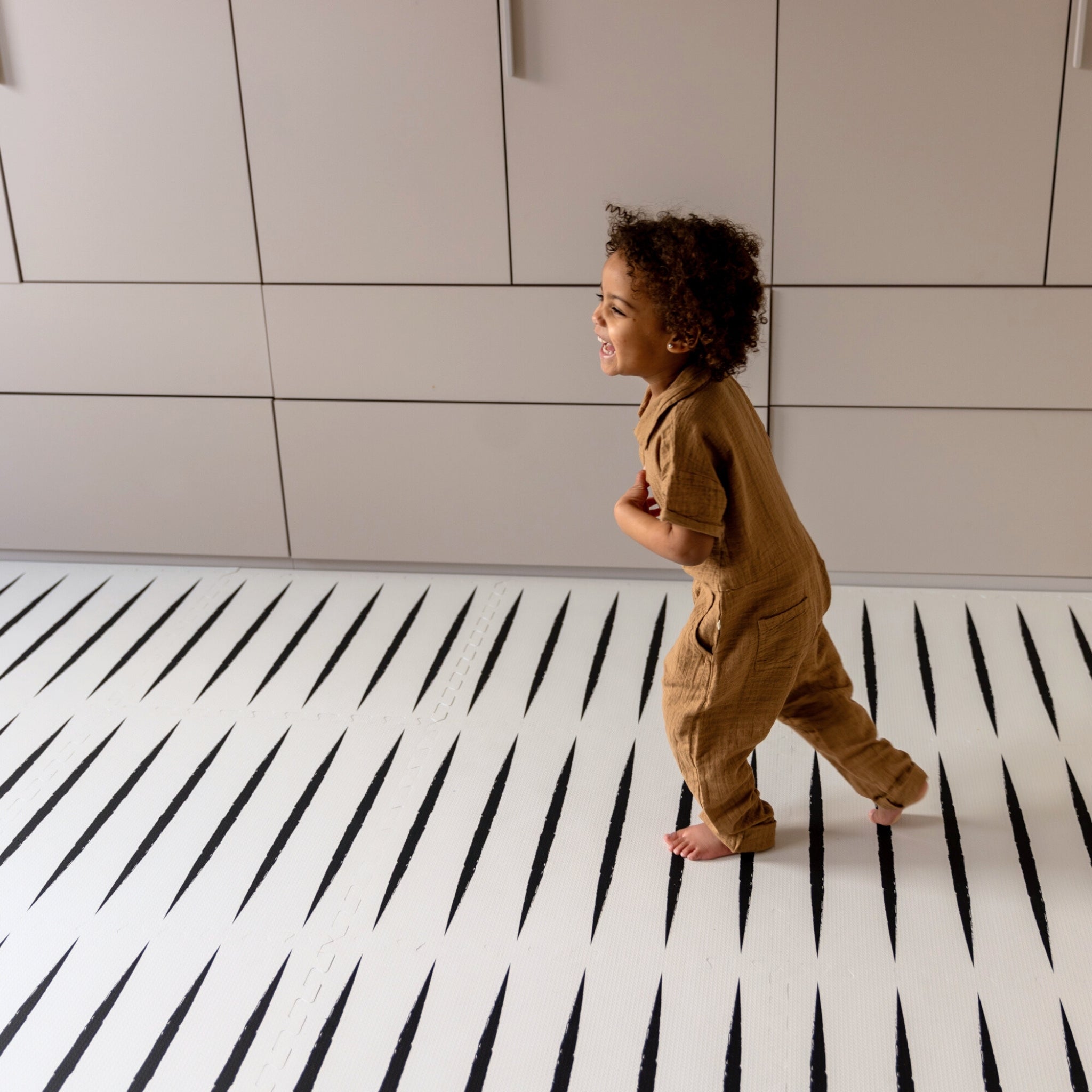
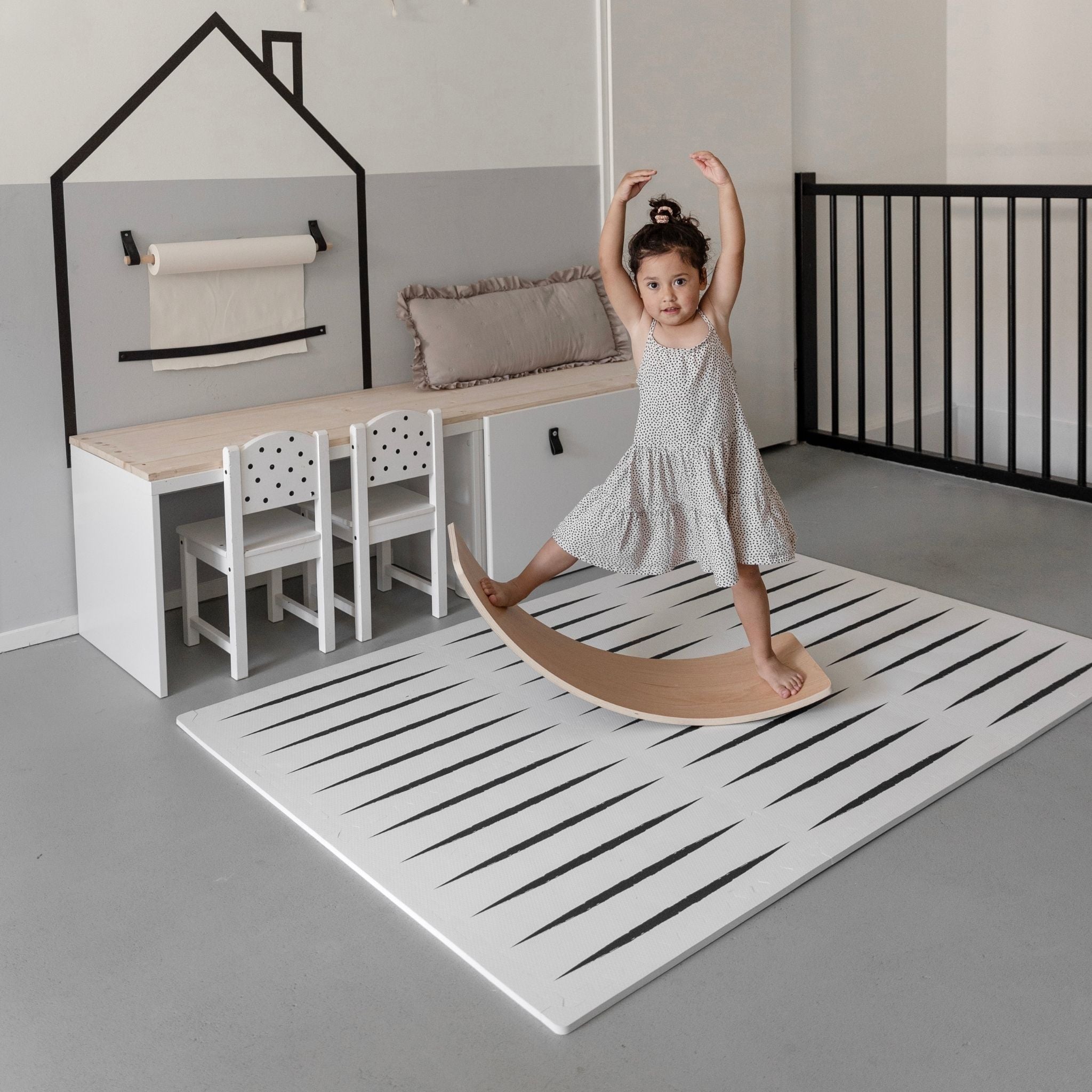
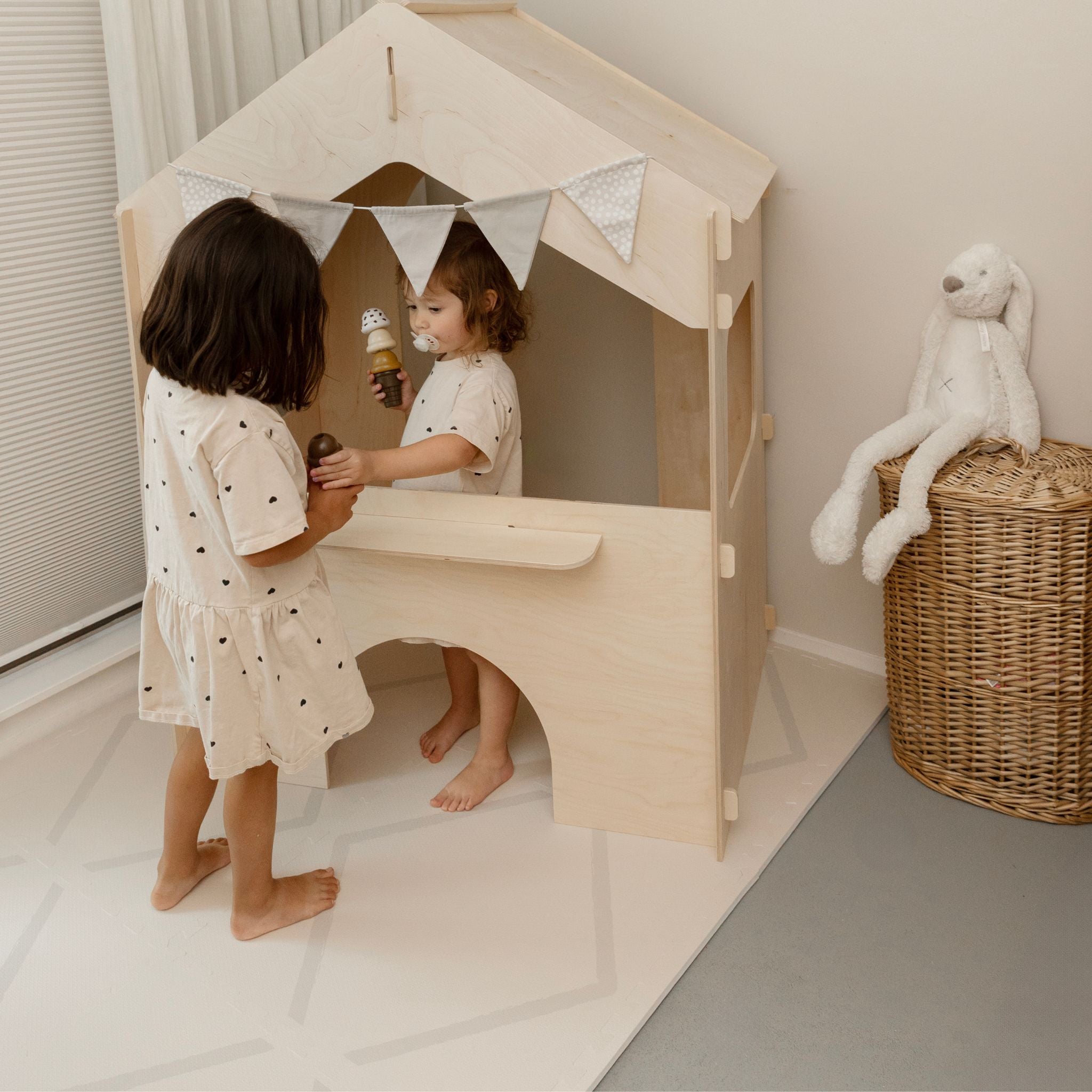
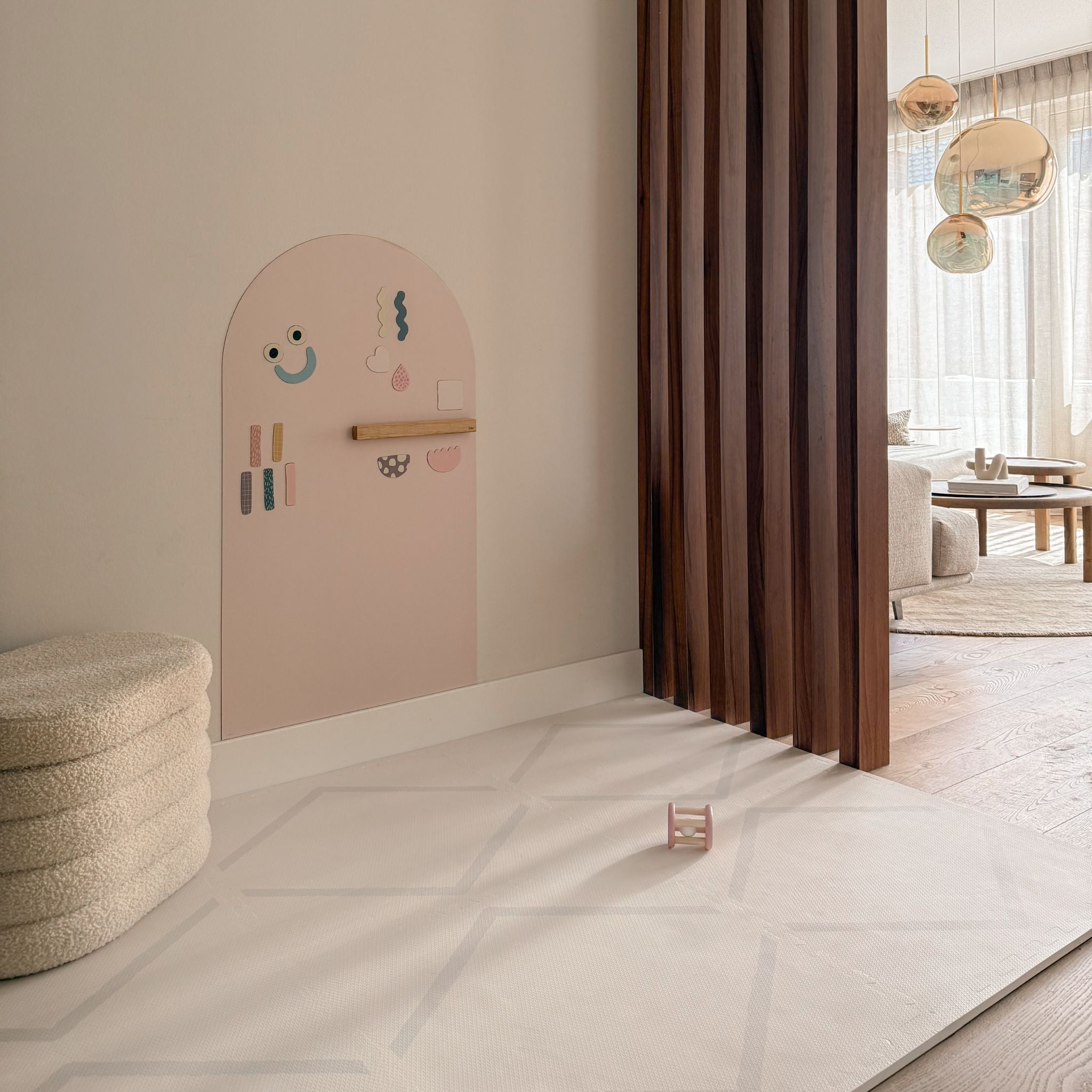
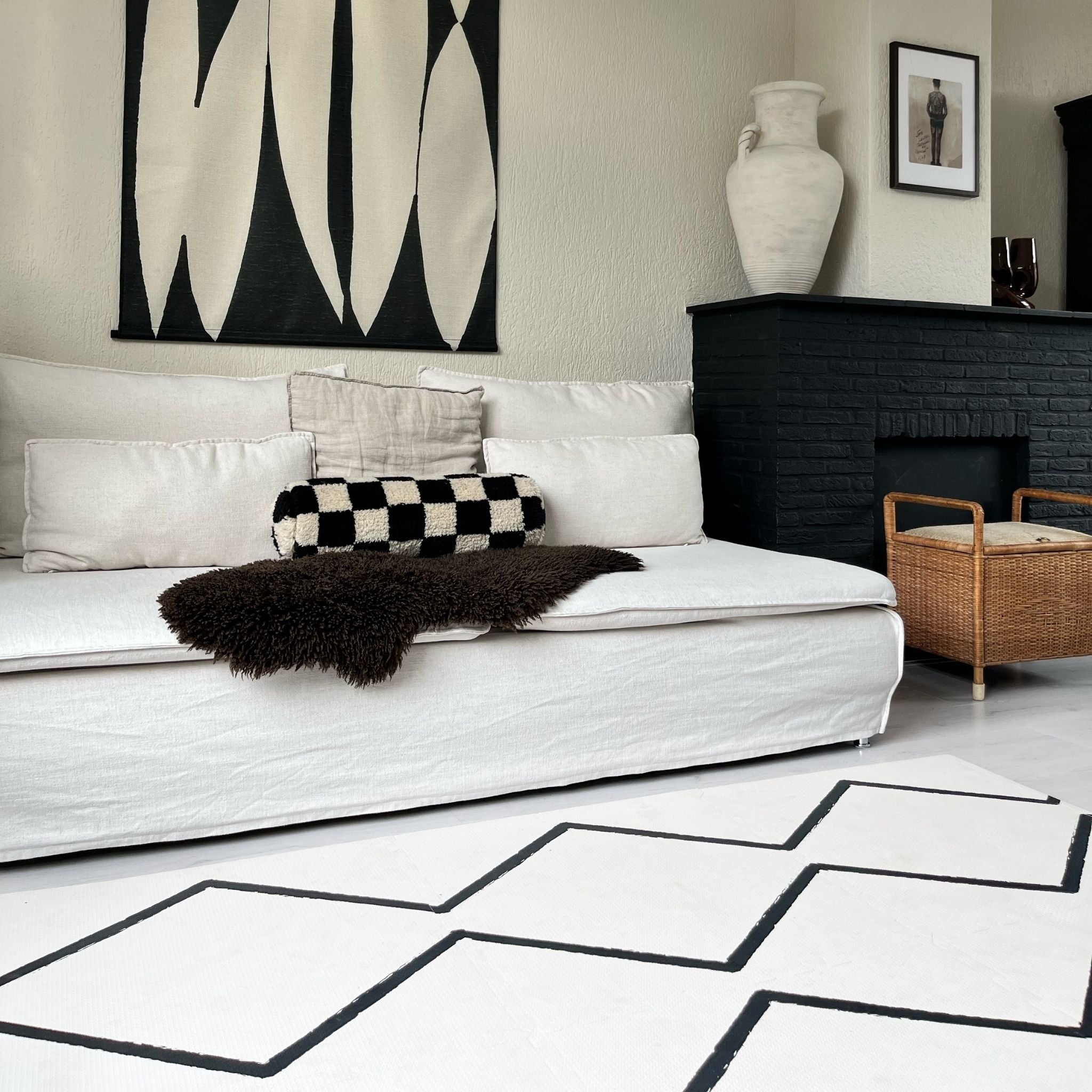
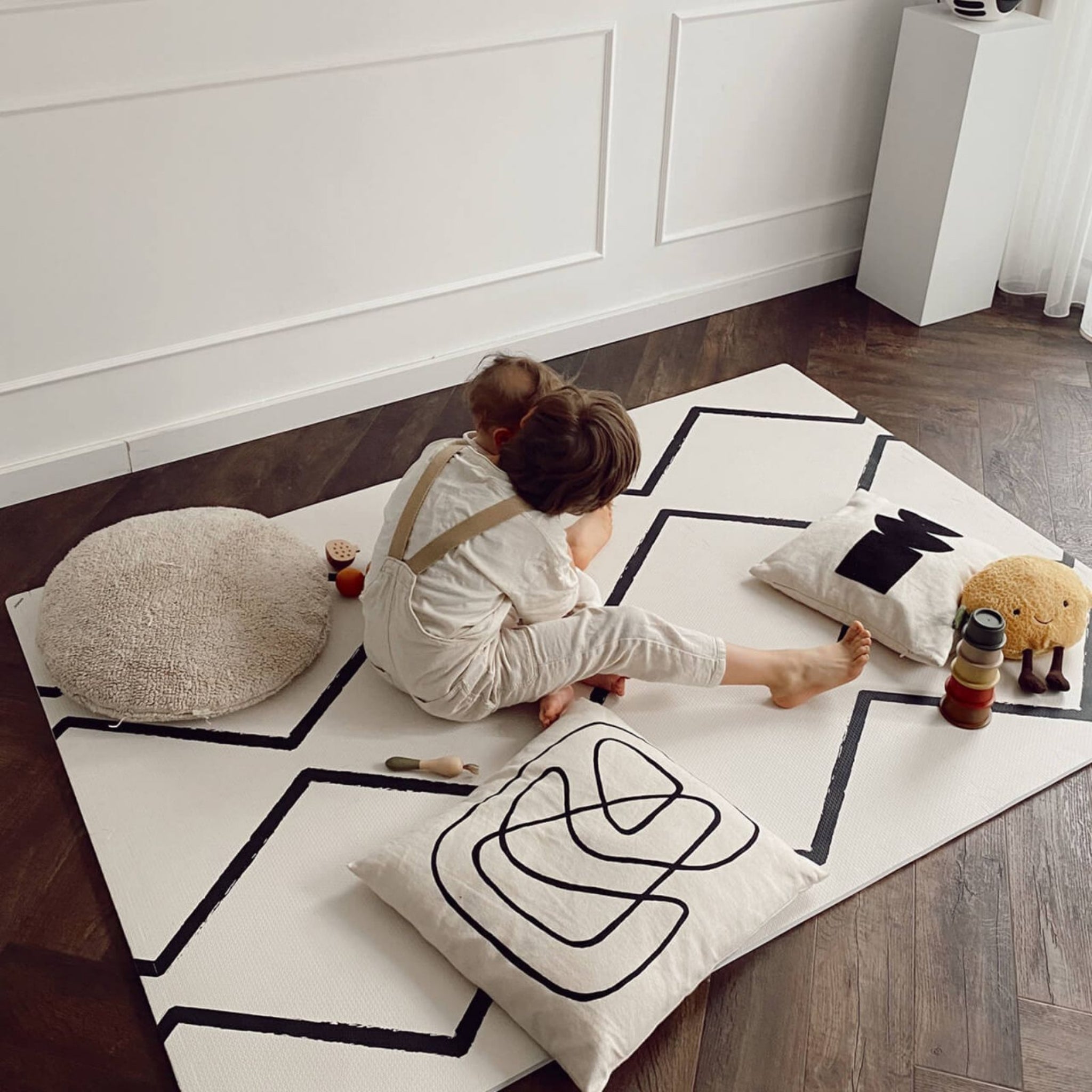
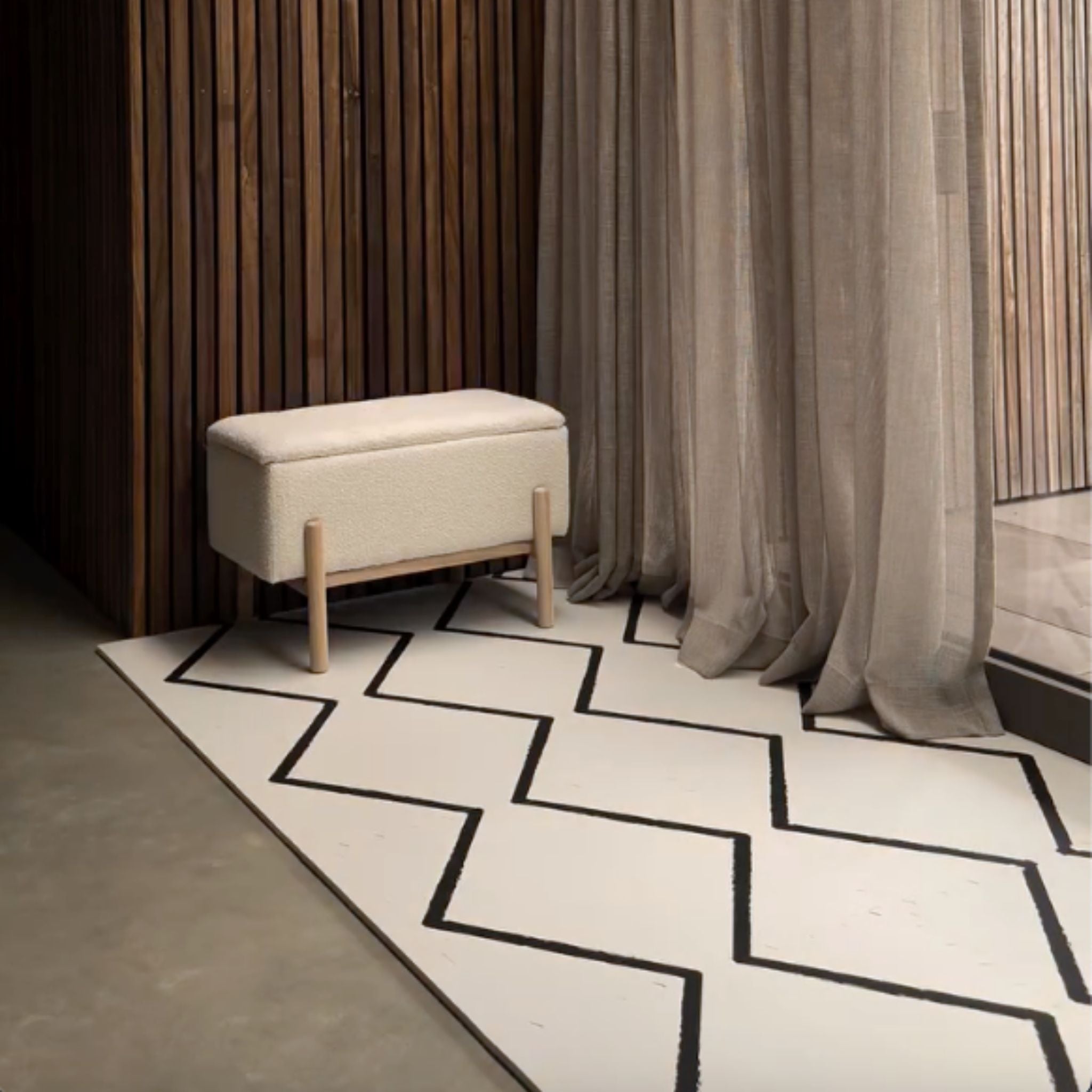
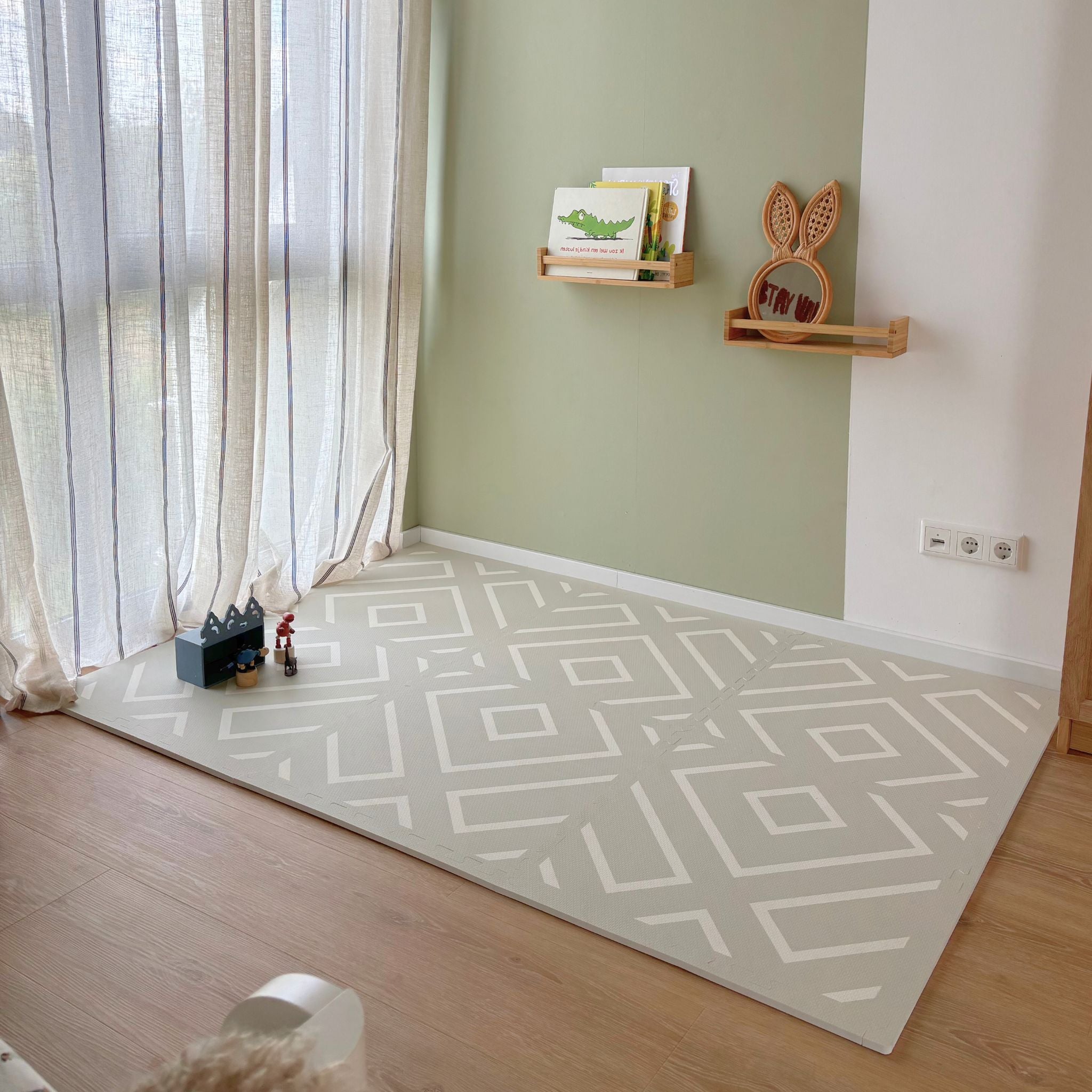
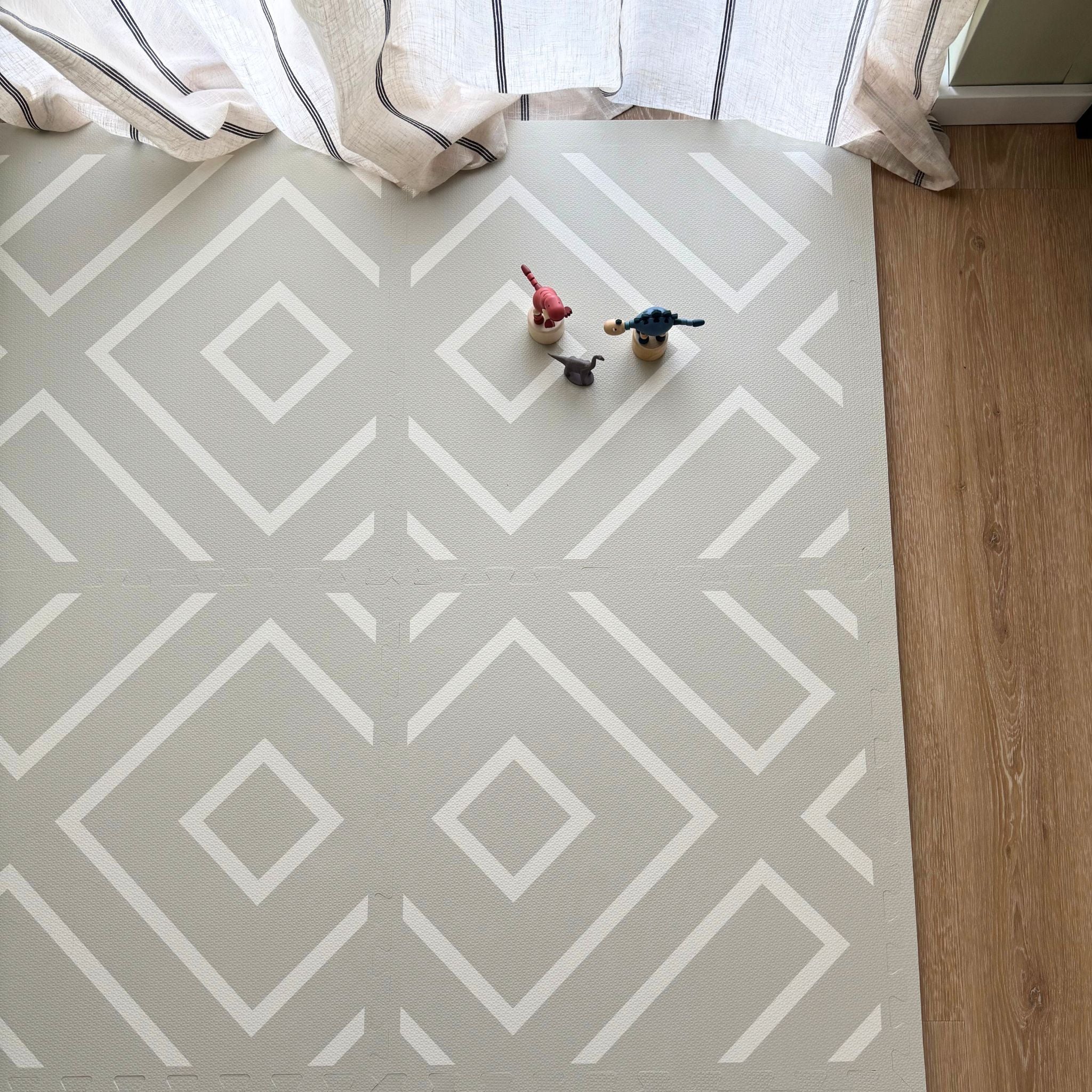
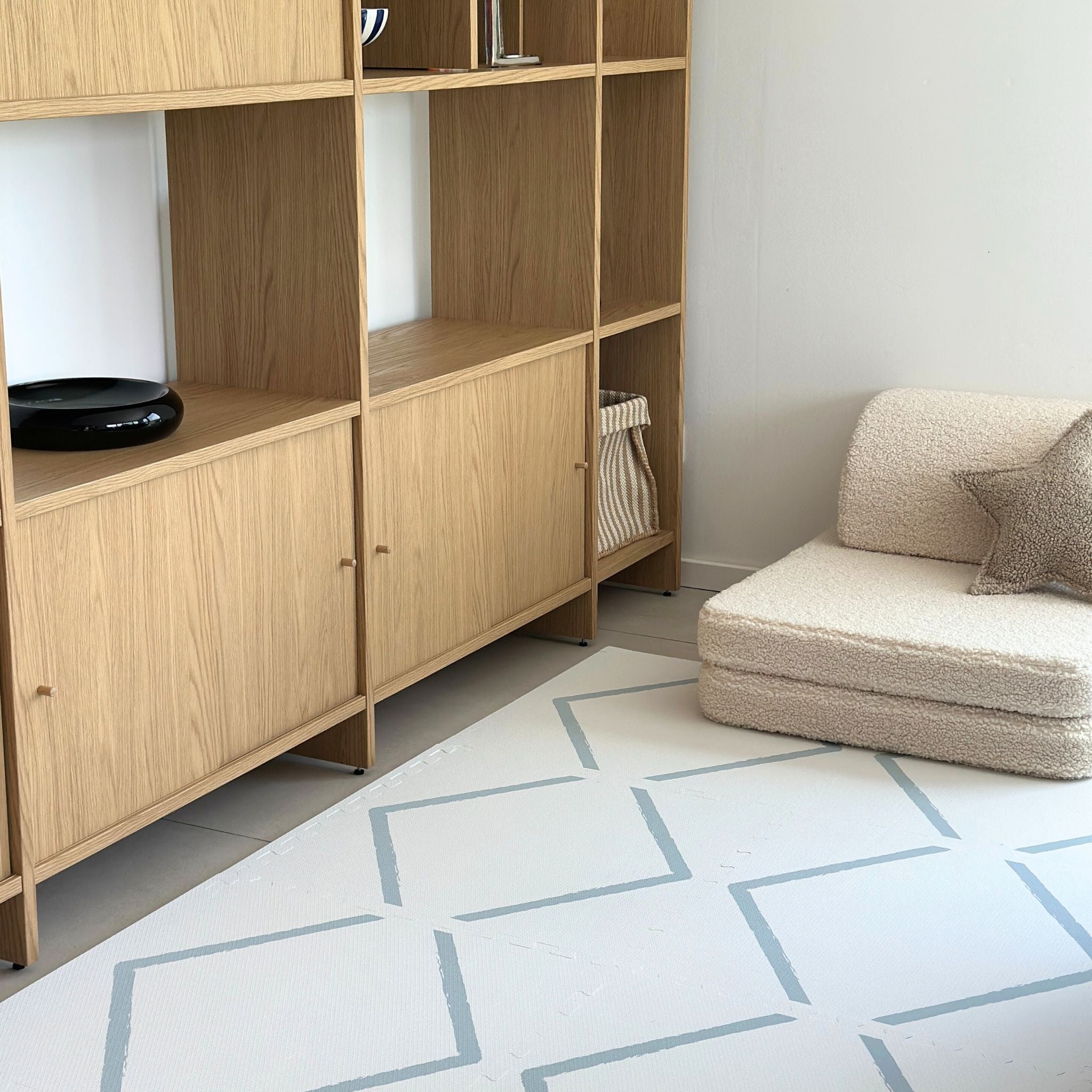
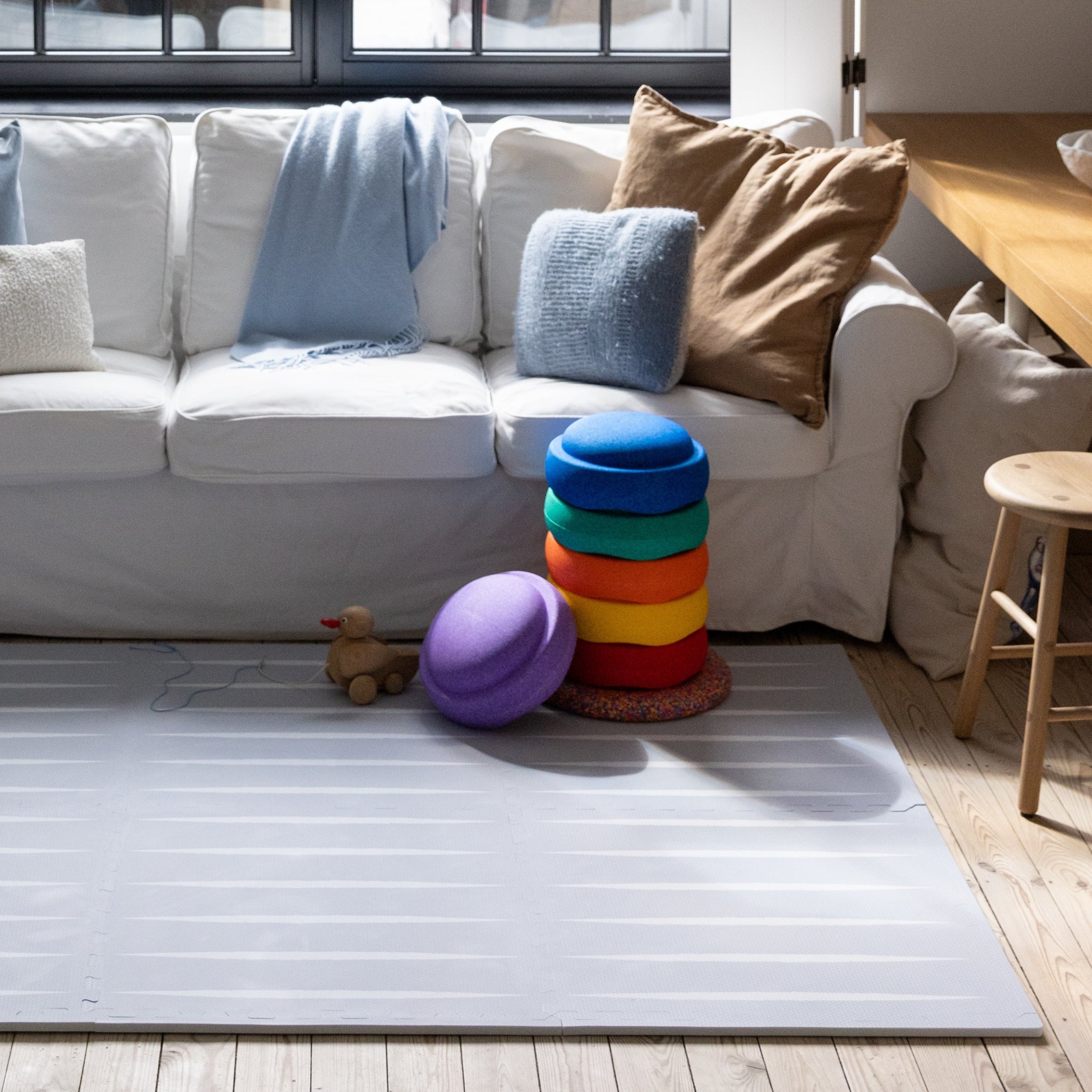
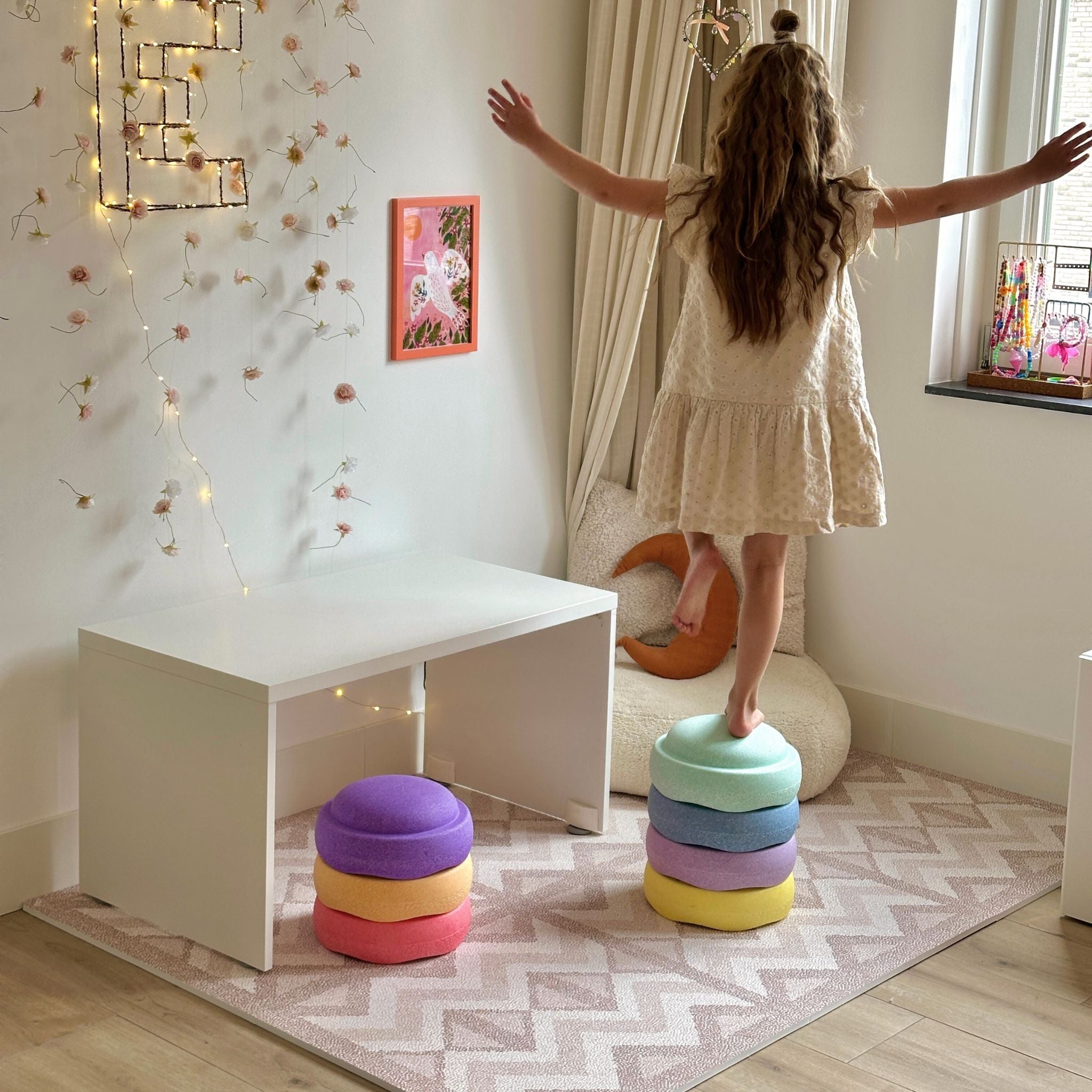
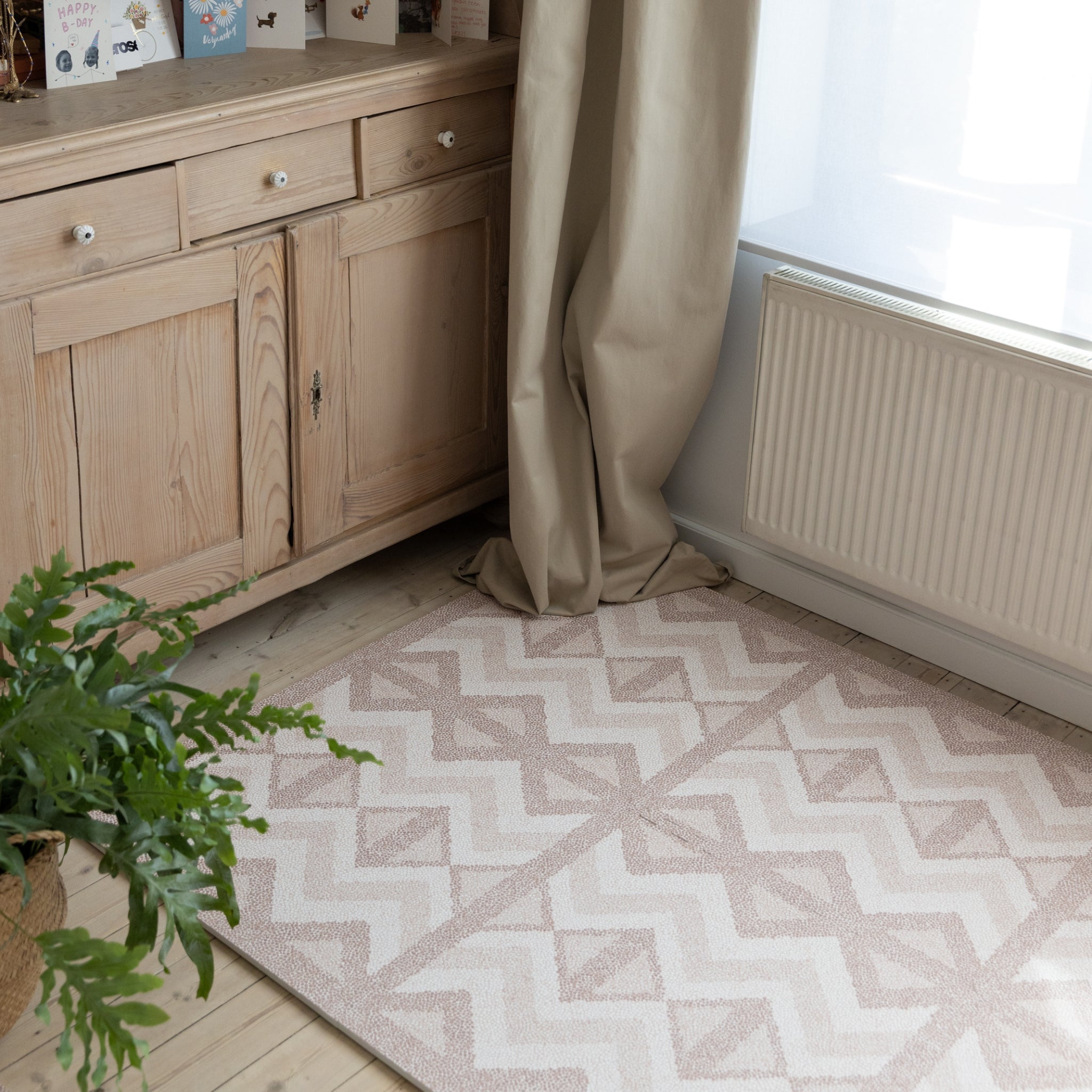
This is the part most buying guides skip, and it is usually the actual objection. A play mat that lives in your living room for two or three years needs to look like it belongs there, not like babyproofing that is tolerated until it can be put away. Muted, patterned designs read closer to a kilim or a woven rug from across the room, which is the point: the mat should disappear into the room's style, not announce itself as a baby product the moment someone walks in.
What does day to day care actually look like?
- Wipe spills with a damp cloth and mild soap if needed, nothing stronger.
- Skip scouring pads and abrasive cleaners, they dull the surface.
- Do not machine wash or tumble dry the tiles.
- Keep the mat out of long, direct sunlight, the same rule as any flooring.
- To store, separate the tiles and stack them flat rather than trying to roll the mat.
Frequently asked questions
Is a thicker foam play mat always better?
Not necessarily. Thickness changes how soft the surface feels, so match it to the floor underneath and to how your child plays, rather than simply picking the thickest option.
What size play mat does Eeveve recommend as a starting point?
Once a baby is rolling or crawling, 6 ft by 8 ft is a practical starting point for most living rooms, and a second mat in the same pattern can extend it later.
Does it come with a warranty?
Yes. Every mat has a 365-day warranty, which is separate from the 30-day return window.
Can it go in the washing machine?
No. Wipe it with a damp cloth, with a little mild soap if needed.
How long does a foam play mat actually last?
The tiles are built for daily floor use through the crawling and toddler years, and every mat carries a 365-day warranty.
What if I order the wrong size?
You have 30 days to decide, so you can lay it out at home and send it back if it does not fit the room the way you expected.
Ready to measure your floor?
Every pattern comes in eight sizes and ships as individual puzzle tiles, with 30 days to decide if it is the right fit.